Quick answer
Endoscopic Sinus Surgery in Turkey: Is Sinus Surgery Permanent?: the right answer depends on diagnosis, the actual treatment plan and individual risk factors. Use this article to prepare for consultation, then have the treating clinic confirm timing, medicines, suitability and travel planning for your case.
- Do not confirm treatment before adequate clinical assessment.
- Get scope, risks, aftercare and return-travel criteria in writing.
- For care in Turkey, verify the authorised facility and responsible clinician.
Endoscopic sinus surgery in Turkey is usually considered for selected chronic rhinosinusitis when symptoms and objective findings remain important despite appropriate medical treatment, or when another surgical indication is present. Functional endoscopic sinus surgery uses instruments passed through the nostrils to open or restore sinus drainage pathways; it does not remove the underlying tendency toward chronic inflammation. The 2025 American Academy of Otolaryngology–Head and Neck Surgery guideline focuses on selecting the right patient, setting realistic goals and planning postoperative care. Start with our Functional Endoscopic Sinus Surgery page and ask what diagnosis, scan finding and treatment history make surgery appropriate in your case.
What Functional Endoscopic Sinus Surgery Actually Does
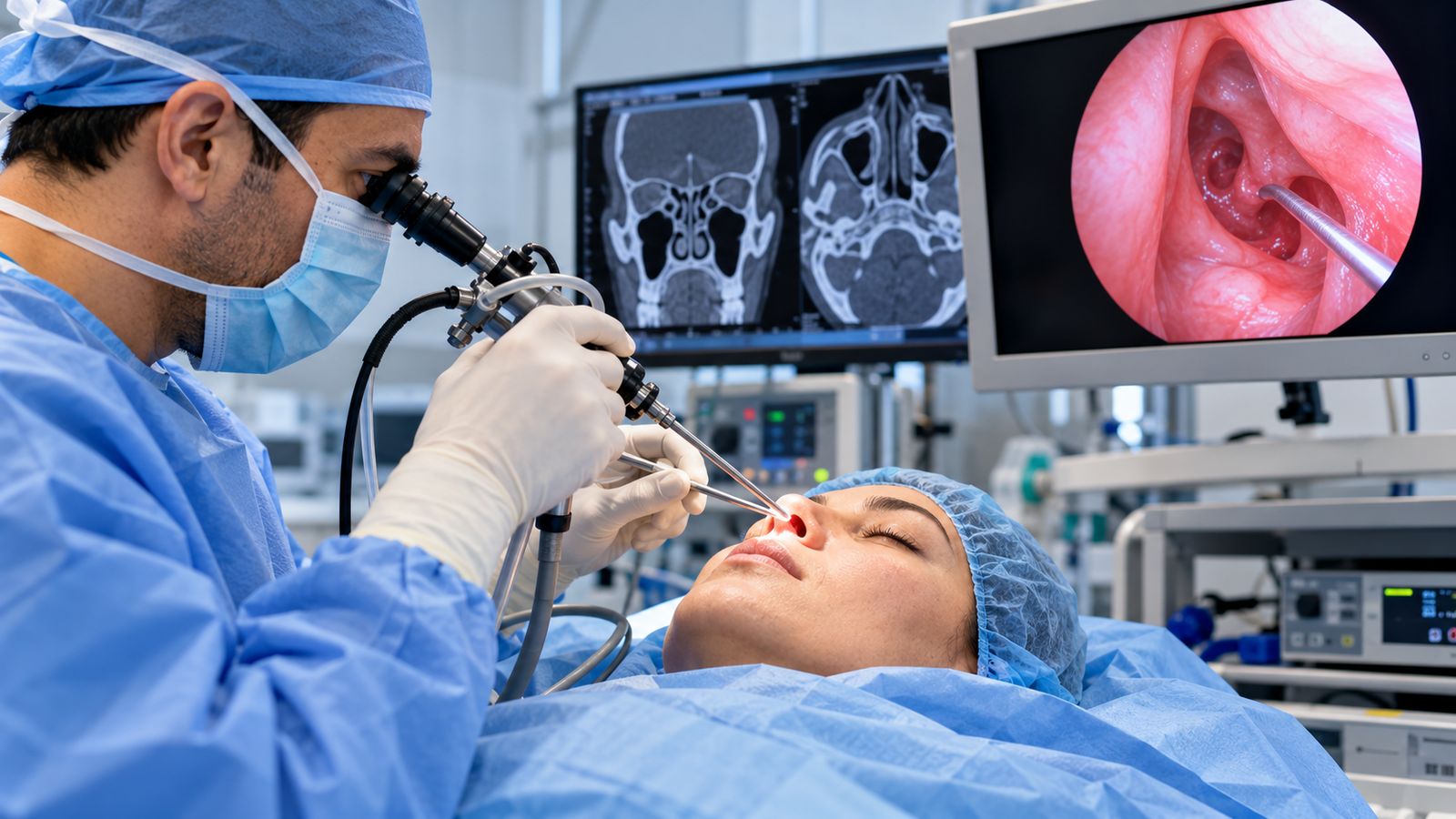
The surgeon works through the nose with an endoscope and small instruments to widen selected sinus openings, remove obstructing diseased tissue when necessary and improve access for drainage and topical treatment.
The operation is tailored to the sinuses involved. It should not be presented as the same fixed operation for every person with facial pressure, nasal blockage or recurrent infections.
Who May Be Considered For Surgery?
Chronic rhinosinusitis should be diagnosed from symptoms together with objective evidence from nasal examination, endoscopy or imaging. Surgery is usually considered when the expected benefit is greater than continued non-surgical management and the diagnosis has been confirmed.
People with nasal polyps, asthma, allergy, previous sinus surgery or different inflammatory patterns may have different risks of recurrence and different postoperative medical needs.
Is Sinus Surgery Permanent?
The anatomical changes created by surgery can be long lasting, but chronic rhinosinusitis can recur. Surgery does not guarantee that inflammation, polyps or symptoms will never return.
Long-term studies support this distinction. A large database study of 29,934 patients found a 15.9% revision-surgery rate over a mean follow-up of 9.7 years. A separate prospective cohort followed for an average of 10.9 years found a 17% revision rate, rising to 25% in patients with chronic rhinosinusitis with nasal polyps. These figures are not Turkey-specific and should not be used as an individual prediction.
Why Symptoms Can Return After Surgery
Endoscopic sinus surgery improves anatomy and access, but it does not remove every driver of inflammation. Nasal polyps, asthma, allergy, smoking, certain immune conditions and severe inflammatory disease can influence recurrence.
A person may therefore feel much better after surgery and still need long-term nasal treatment or later review.
Does Surgery Replace Nasal Sprays And Other Medical Treatment?
Not necessarily. Postoperative saline irrigation and topical medicines are commonly used, and some patients continue long-term anti-inflammatory treatment after the surgical cavities have healed.
The surgeon should explain which medicines stop before surgery, which restart afterwards and which may remain part of long-term disease control.
What Should Be Confirmed Before Travelling?
Ask which sinus disease has been diagnosed, what the scan shows, what medical treatment has already been tried and which sinuses the surgeon plans to open. If polyps are present, ask how recurrence risk will be managed after you return home.
The written plan should also say whether another procedure such as septal surgery or turbinate treatment is being added, because that can change recovery and risk.
What Happens During The Operation?
The procedure is usually performed through the nostrils without an external facial incision. The exact extent depends on the sinuses involved, anatomy, previous surgery and disease pattern.
The surgeon may remove obstructing tissue, widen natural drainage pathways and preserve healthy mucosa as much as possible. The final extent should follow the disease that was documented, not a package name.
What Are The Main Risks?
Possible complications include bleeding, infection, scar formation, persistent symptoms and the need for revision surgery. Less common but important risks include injury around the eye, cerebrospinal-fluid leak and injury to nearby structures.
Risk depends on the extent of disease, previous operations, anatomy and the planned surgical area, so informed consent should be specific to your scan and procedure.
What Does Early Recovery Usually Involve?
Nasal blockage, blood-stained discharge, crusting, pressure and reduced smell can occur during early healing. Saline irrigation, medication and clinic review are commonly part of postoperative care.
Some patients need endoscopic cleaning or other follow-up in the weeks after surgery. If you are travelling internationally, ask which of those reviews must happen before you leave Turkey and which can be done at home.
When Can You Fly After Sinus Surgery?
There is no single safe flying date for every patient. Pressure changes, bleeding risk, swelling, pain and the extent of surgery all matter. The operating surgeon should confirm fitness to fly after early review.
Do not rely on a general travel timetable if you have ongoing bleeding, fever, severe headache, visual symptoms, clear watery nasal drainage or worsening facial swelling.
Warning Signs That Need Urgent Assessment
- Heavy or persistent bleeding.
- New visual loss, double vision or marked swelling around an eye.
- Severe worsening headache, neck stiffness or confusion.
- Clear continuous watery drainage that the surgeon is concerned could represent a fluid leak.
- High fever or rapidly worsening facial pain and swelling.
Questions To Ask The Sinus Surgeon
- What exact diagnosis do I have?
- What does my scan show?
- Which medical treatments have been tried adequately?
- Which sinuses will be operated on and why?
- Do I have nasal polyps or another factor that increases recurrence risk?
- Which medicines will I need after surgery?
- How many early endoscopic reviews are planned?
- What findings would make you extend or reduce the operation?
- When will you assess me for safe return travel?
- Who manages long-term sinus care after I go home?
How Turkelite Medcare Coordinates Endoscopic Sinus Surgery
Turkelite Medcare is a patient coordination service, not the treating ear-nose-throat clinic. We do not diagnose chronic sinus disease, choose the extent of surgery or decide whether inflammation has been permanently controlled.
Our role is to organise provider questions, scans and records, appointments, travel and the return-home follow-up handover around the clinical plan confirmed by the treating team. See patient services.
Frequently Asked Questions
Is Endoscopic Sinus Surgery A Permanent Cure?
No guarantee can be made. Surgery can create lasting anatomical improvement, but chronic inflammation and polyps can recur and some patients need revision surgery.
Can Sinus Polyps Come Back After Surgery?
Yes. Recurrence is more common in some inflammatory patterns, so long-term medical treatment and review can remain important after surgery.
Will I Still Need Nasal Sprays After Surgery?
Possibly. Many patients use saline irrigation and topical medicines after surgery, and some continue anti-inflammatory treatment long term.
How Long Should I Stay In Turkey After Sinus Surgery?
The stay should cover early postoperative review and a surgeon-confirmed fit-to-fly decision. The exact duration depends on the operation and healing.
Sinus Surgery Can Change The Anatomy, But Follow-Up Manages The Disease
The useful goal is not to promise permanent freedom from sinus disease. It is to improve drainage and access, reduce disease burden when surgery is indicated and keep a realistic long-term medical and follow-up plan.
Sources and further reading
- NHS: Hearing aids and implants
- CUH: Tonsillectomy
- Republic of Türkiye Ministry of Health: International health tourism regulation
These sources support general patient information. Individual medical recommendations must come from the treating clinician.
View the related treatment area
This content is for general information and does not replace individual medical advice, diagnosis or treatment. Discuss treatment suitability, risks and recovery with a qualified healthcare professional.