Quick answer
Flying After Blepharoplasty: How Soon Can You Fly?: the right answer depends on diagnosis, the actual treatment plan and individual risk factors. Use this article to prepare for consultation, then have the treating clinic confirm timing, medicines, suitability and travel planning for your case.
- Do not confirm treatment before adequate clinical assessment.
- Get scope, risks, aftercare and return-travel criteria in writing.
- For care in Turkey, verify the authorised facility and responsible clinician.
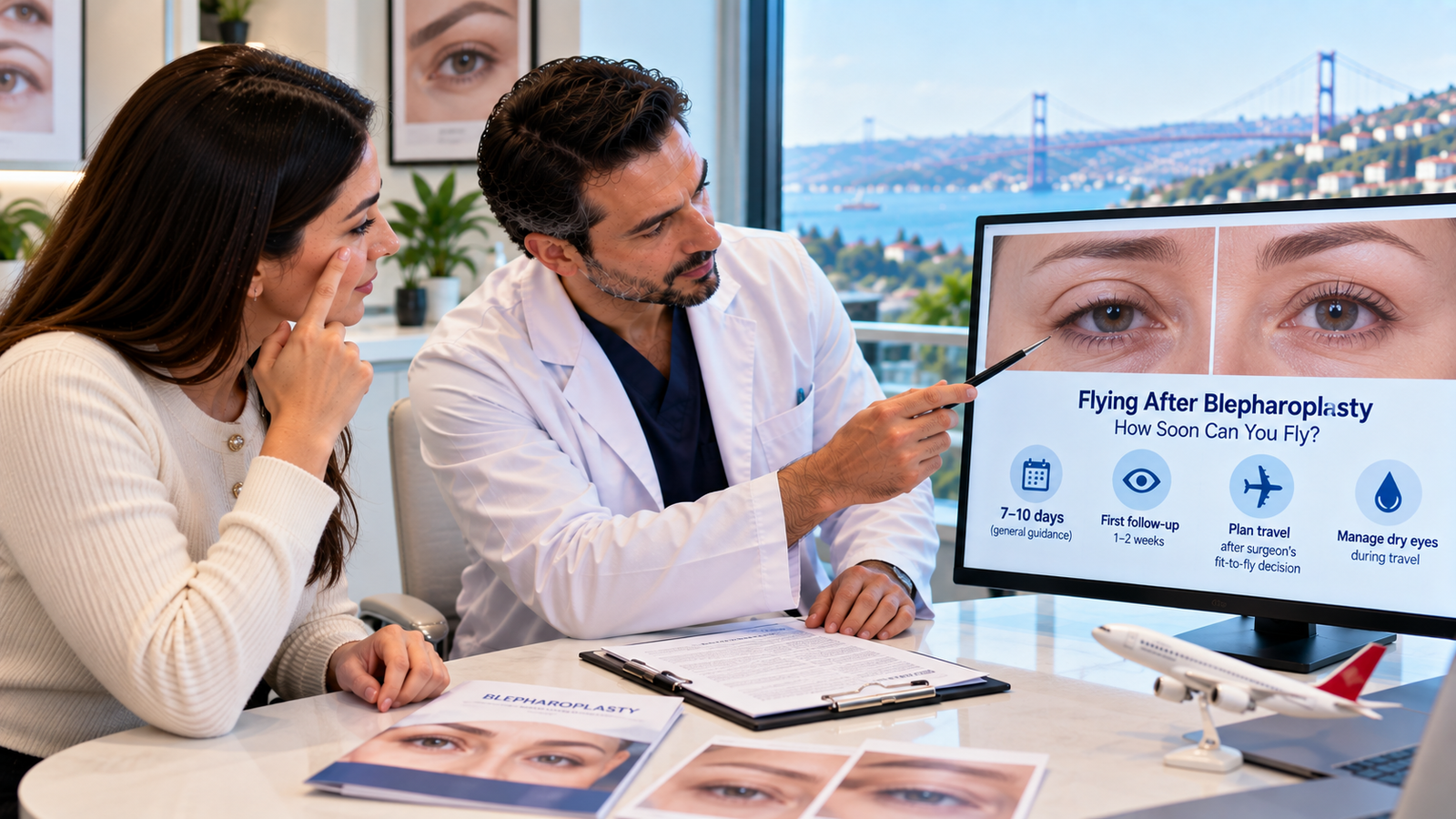
Flying after blepharoplasty should be timed around eye symptoms, swelling, incision review and the surgeon’s fit-to-fly decision. The American Society of Plastic Surgeons has used about 7 to 10 days as general guidance before flying after facial cosmetic procedures, including eyelid surgery. Upper-eyelid postoperative guidance from the American Academy of Ophthalmology’s EyeWiki also advises avoiding lifting, bending, straining and exercise during the first 10 days and recommends a follow-up assessment within 1 to 2 weeks. Start with our Blepharoplasty page and plan the return flight only after the treating surgeon has explained the early review schedule.
Why Eyelid Surgery Needs A Travel Plan
Blepharoplasty is surgery around the eye. Early recovery can include swelling, bruising, irritation, dry eyes and discomfort, so postoperative review is important before you move far away from the treating team.
Travel planning also has to consider general postoperative risks, including immobility during long flights and limited access to the operating surgeon if an urgent eye symptom appears after departure.
How Soon Can You Fly After Eyelid Surgery?
General plastic-surgery guidance commonly uses about 7 to 10 days after facial cosmetic surgery before air travel. For uncomplicated eyelid surgery, this can overlap with the period when swelling is improving and the first follow-up is due.
The exact date remains individual. Upper and lower eyelid surgery, combined procedures, wound healing, vision symptoms and your general medical risk can all change the timing.
Why The First 10 Days Matter
EyeWiki guidance for upper blepharoplasty advises patients to avoid lifting, bending, straining and exercise during the first 10 days. Those restrictions matter when planning airports, luggage and long journeys.
If you still need help with routine activity, are unable to manage luggage without straining or have worsening eye symptoms, travel should be reconsidered with the surgeon.
What Recovery Symptoms Are Common?
American Society of Plastic Surgeons guidance describes early swelling, bruising, irritation, dry eyes and discomfort as expected parts of eyelid-surgery recovery in many patients. Cold compresses, prescribed ointment and other instructions may be used according to the surgeon’s protocol.
These expected symptoms should gradually improve. A new or rapidly worsening pattern needs clinical review rather than reassurance from a generic recovery timetable.
When Is The First Follow-Up?
EyeWiki recommends postoperative review within 1 to 2 weeks after upper blepharoplasty. Your own surgeon may arrange an earlier check, especially if sutures need removal or lower eyelid surgery was performed.
Ask before surgery whether the clinic expects you to remain locally until a specific review has been completed.
Flying After Upper Versus Lower Blepharoplasty
The travel decision is not based only on whether the operation was upper or lower eyelid surgery. Lower-eyelid procedures can involve different tissue planes and may create different swelling or support needs, while upper-eyelid surgery may have sutures that need planned review.
The surgeon should state which postoperative findings must be stable before travel for your exact operation.
What If Blepharoplasty Was Combined With Another Procedure?
If eyelid surgery was combined with a facelift, brow lift, rhinoplasty or another operation, the return-flight date should follow the procedure with the longer or more restrictive recovery.
Do not use a blepharoplasty-only travel estimate for a combined surgical plan.
Warning Signs Before A Flight
EyeWiki advises urgent contact for vision loss, double vision, bleeding, severe swelling or severe pain. These symptoms need assessment before any travel decision.
Rapidly worsening swelling, major asymmetry, new visual disturbance or uncontrolled bleeding are reasons to seek urgent local care rather than continue to the airport.
What About Dry Eyes During Travel?
Dryness and irritation can occur after blepharoplasty. Use only the lubricating drops, gel or ointment recommended by your treating team and keep them available during the journey if the surgeon approves travel.
Contact lenses, eye makeup and other eye-surface products should follow the surgeon’s specific postoperative instructions rather than a generic flight checklist.
How Long Should You Stay In Turkey After Blepharoplasty?
A practical stay should include the early postoperative period and the review that the surgeon considers necessary before return travel. General face-surgery guidance often cites around 7 to 10 days, while upper-eyelid follow-up guidance places formal review within 1 to 2 weeks.
Your planned stay may therefore extend into the second week if the surgeon wants to review sutures, swelling, eye closure or vision before you leave.
What To Do If You Are Cleared To Fly
- Carry the surgeon’s eye-care instructions and contact details.
- Use prescribed eye medication exactly as directed.
- Do not rub the eyelids or incisions.
- Avoid lifting heavy luggage if bending or straining is still restricted.
- Keep sunglasses available for protection from bright light and sun.
- Move regularly during a long journey when it is safe to do so.
Questions To Ask Before Booking The Flight
- When is my first postoperative eyelid review?
- Will sutures need removal before I fly?
- Which amount of swelling or bruising is still acceptable for travel?
- What vision symptoms would make flying unsafe?
- When can I bend, lift luggage and walk through an airport normally?
- Which eye drops or ointments should I carry?
- Does a combined procedure require a longer stay?
- Who should I contact if an eye symptom develops after I return home?
How Turkelite Medcare Coordinates Eyelid-Surgery Travel
Turkelite Medcare is a patient coordination service, not the treating eye or plastic-surgery clinic. We do not decide whether your eyelids are sufficiently healed for air travel.
Our role is to organise appointments, travel, records and the return-home handover around the surgeon-confirmed recovery schedule. See patient services.
Frequently Asked Questions
How Soon Can You Fly After Blepharoplasty?
General plastic-surgery guidance often uses about 7 to 10 days after facial cosmetic procedures, but the treating surgeon should confirm your actual date after examining the eyes and incisions.
Can I Fly 7 Days After Eyelid Surgery?
Possibly if recovery is uncomplicated and your surgeon agrees, but day 7 is not guaranteed. Sutures, swelling, vision symptoms or combined surgery can change the plan.
Should I Wait Until My Follow-Up Before Flying?
That is often the safer way to plan international treatment. Upper-eyelid guidance recommends follow-up within 1 to 2 weeks, and your own surgeon may want a specific review before travel.
What Eye Symptoms Mean I Should Not Fly?
Vision loss, double vision, severe pain, severe swelling or significant bleeding need urgent assessment and should take priority over travel.
Eye Review First, Flight Second
The safest return plan after blepharoplasty is built around the eye examination and wound review, not around the cheapest available flight. Travel should follow the surgeon’s recovery decision.
Sources and further reading
- NHS: Before you have a cosmetic procedure
- NHS: Choosing who will do your cosmetic procedure
- Republic of Türkiye Ministry of Health: International health tourism regulation
These sources support general patient information. Individual medical recommendations must come from the treating clinician.
View the related treatment area
This content is for general information and does not replace individual medical advice, diagnosis or treatment. Discuss treatment suitability, risks and recovery with a qualified healthcare professional.