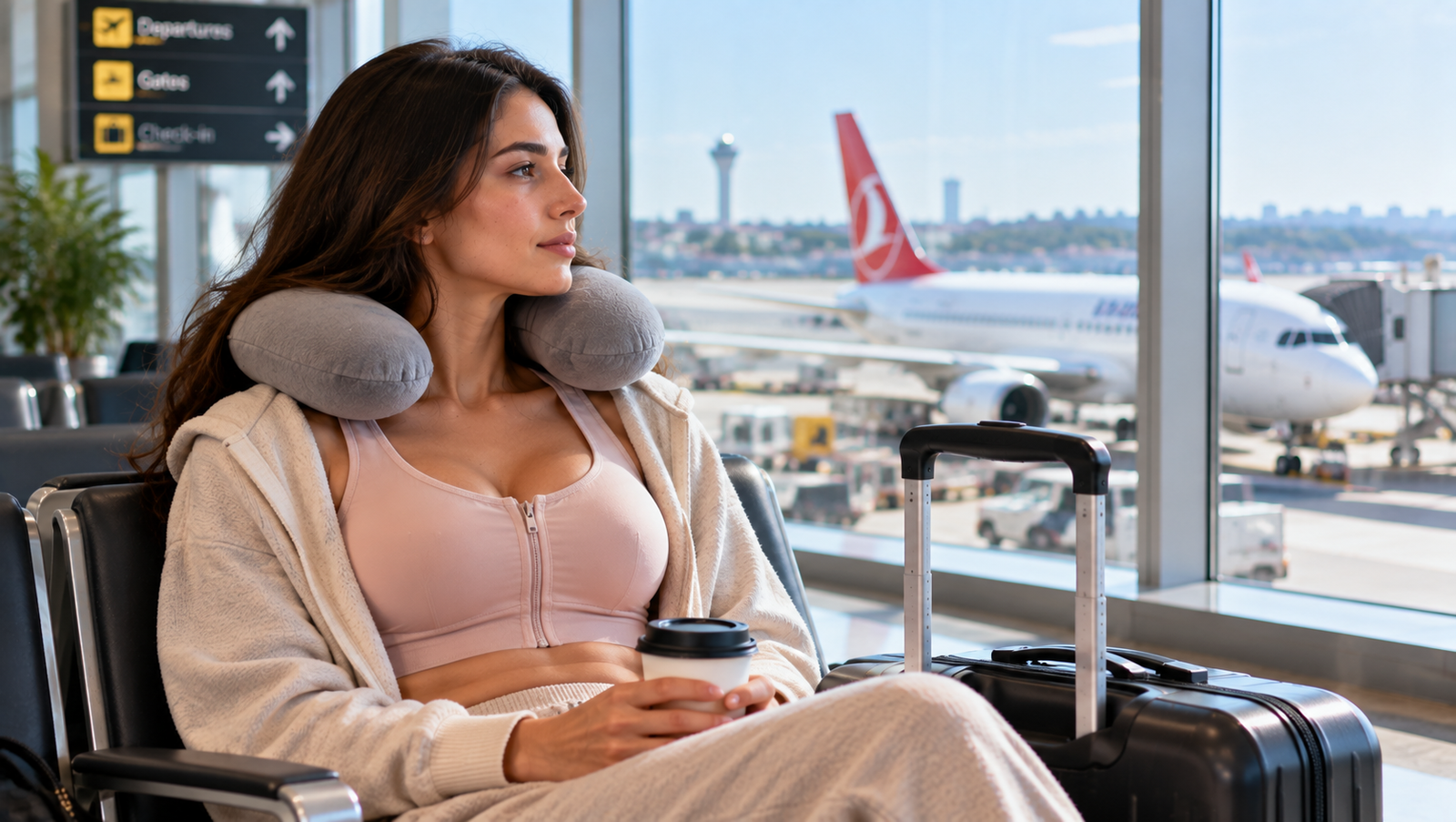
If you are planning flying after breast augmentation, use public guidance as a planning range rather than a guaranteed clearance date. The American Society of Plastic Surgeons has suggested waiting about 5 to 7 days after body procedures such as breast augmentation before flying, while a more recent 2026 patient-education article from the same organisation includes a surgeon recommendation to wait at least two weeks for travel involving prolonged sitting after surgery. Long-distance travel also adds a blood-clot question: the Centers for Disease Control and Prevention treats journeys longer than about four hours as a setting in which prolonged immobility can contribute to clot risk, especially when another risk factor such as recent surgery is present. The practical message is simple: the flight date should follow the surgeon's review, your recovery, the length of the journey and your individual risk profile. Start with our Breast Augmentation page, then organise travel around the treating surgeon's confirmed plan.
Flying After Breast Augmentation: Why There Is No Single Universal Day
Public recommendations are not identical because “flying” can mean very different journeys. A short direct flight a week after an uncomplicated operation is not the same as a ten-hour flight with airport queues, connections and a long drive at the other end.
The American Society of Plastic Surgeons has used 5 to 7 days as a broad minimum planning reference after body procedures including breast augmentation. A 2026 article from the same organisation quotes a plastic surgeon who recommends at least two weeks before travel involving prolonged sitting after surgery. Neither statement should be treated as a personal medical rule.
The treating surgeon knows your operation, implant placement, incision, bleeding risk, wounds, mobility and medical history. Ask which travel interval they use for your exact case and what must be checked before they approve departure.
How Long To Stay In Turkey After Breast Augmentation
For an international patient, the stay should cover more than the operation itself. It should include immediate recovery, the early period when bleeding and swelling are monitored, a planned postoperative review and the surgeon's decision about return travel.
A practical discussion may start with a range of roughly one to two weeks because public plastic-surgery travel guidance spans from about 5 to 7 days for breast augmentation to more conservative advice of around two weeks for longer travel after surgery. That is a planning range, not a promise that every patient should fly on day seven or day fourteen.
Before booking, ask the clinic to put four dates in writing: the operation date, expected discharge, first in-person review and earliest return-travel date if recovery is uncomplicated. Then ask which findings would extend the stay.
The First Several Days Are Still An Active Recovery Period
The American Society of Plastic Surgeons advises taking it easy during the first several days because bleeding can occur into the surgical pockets around the implants. Soreness and swelling may continue for weeks even when recovery is progressing normally.
This matters for travel because the airport may require walking, standing, lifting and carrying at a time when your surgeon still wants reduced activity. A patient who feels well enough to sit on a plane may still not be ready to lift a suitcase, rush through a terminal or manage an unexpected delay alone.
Plan the first week around recovery and review, not sightseeing. Cosmetic surgery abroad should not be treated as a normal holiday immediately after the operation.
Long-Haul Flights Add A Blood-Clot Consideration
The Centers for Disease Control and Prevention describes travel longer than four hours as long-distance travel for blood-clot planning. Prolonged sitting can contribute to deep-vein thrombosis, and recent surgery is an additional risk factor that should be considered with your other health factors.
Your personal risk may be influenced by previous blood clots, clotting disorders, obesity, smoking, hormone use, limited mobility, age, additional procedures or a very long itinerary. The fact that another patient flew safely after a few days does not determine your own risk.
Ask the surgeon whether your total journey changes the plan. Give them the full door-to-door itinerary, not only the scheduled flight time.
Do Not Start Blood-Thinning Treatment From A Blog
Some patients assume that aspirin, anticoagulants or compression garments automatically make early flying safe. That is not a safe assumption. Blood-clot prevention needs to be individualised because medicines can also increase bleeding risk after surgery.
Ask the treating team whether you need any specific prevention strategy and exactly when it should start or stop. Do not begin or discontinue prescribed medication without clinical advice.
For many travellers, regular leg movement and avoiding prolonged immobility are general travel measures, but they do not replace an individual surgical risk assessment.
Swelling Is Expected Before You Ever Reach The Airport
Breast augmentation commonly causes soreness and swelling for several weeks. A support bra or other postoperative garment may be recommended to reduce swelling and support the breasts while tissues heal.
Do not choose a flight date based on the expectation that the breasts will already look settled. Early swelling, tightness, asymmetry and changes in implant position can be part of the recovery period and should be interpreted by the treating surgeon.
If swelling suddenly increases on one side, becomes associated with severe pain or is accompanied by another unexpected symptom, contact the treating team before travelling.
The Support Bra And Dressings Need A Travel Plan
The American Society of Plastic Surgeons notes that patients may be instructed to wear a support garment continuously during early recovery. Incision care, tape, dressings and shower instructions can vary by surgeon.
Ask what you should wear during the flight, whether dressings need to stay dry, how to manage a long travel day and what supplies should be carried in hand luggage. Do not substitute a different tight garment simply because it feels more convenient for the airport.
Keep medication and wound-care instructions accessible rather than packed in checked baggage.
Heavy Luggage Is A Separate Problem From Sitting On The Plane
Postoperative guidance commonly restricts straining and vigorous activity during early breast-augmentation recovery. One major clinical reference advises avoiding activities that cause straining or a marked rise in pulse or blood pressure for at least two weeks.
That makes overhead luggage, heavy suitcases and difficult transfers part of the medical-travel plan. Even if the surgeon approves the flight, they may still restrict lifting.
Travel with a companion when appropriate, use wheeled luggage, arrange airport assistance if needed and do not lift a heavy cabin bag into an overhead locker against postoperative advice.
Drains Or Non-Dissolving Stitches Can Change The Stay
Some breast-augmentation patients may have drainage tubes or stitches that require a later appointment. If your surgeon uses either, ask when they are expected to be removed and whether that review must occur before you leave Turkey.
Do not build the return flight around an assumption that all patients have the same wound-care pathway. Implant placement, incision choice, combined procedures and surgeon preference can alter follow-up.
If a drain is still in place, ask specifically about care, infection warning signs, travel practicality and whether the surgeon considers flying appropriate.
Combined Procedures Can Make A Standard Timeline Misleading
A breast augmentation may be performed alone or combined with a breast lift, liposuction or another cosmetic procedure. Adding surgery can increase wound burden, operating time, mobility restrictions and blood-clot considerations.
A 5-to-7-day reference for isolated breast augmentation should not automatically be applied to a larger combined operation. Ask the surgeon which procedure drives the recovery and return-travel timing.
Make sure the written quote and consent documents list every planned procedure so the travel advice is based on the operation you are actually having.
Return travel should also account for pain control and self-care. If you still need medication that makes you drowsy, cannot dress comfortably, struggle to get in and out of a seat or need help with basic movement, tell the surgeon before the flight is confirmed. Being technically discharged from the clinic is not the same as being ready for an international airport journey.
Ask whether the clinic wants photographs or another examination shortly before departure. A final review close to the travel date can identify a change that was not present at the first postoperative appointment.
Long-Haul Flight After Breast Augmentation Needs A Door-To-Door Plan
A long-haul journey includes more than time in the air. Airport queues, security, connections, boarding, baggage, immigration and ground travel can extend immobility and fatigue.
If your flight exceeds four hours, ask the surgeon specifically how the recent operation changes your clot-risk plan. Also ask how often you should move, what level of walking is appropriate and whether your normal hydration plan needs modification.
A direct flight may be easier than several connections, but the safest itinerary is the one that fits your clinical recovery and risk assessment.
Do Not Use A Package Checkout Date As Medical Clearance
Medical-tourism packages often bundle surgery, hotel nights and transfers. Those services can be useful, but a hotel reservation cannot determine when a patient is medically fit to travel.
The surgeon should have the authority to delay departure if there is significant swelling, bleeding, wound concern, infection, unexpected pain, reduced mobility or another clinical issue. Flexible travel arrangements make it easier to follow that decision.
If the package cannot accommodate a medically necessary change, understand the financial consequences before treatment begins.
Know The Warning Signs Before You Leave
Clinical guidance after breast augmentation advises contacting the surgeon for warmth and redness of the breast or fever because these can indicate infection. Chest pain or shortness of breath require urgent medical attention. Blood-clot symptoms can also include new leg pain or swelling, particularly on one side.
Other concerning postoperative changes include rapidly increasing swelling, significant bleeding, wound opening, severe pain that is not controlled or a sudden change that worries the treating team.
If you are seriously unwell, seek urgent local care rather than boarding a flight to avoid rebooking costs.
Bring Your Implant Records Home
Breast implants are medical devices, and the exact implant information matters for future imaging, reviews or revision surgery. Ask for the manufacturer, model, size, shape, fill, surface information and implant card or equivalent record before leaving.
Keep the operation report, discharge summary, medication list, wound-care instructions and contact details for the treating clinic as well.
A complete record makes long-term follow-up easier after you return home.
Aftercare Does Not End When The Flight Lands
Breast augmentation recovery continues for weeks, and implants require long-term awareness. Ask when normal exercise, driving, work, sleeping positions and upper-body activity can resume and which follow-up reviews are planned after you return.
Clarify who reviews photographs, who answers implant-related questions and what symptoms require a local clinician rather than remote follow-up.
The patient services page explains how practical travel and return-home handover can be kept connected to the provider-confirmed clinical plan.
Questions To Ask Before Booking The Return Flight
- What is the earliest flight date you would consider after my exact operation?
- Does my journey length or number of connections change that advice?
- Which postoperative review must occur before I leave Turkey?
- Do I have any individual blood-clot risk factors that change the plan?
- What lifting and luggage restrictions will still apply on travel day?
- Will I still have drains, non-dissolving stitches, dressings or special wound care?
- What swelling or discomfort is expected on the proposed travel date?
- What symptoms mean I should delay the flight?
- Who is the clinical contact after I return home?
- What implant and surgical records will I receive before departure?
How Turkelite Medcare Coordinates Breast-Augmentation Travel
Turkelite Medcare is a patient coordination service, not the operating clinic. We do not decide when you are fit to fly, prescribe blood-clot prevention, assess wounds or choose implant size and placement. Those are clinical decisions for the independent treating surgeon and clinic.
Once the provider confirms the operation, early reviews, recovery milestones and return-travel window, Turkelite can coordinate flights, accommodation, transfers, appointments, provider communication and the return-home handover around that medical plan.
If you want help organising the practical journey around a surgeon-confirmed plan, start your private enquiry.
Frequently Asked Questions
How Soon Can I Fly After Breast Augmentation?
There is no universal date. The American Society of Plastic Surgeons has used about 5 to 7 days as a broad reference after body procedures including breast augmentation, while a 2026 patient-education article from the same organisation includes a surgeon recommendation of at least two weeks for prolonged travel after surgery. Your surgeon should decide based on your recovery and journey.
How Long Should I Stay In Turkey After Breast Augmentation?
Stay long enough for the operation, early recovery and the postoperative review your surgeon wants before departure. A flexible planning discussion may fall around one to two weeks, but the final duration should be confirmed by the treating provider rather than by a package.
Is A Long-Haul Flight After Breast Augmentation Riskier?
Long journeys add prolonged immobility, and recent surgery is a blood-clot risk factor. Journeys longer than about four hours are commonly treated as long-distance travel for clot-risk planning. Ask your surgeon how your personal risk factors affect the itinerary.
Can I Carry My Own Luggage After Breast Augmentation?
Early recovery often includes restrictions on straining and heavy activity. Even if the flight is approved, your surgeon may still restrict lifting. Arrange help for heavy luggage and follow the specific activity limits you were given.
Can I Fly If I Still Have A Drain?
Do not assume so. If a drain is present, the surgeon should decide whether flying is appropriate and explain care, removal timing and warning signs. The need for an in-person review may change your departure date.
What Symptoms Mean I Should Not Fly?
Seek medical advice before travel for fever, increasing redness or warmth, rapidly worsening swelling, significant bleeding, wound opening or severe unexpected pain. Chest pain, shortness of breath or symptoms suggesting a blood clot require urgent medical assessment.
Let The Surgical Review Set The Flight Date
The useful question is not “What is the earliest day anyone has flown?” but “When does my surgeon consider my recovery and journey safe enough?” Public guidance provides a range, while your wound, swelling, mobility, clot risk, combined procedures and travel duration determine the individual plan. Book enough flexibility for the medical decision to come first.
This content is for general information and does not replace individual medical advice, diagnosis or treatment. Discuss treatment suitability, risks and recovery with a qualified healthcare professional.