Quick answer
Flying After Laser Eye Surgery: LASIK & SMILE: the right answer depends on diagnosis, the actual treatment plan and individual risk factors. Use this article to prepare for consultation, then have the treating clinic confirm timing, medicines, suitability and travel planning for your case.
- Do not confirm treatment before adequate clinical assessment.
- Get scope, risks, aftercare and return-travel criteria in writing.
- For care in Turkey, verify the authorised facility and responsible clinician.
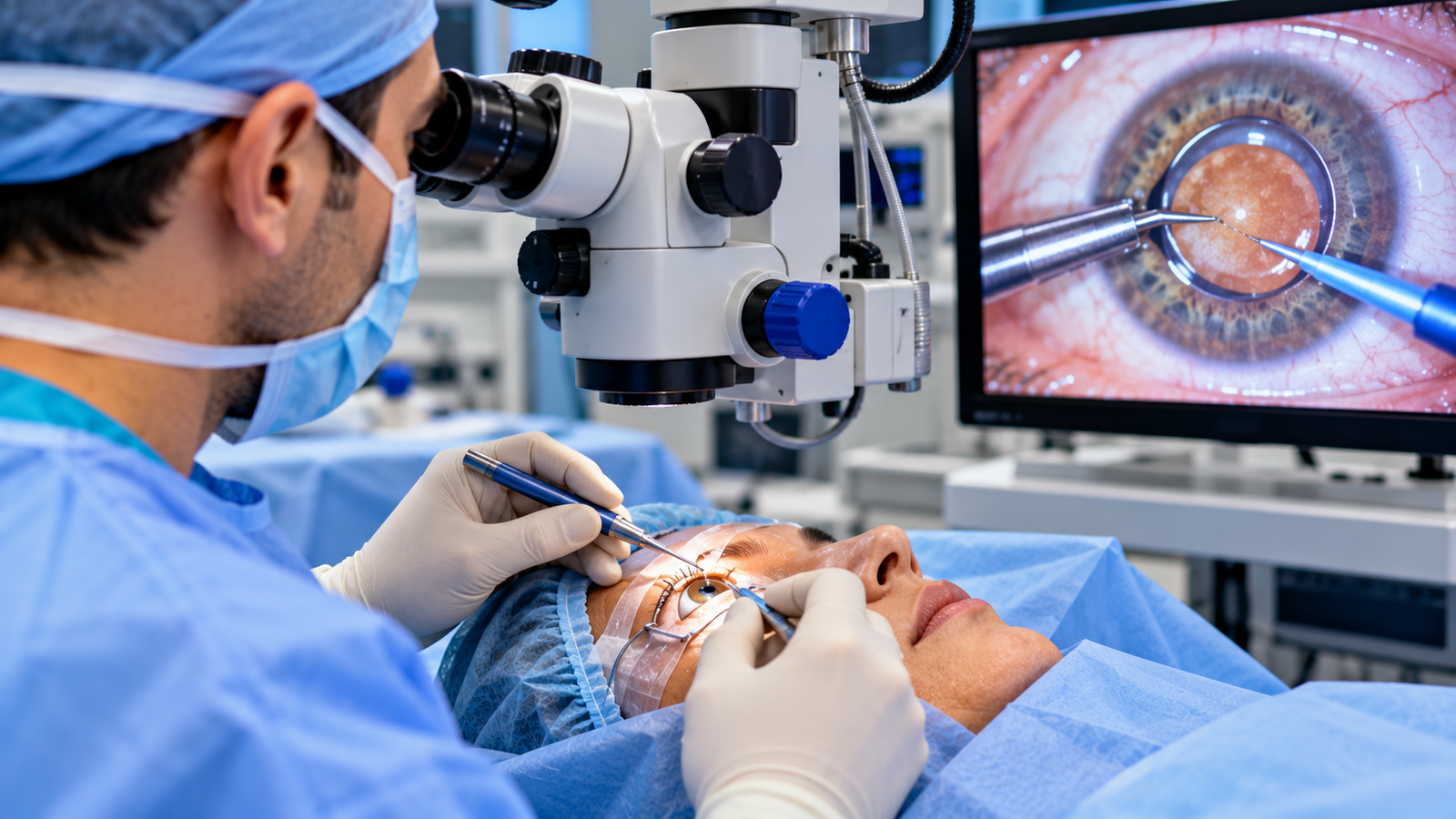
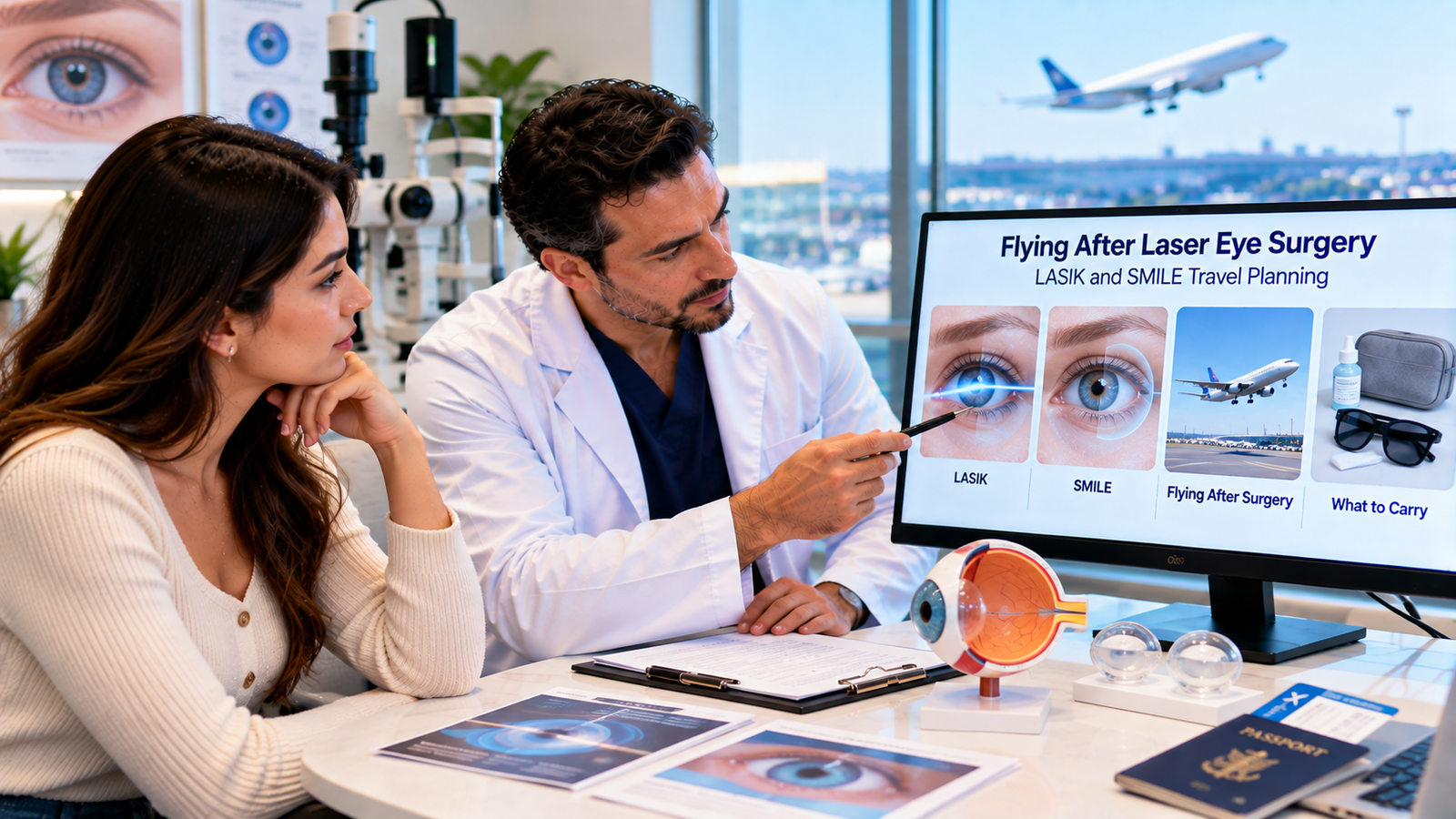
Flying after laser eye surgery is often possible relatively soon after an uncomplicated procedure, but the flight date should be planned around your early eye review rather than around cabin pressure alone. Cleveland Clinic states that flying after LASIK is considered safe, while noting that the eyes may be drier than normal and may need frequent artificial tears. The American Academy of Ophthalmology also identifies dry eye as a common issue after LASIK. Start with our LASIK page and ask the treating ophthalmologist when your first postoperative check must happen before you book the return flight.
Can You Fly After LASIK?
For an uncomplicated LASIK case, flying itself is not usually prohibited because of aircraft cabin pressure. The main practical concerns are early postoperative review, dry cabin air, eye-drop timing, visual fluctuation and access to the treating clinic if a problem appears.
Your surgeon should still confirm fitness to travel because an individual complication, significant pain, corneal-surface problem or abnormal examination can change the plan.
How Soon Can You Fly After LASIK?
There is no universal number of hours or days that applies to every patient. Many refractive-surgery pathways include an early check around the first postoperative day, so the return flight should not prevent that planned review.
If the surgeon is satisfied at the early examination, flying may be reasonable soon afterwards. Do not replace that examination with a generic online timeline.
Why Flying Can Make Dry Eye Feel Worse
Aircraft cabins are dry environments. LASIK can temporarily reduce corneal sensation and tear-film stability, so dryness, burning, grittiness and fluctuating vision can be more noticeable during a flight.
Use the lubricating drops approved by your surgeon, follow the prescribed medication schedule and avoid rubbing your eyes.
What About SMILE Eye Surgery?
SMILE reshapes the cornea through a small incision without creating a LASIK-style flap. Cleveland Clinic notes that many people return to routine activity within one or two days, while recovery guidance still emphasises rest, eye drops, avoiding eye rubbing and following the surgeon’s instructions.
There is no reason to assume that SMILE automatically makes every patient fit to fly immediately. The first review, vision quality, surface comfort and any complication still matter.
Flying After SMILE vs Flying After LASIK
The practical travel issues overlap: confirm the early review, carry prescribed drops, protect the eyes from rubbing and dryness, and know who to contact after landing.
SMILE does not create a corneal flap and may cause less dry-eye disturbance in some patients, but that does not remove the need for postoperative assessment.
Do Not Fly If Your Eye Has Not Been Properly Reviewed
If the surgeon expected to see you before travel, do not skip that appointment only to catch a flight. Early review can identify problems with the corneal surface, inflammation, infection, flap position after LASIK or other unexpected findings.
A short hotel stay can be less important than completing the clinical review that your surgeon considers necessary.
What Should You Carry On The Plane?
- All prescribed postoperative eye drops in hand luggage.
- Approved preservative-free lubricating drops if recommended.
- Protective glasses or sunglasses.
- Your procedure record and clinic contact details.
- Instructions showing when each medication is due.
- A plan for urgent eye care at your destination.
Can You Sleep On The Flight?
You may sleep if your surgeon has not told you otherwise, but avoid rubbing or pressing on the eyes. If eye shields were prescribed for sleep, ask whether you should use them during the flight.
Set reminders for any eye drops that are due while you are travelling.
What Symptoms Should Delay Travel Or Trigger Urgent Review?
Severe eye pain, sudden loss of vision, rapidly worsening redness, significant discharge, marked light sensitivity or a sudden major change in vision should be assessed urgently.
Do not board a flight simply because the ticket is booked if your surgeon has asked to examine an unexpected symptom first.
How Turkelite Medcare Coordinates Eye-Surgery Travel
Turkelite Medcare is a patient coordination service, not the treating eye clinic. We do not decide when an eye is fit to fly or change postoperative medication.
Our role is to organise provider questions, appointment timing, travel, records and the return-home handover around the plan confirmed by the treating ophthalmologist. See patient services.
Questions To Ask Before Booking Your Flight Home
- When is my first postoperative eye examination?
- Must that review happen before I fly?
- Are my eyes healing normally enough for air travel?
- Which drops must I carry and how often should I use them?
- Should I use eye shields while sleeping?
- What symptoms mean I should not fly?
- Who do I contact after I return home?
- When is my next scheduled eye review?
Frequently Asked Questions
Can I Fly The Day After LASIK?
It may be possible after an uncomplicated procedure if your early review is satisfactory and your surgeon agrees. Do not skip a required first-day examination.
Does Cabin Pressure Damage LASIK?
Cabin pressure is not usually the main concern after uncomplicated LASIK. Dryness, early healing and access to review are more practical issues.
How Soon Can I Fly After SMILE?
Timing is individual. Many people recover quickly, but the surgeon should confirm that your early examination and eye condition support travel.
Why Do My Eyes Feel Drier On A Plane?
Cabin air is dry, and laser eye surgery can temporarily worsen tear-film symptoms, so lubrication may be needed more often.
Plan The Flight Around The Eye Review
For most uncomplicated laser vision correction, the key question is not simply “how many hours after surgery?” It is whether the eye has had the required early review, is healing as expected and has a clear medication and follow-up plan for travel.
Sources and further reading
- FDA: LASIK
- FDA: LASIK risks and choosing a doctor
- Republic of Türkiye Ministry of Health: International health tourism regulation
These sources support general patient information. Individual medical recommendations must come from the treating clinician.
View the related treatment area
This content is for general information and does not replace individual medical advice, diagnosis or treatment. Discuss treatment suitability, risks and recovery with a qualified healthcare professional.