Quick answer
Invisalign in Turkey vs UK: Follow-Up for Clear Aligners Abroad: the right answer depends on diagnosis, the actual treatment plan and individual risk factors. Use this article to prepare for consultation, then have the treating clinic confirm timing, medicines, suitability and travel planning for your case.
- Do not confirm treatment before adequate clinical assessment.
- Get scope, risks, aftercare and return-travel criteria in writing.
- For care in Turkey, verify the authorised facility and responsible clinician.
Invisalign in Turkey vs UK is not mainly a question of whether aligners move teeth differently in one country. The underlying orthodontic principles are the same: diagnosis, digital planning, tooth movement, attachments or enamel reduction when needed, repeated monitoring, refinements and retention. The biggest practical difference for an international patient is continuity of care. British Orthodontic Society guidance says clear-aligner treatment should be actively monitored by a named orthodontist or suitably trained dentist, remotely or face to face, with direct contact and in-person appointments available when required. Start with our Orthodontics & Aligners page and build the follow-up plan before deciding where treatment starts.
What Is The Same In Turkey And The UK?
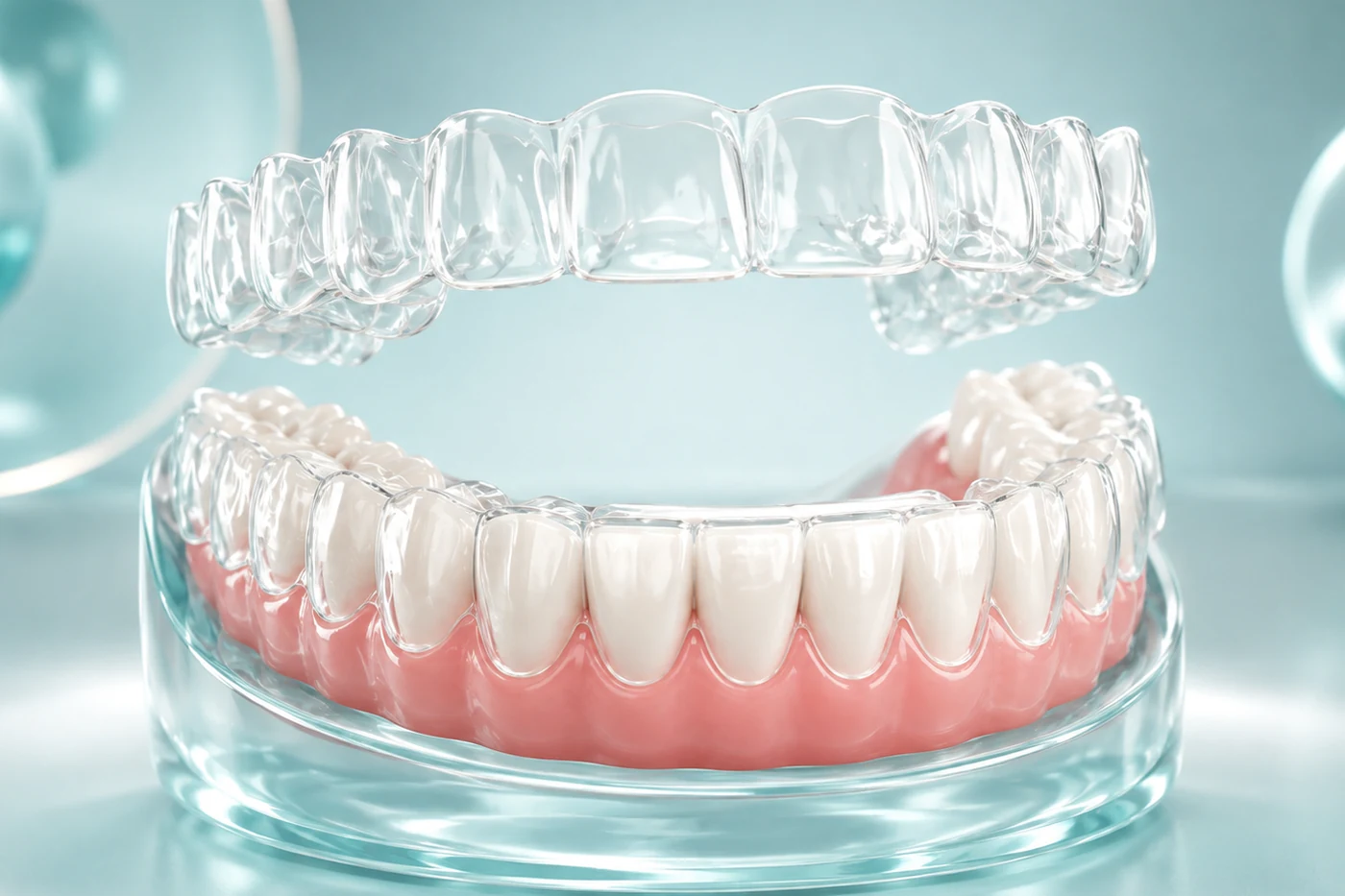
Clear aligners are orthodontic appliances that move teeth through a planned sequence. A proper case still needs diagnosis, clinical examination, appropriate records, treatment planning and ongoing professional supervision.
Starting abroad does not remove the need for monitoring. It only changes where the clinician is located and how in-person reviews, remote checks and unexpected problems are handled.
What Is Different When Treatment Starts Abroad?
If treatment starts in your home country, routine clinical reviews are usually easier to attend. If treatment starts in Turkey and you live in the UK, every planned face-to-face review has a travel consequence unless the treating clinician has a safe remote-monitoring pathway and a clear arrangement for local assessment when needed.
The practical comparison therefore includes continuity, travel frequency, who can examine you locally, how refinements are arranged and what happens if treatment stops tracking.
Clear Aligners Abroad Still Need A Named Treating Clinician
British Orthodontic Society guidance states that direct involvement of an appropriately trained and registered orthodontist or dentist is essential for monitoring clear-aligner care. Patients should know the name of the clinician responsible for treatment and be able to contact that clinician directly.
Ask who owns the orthodontic plan, who approves changes and who reviews scans or photographs after you return home.
How Often Are Aligner Check-Ups Needed?
There is no single universal interval. The schedule depends on case complexity, type of tooth movement, attachments, enamel reduction, tracking, oral health and the clinician’s protocol.
Official Invisalign patient information describes regular in-person check-ups during treatment, while remote-care tools can be used between office visits when the treating provider participates.
Can Remote Monitoring Replace All In-Person Visits?
Not reliably. Remote monitoring can reduce some appointment burden, but it should be integrated into standard orthodontic care rather than treated as a substitute for every clinical examination.
A systematic review found that adding remote dental monitoring reduced in-office visits by approximately 1.68 to 3.5 visits and might improve aligner fit, but the evidence was generally low quality and did not show a clear reduction in treatment duration or emergency appointments.
What Can Be Checked Remotely?
Photographs and remote platforms can help the clinician review visible aligner fit, attachment presence, oral hygiene concerns and whether planned tooth movement appears to be progressing.
They cannot replace every task that requires hands-on examination, new imaging, attachment placement, enamel reduction, repair, periodontal assessment or a physical bite check.
What Happens If An Aligner Stops Fitting?
Poor tracking can mean a tooth is not moving as planned, an attachment has been lost, wear has been inconsistent or the planned movement needs reassessment. The clinician may tell you to stay in the current aligner, return to an earlier stage, use additional aids or attend for a new scan and refinement.
If you live abroad, the written plan should explain which of those steps require travel and whether a suitable local clinician can help with urgent physical problems.
Attachments And Enamel Reduction Can Require Face-To-Face Care
Many aligner plans use small bonded attachments to guide tooth movement. Some plans also use controlled enamel reduction between teeth to create space.
These steps need accurate clinical execution. Ask whether all attachments and planned enamel reduction are completed during the initial trip or whether later stages could require another in-person appointment.
Refinements Can Change The Travel Plan
Aligner treatment does not always finish with the first series of trays. Additional scans and refinement aligners may be needed when movements are incomplete or finishing changes are required.
A 2026 systematic review found refinement is influenced by case complexity and specific tooth movements; remote monitoring may reduce appointment burden but did not consistently reduce the need for refinement.
Invisalign In Turkey vs UK: Regulation Is Different
In the UK, dental professionals must be registered with the General Dental Council to practise. Treatment in Turkey is governed by the Turkish system, and the Turkish Ministry of Health publishes lists of healthcare providers authorised for international health tourism.
These are different regulatory frameworks. Before treatment abroad, verify the legal identity of the provider, the named treating clinician and any relevant authorisation rather than assuming UK registration applies overseas.
What If You Need Urgent Care In The UK?
A local UK dentist or orthodontist may be able to assess pain, broken attachments, gum problems or another urgent issue, but they are not automatically responsible for continuing another clinician’s full orthodontic plan.
Ask before travel whether the Turkish treating clinician will communicate with a local professional if needed and what records will be provided for that handover.
What Records Should You Bring Home?
- Your diagnosis and written orthodontic treatment plan.
- Digital scan or model information where available.
- Details of attachments and any enamel reduction completed.
- The aligner sequence and instructions for changing trays.
- Contact details for the named treating clinician.
- Instructions for poor tracking, lost aligners or lost attachments.
- The planned review and refinement pathway.
- The retention plan after active treatment.
Clear Aligners Abroad: Questions To Ask Before Starting
- Who is the named clinician responsible for my orthodontic treatment?
- How was my diagnosis confirmed before the aligners were prescribed?
- How often are face-to-face reviews planned?
- Which checks can be performed remotely?
- What requires me to return to Turkey?
- Who deals with a lost attachment or an aligner that no longer fits?
- How are refinement scans and extra aligners handled?
- Can the treating clinician communicate with a UK dentist or orthodontist if needed?
- What happens if I cannot travel at the planned time?
- Who provides retention and long-term follow-up after active treatment?
How Turkelite Medcare Coordinates An International Aligner Pathway
Turkelite Medcare is a patient coordination service, not the treating orthodontic clinic. We do not prescribe aligners, decide tooth movements or determine whether remote monitoring is clinically sufficient.
Our role is to organise provider questions, records, appointment and travel logic, and the return-home handover around the orthodontic plan confirmed by the treating clinician.
Frequently Asked Questions
Is Invisalign In Turkey Different From Invisalign In The UK?
The aligner system may be the same, but regulation, clinician access, travel requirements and follow-up logistics differ. The key issue is continuity of supervised orthodontic care.
Can I Have Clear Aligners In Turkey And Live In The UK?
Potentially, yes, but the treating clinician should define which reviews are remote, which require face-to-face care and what happens if you need an unscheduled examination.
Can Aligner Check-Ups Be Done By Photos?
Some monitoring can be performed remotely with photographs or digital tools, but not every clinical task can be replaced by remote review.
Will I Need To Return To Turkey For Refinements?
Possibly. A new scan, attachments, enamel reduction or another physical procedure may require an in-person visit depending on the treatment plan.
The Real Comparison Is Follow-Up, Not Geography
The safest way to compare clear-aligner treatment in Turkey and the UK is to map who supervises the case, which appointments must be in person, how remote monitoring works, what happens when treatment goes off track and who provides retention after the final aligner.
Sources and further reading
- Guy’s and St Thomas’ NHS: Dental implants
- NHS: Dental treatments
- Republic of Türkiye Ministry of Health: International health tourism regulation
These sources support general patient information. Individual medical recommendations must come from the treating clinician.
View the related treatment area
This content is for general information and does not replace individual medical advice, diagnosis or treatment. Discuss treatment suitability, risks and recovery with a qualified healthcare professional.