Quick answer
Skin Removal After Weight Loss in Turkey: Body Lift Guide: the right answer depends on diagnosis, the actual treatment plan and individual risk factors. Use this article to prepare for consultation, then have the treating clinic confirm timing, medicines, suitability and travel planning for your case.
- Do not confirm treatment before adequate clinical assessment.
- Get scope, risks, aftercare and return-travel criteria in writing.
- For care in Turkey, verify the authorised facility and responsible clinician.
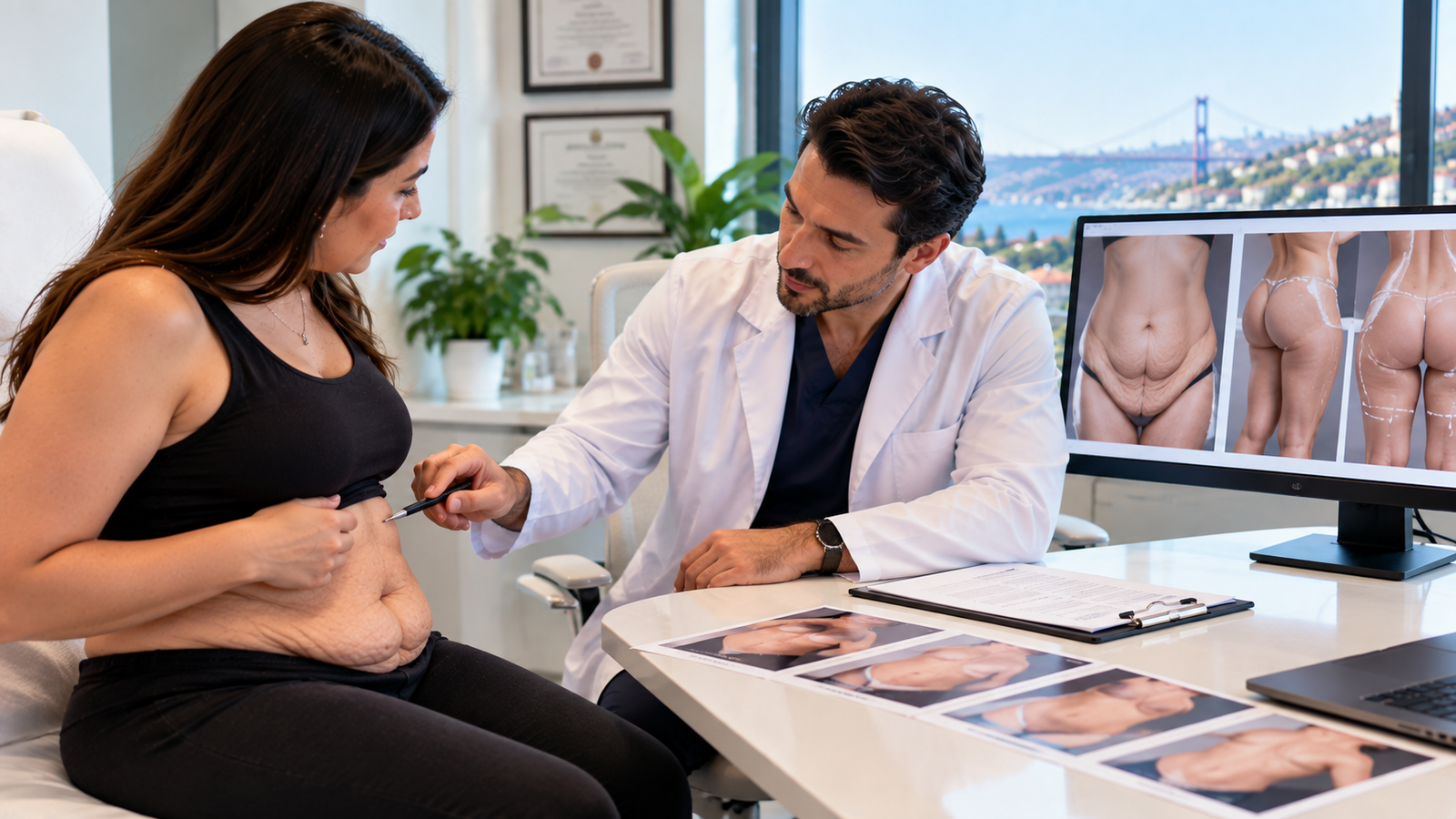
Skin removal after weight loss in Turkey is body-contouring surgery for excess skin and soft tissue that remain after substantial weight reduction. The operation is not a way to lose the weight itself. The American Society of Plastic Surgeons describes a lower body lift as treatment for sagging tissue around the abdomen, buttocks, groin and outer thighs, usually through extensive scars planned around the lower trunk. After major weight loss, the safest plan depends on stable weight, nutrition, smoking status, medical conditions, scar tolerance and which body areas need treatment. Start with the Turkelite treatment library and let the plastic surgeon define the exact body-contouring procedure before travel is booked.
Why Loose Skin Can Remain After Major Weight Loss
Skin and supporting tissues may not contract fully after large weight changes. The amount and location of excess skin vary with age, genetics, starting weight, duration of obesity, pregnancy history, smoking, sun exposure and the speed and amount of weight loss.
Exercise can improve strength and body composition, but it cannot remove a large skin fold. Surgery is considered when excess tissue causes contour concerns, hygiene problems, rubbing, recurrent irritation or functional difficulty.
What A Lower Body Lift Treats
A lower body lift is designed around the lower trunk. Professional plastic-surgery descriptions include the abdomen, waist, buttocks, groin and outer thighs, with the exact pattern tailored to the patient.
The operation commonly uses a circumferential or near-circumferential incision so that excess skin can be removed and tissues can be reshaped around more than one side of the body.
What Is A 360 Body Lift?
The phrase 360 body lift is commonly used in marketing for a circumferential lower-body procedure that continues around the trunk. In clinical literature, terms such as circumferential lipectomy, belt lipectomy and lower body lift are more established.
“360” is not a separate universal operation with one standard incision or one standard combination of procedures. Ask the surgeon to draw the planned scar and name every area included.
Full Body Lift vs Lower Body Lift
A lower body lift focuses on the lower trunk and related areas. The phrase “full body lift” is less standardised and can be used to describe a broader body-contouring programme involving several regions, such as lower trunk, breasts or chest, arms, back and thighs.
Major-weight-loss body contouring is often performed in stages rather than as one extremely long operation. The surgeon should state which areas are being treated in each stage and why combining or separating them is safer.
Loose Skin Removal After Weight Loss Is Not The Same As Liposuction
Liposuction removes selected deposits of subcutaneous fat but does not remove a large envelope of loose skin. A body lift removes skin and soft tissue and repositions remaining tissues through surgical excision.
Some plans may combine limited liposuction with skin excision, but liposuction alone cannot correct substantial skin laxity after major weight loss.
Weight Stability Matters Before Surgery
Plastic-surgery guidance emphasises reaching or approaching the target weight and maintaining a stable weight before major body contouring. Large weight changes after surgery can stretch tissues again or change the result.
There is no single universal number of stable months that applies to every patient. The surgeon should consider the weight-loss method, current trend, nutrition, bariatric history and whether the patient is still actively losing weight.
Nutrition Has To Be Assessed After Major Weight Loss
People who have lost substantial weight, particularly after bariatric surgery, can have protein, iron, vitamin and other nutritional deficiencies. These problems matter because body-lift surgery creates long incisions that need reliable wound healing.
Pre-operative assessment may include dietary review and blood tests, with important deficiencies corrected before elective surgery. The surgeon and nutrition team should decide what needs testing for the individual patient.
Smoking And Nicotine Increase Wound Risk
Nicotine exposure can impair blood flow and wound healing. Plastic-surgery guidance links smoking with higher risks of wound problems, tissue loss and other postoperative complications.
Tell the surgeon about cigarettes, vaping and nicotine products. Follow the treating team’s required nicotine-free period and testing policy rather than assuming that reducing use is enough.
Scars Are A Central Part Of The Trade-Off
A lower body lift achieves skin removal by exchanging loose tissue for long scars. A circumferential operation may leave a scar that extends around much of the lower trunk.
Scar position can often be planned around clothing lines, but scars cannot be made invisible. Ask where the scar is expected to sit while standing, sitting and wearing normal underwear or swimwear.
What Happens During The Operation?
The surgeon marks the areas of excess tissue, removes planned skin and soft tissue, reshapes or elevates tissues where appropriate and closes the incisions in layers. Drains may be used depending on technique and surgeon preference.
The exact operation can vary substantially between patients. The written plan should state the areas treated, whether liposuction is included, the anticipated scar pattern, anaesthesia setting and whether the procedure is one stage of a larger reconstruction.
Why Some Patients Need Staged Surgery
Treating the abdomen, lower back, thighs, breasts or chest and arms in one session can make an operation very long and physiologically demanding. Staging can limit operative time and allow recovery before the next area is treated.
The sequence should be based on medical risk, the patient’s priorities, scar planning and how one operation may affect the next.
Common Risks To Discuss
- Bleeding or haematoma.
- Infection.
- Delayed wound healing or wound separation.
- Seroma or fluid collection.
- Unfavourable or widened scars.
- Numbness or altered sensation.
- Contour asymmetry or residual loose skin.
- Blood clots and pulmonary complications.
- Need for revision surgery.
Recovery Requires More Than Waiting For The Scar To Close
Early recovery includes wound care, mobility, pain control, swelling management and prevention of blood clots. Activity is gradually increased according to the surgeon’s instructions.
Return to work, exercise and travel depends on the extent of surgery, wound healing, mobility, medicines and whether another procedure was combined. A generic calendar should not replace surgeon-specific clearance.
How Long Should You Stay In Turkey?
There is no universal stay length for body-lift surgery. A circumferential procedure can require early postoperative reviews, drain management when drains are used and confirmation that wounds and mobility are suitable for travel.
Book return travel around the treating surgeon’s review schedule rather than choosing the shortest package. Complications can extend the stay or require local treatment.
What Should Be Stable Before You Travel For Surgery?
- My weight trend and target-weight plan.
- My nutrition and relevant blood results.
- My smoking or nicotine status.
- My medication and blood-clot risk review.
- The exact body areas planned for treatment.
- The scar pattern and whether surgery is circumferential.
- Whether procedures are combined or staged.
- The expected drain and wound-care plan.
- The early review schedule before flying home.
- The route for urgent clinical review after I return.
How Turkelite Medcare Coordinates Post-Weight-Loss Body Contouring
Turkelite Medcare is a patient coordination service, not the treating plastic-surgery clinic. We do not decide how much skin should be removed, which operations should be combined or when a patient is medically ready for surgery.
Our role is to organise records, provider questions, appointments, travel and the return-home handover around the surgical plan confirmed by the independent treating team. See patient services.
Frequently Asked Questions
What Is The Difference Between A Lower Body Lift And A 360 Body Lift?
The terms can overlap. “360 body lift” is commonly used for a circumferential lower-body operation, while lower body lift is the established clinical term for reshaping excess tissue around the lower trunk and related areas.
Is A Full Body Lift One Operation?
Not necessarily. “Full body lift” is not one standardised procedure and may describe a staged programme treating several body regions.
Do I Need To Reach My Goal Weight First?
Plastic-surgery guidance generally favours being at or near a sustainable target weight with a stable trend before major body contouring. The surgeon decides readiness for the individual patient.
Can Liposuction Remove Loose Skin After Weight Loss?
No. Liposuction removes fat rather than a large envelope of excess skin. Significant loose skin usually requires an excisional body-contouring procedure if surgery is appropriate.
Plan The Areas, Scars And Stages Before You Plan The Trip
Post-weight-loss skin removal is not one standard package. The useful plan identifies the exact areas, confirms weight and nutritional readiness, explains the scar trade-off, decides whether surgery should be staged and builds travel around safe postoperative review.
Sources and further reading
- NHS: Before you have a cosmetic procedure
- NHS: Choosing who will do your cosmetic procedure
- Republic of Türkiye Ministry of Health: International health tourism regulation
These sources support general patient information. Individual medical recommendations must come from the treating clinician.
View the related treatment area
This content is for general information and does not replace individual medical advice, diagnosis or treatment. Discuss treatment suitability, risks and recovery with a qualified healthcare professional.