Quick answer
Is It Worth Going to Turkey for a Hair Transplant?: the right answer depends on diagnosis, the actual treatment plan and individual risk factors. Use this article to prepare for consultation, then have the treating clinic confirm timing, medicines, suitability and travel planning for your case.
- Do not confirm treatment before adequate clinical assessment.
- Get scope, risks, aftercare and return-travel criteria in writing.
- For care in Turkey, verify the authorised facility and responsible clinician.
If you are asking is it worth going to Turkey for a hair transplant, the useful answer is not a blanket yes or no. Hair transplantation can produce natural-looking, long-lasting improvement in suitable patients, but the value of travelling to Turkey depends on diagnosis, donor capacity, the clinician who performs the key surgical steps, the proposed graft plan, aftercare and what happens if native hair continues to thin. The American Academy of Dermatology notes that successful candidacy requires enough healthy donor hair and the ability to grow transplanted hair in the recipient area. It also states that results depend heavily on the surgeon selected. Start with our Hair Restoration pathway and evaluate the provider before comparing travel packages.
Does A Hair Transplant In Turkey Work?
The country does not determine whether transplanted follicles can grow. The biological principles are the same: suitable follicles are moved from a donor area to a planned recipient area, and the result depends on diagnosis, donor quality, graft handling, placement, healing and future hair loss.
The American Academy of Dermatology describes modern hair transplantation as capable of producing permanent, natural-looking results in appropriate patients. It also warns that a completely full head of hair may be unrealistic and that a fuller appearance is often the more realistic goal.
A clinic therefore should not sell success as a property of Turkey itself. It should explain why your scalp and donor area are suitable.
The Surgeon And Team Matter More Than The Destination
The International Society of Hair Restoration Surgery has repeatedly warned about clinics in which unlicensed technicians perform medical parts of hair-transplant surgery. It considers diagnosis, treatment planning, donor harvesting, hairline design, recipient-site creation and postoperative medical care to be physician responsibilities.
Before booking, ask who personally examines you, who designs the hairline, who performs donor extraction, who creates or controls recipient sites and who manages complications. A famous clinic brand is not enough if the responsible clinician is unclear.
Donor Hair Is A Limited Resource
A transplant redistributes hair; it does not create new follicles. Published research on donor supply shows that the number of likely permanent follicular units is finite and varies substantially with donor density and the degree of future hair loss.
This is why a very high graft offer is not automatically better value. Overharvesting can leave visible thinning in the donor area and reduce options for future procedures.
Ask the clinic to measure donor density, hair calibre and miniaturisation before proposing a graft number.
Future Hair Loss Can Change A Good Early Result
Transplanted follicles may remain, but native hair around them can continue to thin. A hairline that looks dense at one year can look isolated later if future loss was not considered in the original design.
The American Academy of Dermatology notes that medical treatment may be discussed to slow ongoing hair loss. Medication is not suitable for everyone, so the treating clinician should review benefits, risks and contraindications.
A long-term plan should preserve donor hair for possible future loss instead of using the entire reserve in the first procedure.
What A Good Result Actually Means
A good transplant is not only about graft survival. Natural direction, angle, hairline shape, density distribution, donor appearance and harmony with future hair loss all matter.
Ask for examples from patients with a similar hair-loss pattern, donor quality, hair calibre and skin-to-hair contrast. Before-and-after photographs should include a meaningful follow-up period rather than only early postoperative images.
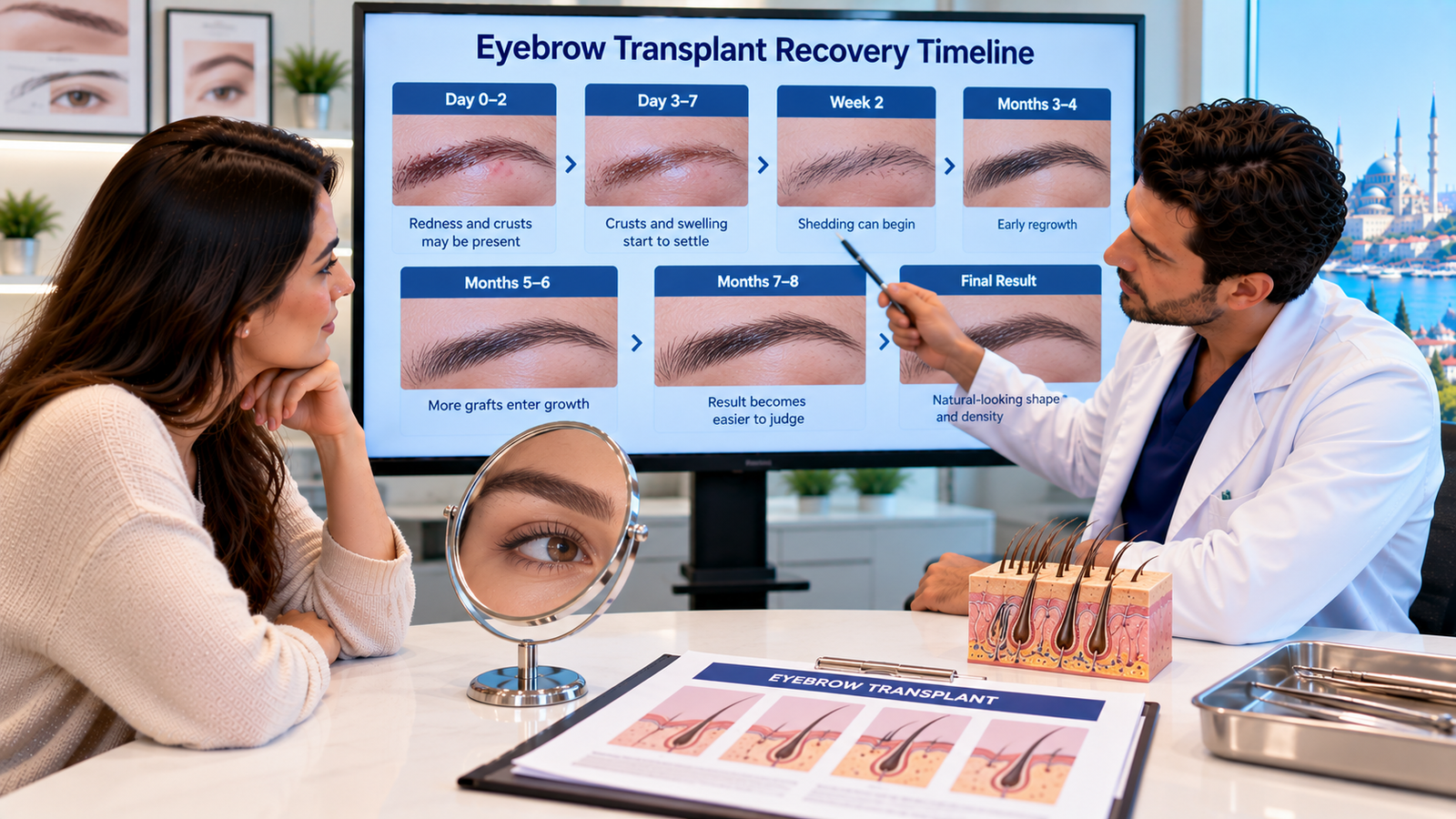
Results usually develop gradually. The American Academy of Dermatology notes that visible results are often seen around six to nine months and can take about twelve months in some patients.
Turkey Can Offer Convenience, But Convenience Is Not A Clinical Standard
Turkey has a large medical-tourism market for hair transplantation, and many clinics organise treatment, hotel and transfers in one package. This can simplify logistics for international patients.
However, a package should not decide the medical plan. The clinic should first confirm diagnosis, candidacy, clinician responsibility, graft strategy and aftercare. Travel services come after those decisions.
Do not treat airport transfer, hotel quality or a low headline price as evidence of surgical quality.
Price Should Be Compared With The Full Scope
A lower price can be attractive, but two quotations may include very different clinical involvement. Ask whether the quote includes the named doctor, diagnostic assessment, medication, postoperative reviews, written records, revision terms and follow-up after you return home.
Also consider the financial effect of a complication, corrective procedure or second trip. The cheapest first procedure can become expensive if donor damage or unnatural placement later needs repair.
Medical Tourism Adds A Follow-Up Problem
After returning home, you may be hundreds or thousands of kilometres from the operating team. Ask who reviews photographs, who answers urgent clinical questions and what symptoms require a local doctor rather than remote messaging.
The International Society of Hair Restoration Surgery's medical-tourism warnings are especially relevant when patients cannot identify the physician responsible for postoperative care.
A reputable plan should make follow-up clear before you travel.
Red Flags That Reduce The Value Of Any Package
- No named physician is confirmed before payment.
- The clinic cannot explain your diagnosis.
- A graft number is promised from photographs without donor assessment.
- The same maximum graft count is marketed to almost every patient.
- Technicians perform medical steps without clear licensed-physician responsibility.
- The clinic promises guaranteed density or a completely full head of hair.
- Future hair loss and donor reserve are not discussed.
- Revision and complication policies are vague.
- No clear clinical contact exists after you return home.
Questions To Ask Before Deciding Whether Turkey Is Worth It
- What is my exact diagnosis?
- Am I a suitable candidate now, or should treatment be delayed?
- How strong is my donor area and how much reserve should remain?
- Who performs each key surgical step?
- Why is this graft number appropriate for my recipient area?
- How is the hairline designed for future hair loss?
- What result is realistic at six, nine and twelve months?
- What is included in the written price?
- Who manages complications and follow-up after I return?
- What happens if I need another procedure later?
How Turkelite Medcare Coordinates The Decision
Turkelite Medcare is a patient coordination service, not the treating hair-transplant clinic. We do not diagnose hair loss, choose a technique, design a hairline or decide how many grafts should be extracted.
Once an independent provider confirms the clinical plan, Turkelite can coordinate provider communication, appointments, flights, accommodation, transfers, records and the return-home handover.
The patient services page explains that division of responsibility.
Frequently Asked Questions
Is A Hair Transplant In Turkey Worth It?
It can be worthwhile for a suitable patient when the responsible clinician, donor plan, technique, aftercare and total travel pathway are strong. It is not worthwhile simply because the procedure is cheaper or because the clinic is in Turkey.
Does A Hair Transplant In Turkey Work?
Hair transplantation can work in Turkey just as it can elsewhere when diagnosis, donor selection, surgery and follow-up are appropriate. Country alone does not determine graft growth or naturalness.
How Long Until I See The Result?
Visible improvement often develops around six to nine months, while some patients need about twelve months before the result can be judged more fully.
Is More Grafts Always Better?
No. Donor hair is finite. The graft count should match the area, target density, donor capacity and future hair-loss plan rather than the largest number a clinic can advertise.
What Is The Biggest Risk Of Choosing By Price Alone?
Price-only decisions can hide unclear clinician responsibility, overharvesting, poor hairline planning or weak aftercare. Corrective work can be difficult because donor hair that has already been removed cannot simply be replaced.
Judge The Clinic, Not The Country
The most useful question is not whether Turkey is universally “worth it,” but whether the specific medical plan remains sensible after the package marketing is removed. Verify diagnosis, donor capacity, clinician responsibility, realistic density, future hair loss and follow-up before deciding whether the journey offers value for you.
Sources and further reading
- NHS: Hair transplant
- NHS: Choosing who will do your cosmetic procedure
- Republic of Türkiye Ministry of Health: International health tourism regulation
These sources support general patient information. Individual medical recommendations must come from the treating clinician.
View the related treatment area
This content is for general information and does not replace individual medical advice, diagnosis or treatment. Discuss treatment suitability, risks and recovery with a qualified healthcare professional.