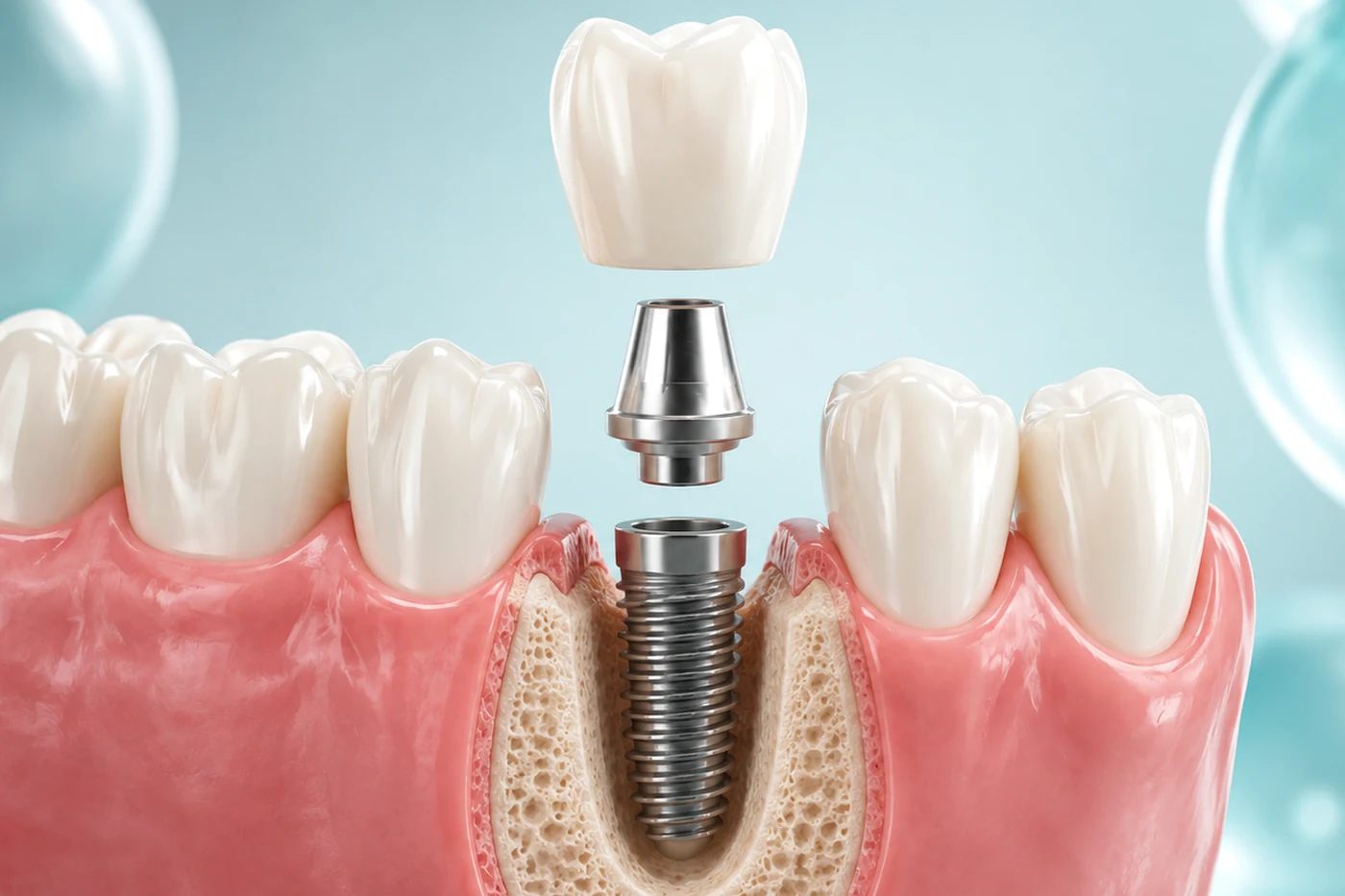
If you are asking is it worth going to Turkey for dental implants, there is no responsible yes-or-no answer based on country or headline price alone. Dental implants can perform well over the long term when diagnosis, surgery, restoration and maintenance are appropriate, but they also create lifelong maintenance needs and can develop biological or mechanical complications. A recent systematic review estimated 10-year survival of contemporary tooth implants at about 96.4%, with a sensitivity analysis around 93.2%; these population estimates are not a guarantee for an individual patient, and implant survival is not the same as keeping the original crown or bridge unchanged for life. The better decision is to compare the full clinical pathway: gum and bone health, clinician qualifications, implant system, number of visits, total travel cost, complication plan and local aftercare. Start with our Dental Implants page, then decide whether the complete plan works for you.
Start With The Diagnosis, Not The Package Price
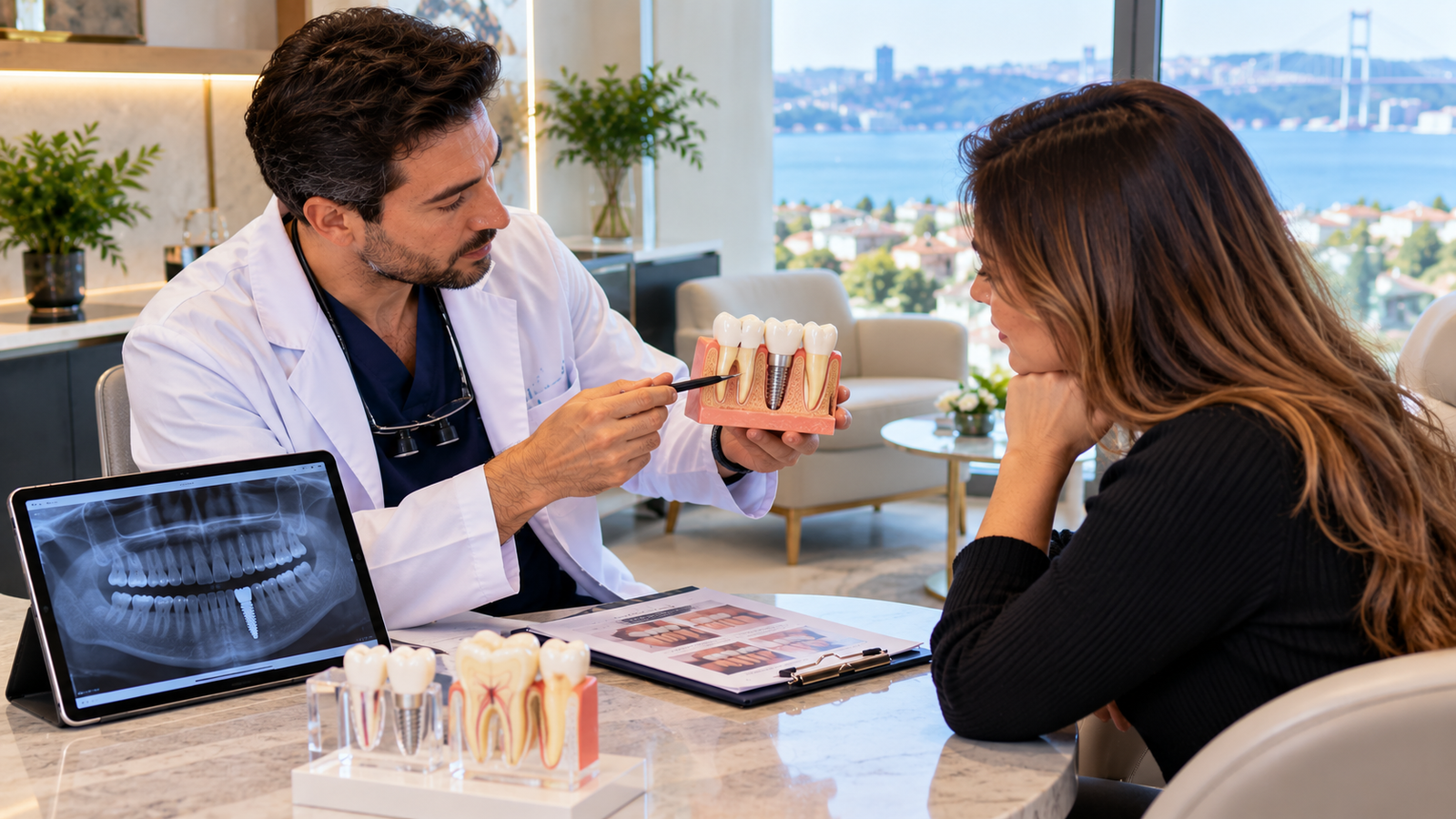
An implant is not simply a replacement screw for a missing tooth. Planning may require examination, radiographs or three-dimensional imaging, assessment of bone volume, gum health, bite, neighbouring teeth, smoking, diabetes and previous periodontal disease.
European periodontal guidance emphasises controlling active periodontal disease and addressing modifiable risks before implant placement. A low quote has little value if infection, unstable gum disease or inadequate bone has not been assessed correctly.
Ask the treating dentist to explain why an implant is recommended, what alternatives exist and what conditions must be treated first.
Implant Survival Is Not The Same As A Lifetime Guarantee
Long-term implant studies are encouraging, but statistics need careful interpretation. The recent systematic review of contemporary implants estimated 10-year implant survival around 96.4%, while a more conservative sensitivity model was around 93.2%.
Survival means the implant remains in place. It does not mean that every crown, screw, abutment or prosthesis remains unchanged or complication-free. Older long-term studies of single implants also show that the implant itself can survive while the original crown sometimes needs repair or replacement.
When comparing clinics, ask for long-term maintenance expectations rather than a simple promise that implants “last for life.”
Provider Quality Matters More Than The Country Name
Good and poor dental care can exist in many countries. The useful comparison is between specific clinicians, clinics, laboratories and aftercare systems, not between national labels.
The UK General Dental Council advises patients considering treatment abroad to check the dentist's qualifications, professional regulation, experience, complication and infection information, aftercare arrangements and what happens if further treatment is needed.
Ask who performs the implant surgery, who designs the final restoration and whether the same clinician or team remains responsible throughout the case.
Know The Exact Implant System Being Used
Implants are medical devices with specific manufacturers, connections and components. Future dentists may need compatible parts to remove, repair or replace a crown or abutment.
Before treatment, ask for the implant manufacturer, system, dimensions where relevant and a written implant record after surgery. Keep labels, implant cards, radiographs and restorative information.
A future dentist can still assess an unknown implant, but maintenance becomes easier when the system is clearly documented and components remain available.
Ask Whether Your Treatment Needs One Trip Or Several
Some implant cases can progress quickly, while others require extraction healing, bone grafting, sinus augmentation, implant integration or staged restorative work. The correct number of visits depends on biology and the treatment plan.
Do not choose a clinic simply because it promises to complete a complex case in one short trip. Ask what clinical findings would require a second visit, longer healing or a change from immediate to delayed loading.
Flights and hotel nights should follow the dental plan, not force the dentist to compress healing into a package schedule.
Immediate Teeth Are Not Suitable For Every Implant Case
Some implants can receive an immediate temporary restoration when primary stability, bone conditions, bite and other factors are suitable. Other cases need a healing period before loading.
Ask whether “same-day teeth” means a temporary restoration or the definitive final prosthesis, what criteria must be met on the day of surgery and what happens if implant stability is lower than expected.
A responsible plan should allow the clinician to change to delayed loading when that is safer.
Bone Grafting Can Change The Real Cost And Timeline
Insufficient bone may require grafting before or during implant placement. Upper back teeth may also need sinus augmentation in selected cases.
Ask whether the quote includes graft material, membranes, sinus procedures, additional imaging, sedation, medicines and follow-up. If these are only added after arrival, the headline price may not represent the real cost.
Get a provisional written plan that shows which costs are confirmed and which depend on clinical findings.
Compare Total Cost, Not Just The Implant Fee
The real cost of dental treatment abroad can include consultation, imaging, surgery, temporary teeth, final restorations, grafting, medicines, flights, hotels, transfers, time away from work and a possible second trip.
Also consider the cost of maintenance and what happens if you need a local dentist to investigate pain or repair a restoration after returning home.
A treatment can be financially attractive only if the scope is comparable. Compare like with like: implant fixture, abutment, crown, grafting, reviews and aftercare should be listed separately.
Cheap Treatment Can Become Expensive If Aftercare Is Unclear
The General Dental Council specifically recommends asking what aftercare is included, what guarantees apply and who pays for further treatment, flights or accommodation if something goes wrong.
A clinic may replace a component under warranty but require you to pay to return to Turkey. Another may exclude problems treated by an outside dentist. Read the terms before treatment rather than relying on the word “guarantee.”
Ask who you contact after returning home, how quickly clinical questions are answered and when a problem requires an in-person dentist.
Gum Health Determines Long-Term Implant Risk
Peri-implant disease can affect the tissues and bone around implants. European periodontal guidance identifies previous periodontitis, poor plaque control and smoking among important factors to assess and manage.
Implant treatment does not remove the need for periodontal care. If you had gum disease before treatment, long-term supportive care is especially important.
Ask the clinic to record periodontal findings before surgery and explain the hygiene and maintenance programme after the final restoration is fitted.
Smoking And Diabetes Need Honest Risk Discussion
Smoking and poorly controlled diabetes can affect healing and long-term peri-implant health. They do not create the same risk in every person, but they should be assessed rather than ignored in a sales consultation.
Tell the clinician your smoking history, diabetes status, medicines and relevant medical conditions. Ask whether treatment should be delayed while a modifiable risk is improved.
Do not hide medical information to keep a package date.
Full-Mouth Treatment Needs More Planning Than A Single Implant
Replacing one missing tooth is very different from rebuilding an entire arch. Full-arch treatment must consider jaw relationship, bite force, prosthesis design, hygiene access, number and position of implants and what happens if one component develops a problem.
Ask whether the proposed teeth are fixed or removable by the dentist, what materials are used, how the prosthesis is cleaned and what maintenance components may need replacement.
The larger the reconstruction, the more important records and long-term follow-up become.
Do Not Sacrifice Restorable Teeth Without A Clear Reason
Some patients travel expecting implants but still have teeth that may be treatable. Extraction is irreversible. Ask why each tooth is considered hopeless and what alternatives were considered.
When many teeth are being removed, consider obtaining an independent second opinion before travel or before irreversible treatment begins.
The decision should be based on prognosis and health, not on making the treatment fit a standard implant package.
Dental Implants Need Lifelong Maintenance
Implants are not maintenance-free. Long-term care includes professional reviews, plaque control, assessment of gum and bone health and maintenance of the crown, bridge or full-arch prosthesis.
European periodontal guidance recommends structured supportive care after implant therapy, particularly for patients with risk factors.
Before travelling, identify who will perform routine maintenance at home and whether that dentist is comfortable caring for the implant system and restoration being proposed.
What Records Should You Bring Home?
- Written diagnosis and final treatment plan.
- Preoperative and postoperative radiographs or scans.
- Implant manufacturer, system and component information.
- Implant positions, dimensions and placement dates.
- Details of graft materials and sinus procedures if used.
- Final crown, bridge or prosthesis material and design.
- Medication and aftercare instructions.
- Clinic guarantee or revision terms.
- Named clinical contact for complications.
- Recommended maintenance and review schedule.
Questions That Help Decide Whether The Trip Is Worth It
- Is the diagnosis complete, including gum and bone health?
- Who is the named implant dentist or surgeon and what is their experience?
- Which implant system and restorative materials will be used?
- How many visits are medically expected?
- What findings could require grafting or delayed loading?
- What is the total cost including travel and possible second visits?
- What aftercare and guarantee are included?
- Who will manage an urgent problem after I return home?
- Who will provide routine implant maintenance locally?
- What happens financially if the plan changes after examination?
When Going Abroad May Be A Poor Fit
International treatment may be a poor fit if you cannot stay long enough for required reviews, cannot return for staged care, have uncontrolled gum disease or medical risks, lack a realistic local aftercare route or would be financially unable to manage a complication.
It may also be unsuitable if the plan depends on removing many restorable teeth without a convincing clinical explanation or if the provider will not supply implant records.
The decision should remain reversible until you have enough information to understand both the treatment and the follow-up burden.
How Turkelite Medcare Helps With The Decision Process
Turkelite Medcare is a patient coordination service, not the treating dental clinic. We do not decide that implants are the best option, diagnose bone or gum conditions or guarantee a treatment result.
Our role is to organise provider communication, requested records, appointments, travel, accommodation and the return-home handover around the treatment plan confirmed by the independent dental provider.
The patient services page explains this coordination role.
Frequently Asked Questions
Is It Worth Going To Turkey For Dental Implants?
It can make sense for some patients and not for others. Compare the specific provider, diagnosis, implant system, total cost, number of visits, complication plan and long-term maintenance rather than making the decision from country or headline price alone.
Do Dental Implants From Turkey Last?
Implant longevity depends on biology, planning, surgery, restoration and maintenance rather than the country name. A recent systematic review estimated about 96.4% 10-year survival for contemporary implants, with a sensitivity estimate around 93.2%, but individual results vary and prosthetic components may still need maintenance or replacement.
Is It Worth Going To Turkey For Teeth In General?
That depends on the exact dental work. A crown, veneer, implant and full-mouth reconstruction have different risks, timelines and aftercare needs. Evaluate each proposed procedure on its clinical indication and total treatment pathway.
How Many Trips Might Dental Implants Require?
Some cases can be completed quickly, while others require staged healing, grafting or a later final restoration. Ask the treating dentist how many visits your case is expected to need and what findings could add another trip.
What Is The Biggest Aftercare Issue With Implants Abroad?
The main planning issue is continuity: know who manages pain or complications after you return, who performs routine maintenance, whether compatible implant components are available and what the overseas clinic's guarantee actually covers.
Should I Get A Second Opinion Before Full-Mouth Implant Treatment?
A second opinion is especially useful when many teeth are planned for extraction, extensive grafting is proposed or you are moving from treatable natural teeth to a full-arch implant reconstruction. Extraction is irreversible, so the prognosis of each tooth should be clear.
Decide On The Whole Pathway, Not The Flight Destination
The value of dental implants in Turkey depends on the quality and completeness of the clinical pathway. A lower price may be useful, but only after diagnosis, provider credentials, implant records, realistic treatment timing, aftercare and lifelong maintenance are included in the comparison. The most useful question is not whether Turkey is “worth it” in general, but whether this specific plan remains sensible when every medical, practical and long-term cost is visible.
This content is for general information and does not replace individual medical advice, diagnosis or treatment. Discuss treatment suitability, risks and recovery with a qualified healthcare professional.