


Treatment timeline
Assessment → written plan → treatment → recovery → follow-up. Your provider confirms the patient-specific sequence.

A beard transplant redistributes hair follicles from a donor area into selected beard or moustache zones using a planned density, direction and donor strategy.
An enquiry is not a booking.
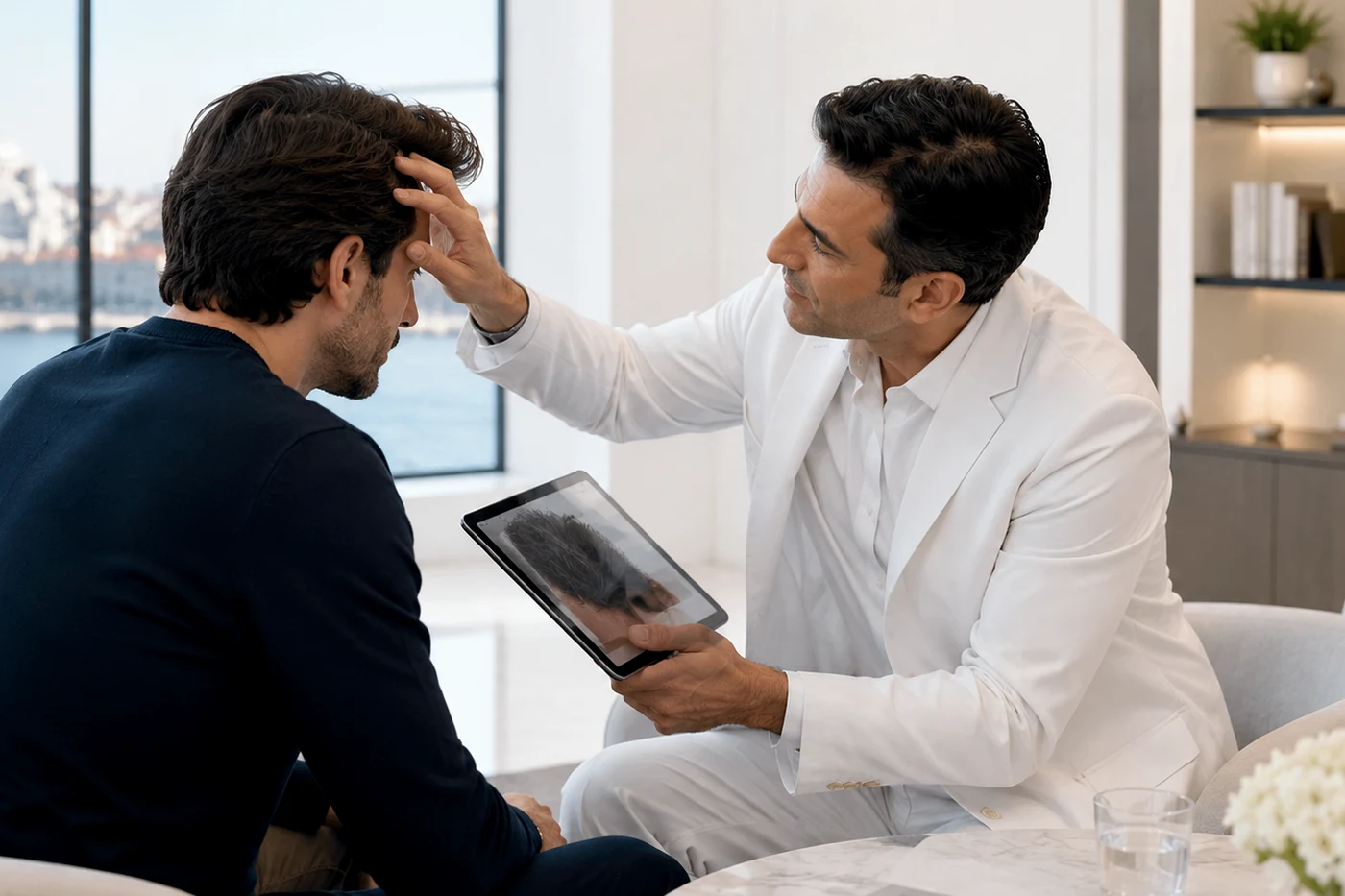
Deeper treatment guide
Read the treatment-specific guidance on planning, procedure, recovery and follow-up.
A beard transplant moves scalp follicles into selected facial areas. The first question is why the beard is sparse. A stable hereditary pattern may be very different from patchiness caused by scarring, inflammatory skin disease or another condition that should be assessed before surgery. A cosmetic design should not be placed over an unresolved medical problem.
Because facial hair is viewed at close range, direction and angle are as important as graft count. The cheek line, moustache, goatee, jaw and sideburn areas each have different growth patterns.
Ask who draws the beard and how the plan changes from cheek to jaw, moustache and chin. Follicles should be placed at very shallow and changing angles to mimic natural facial hair. A dense outline with the wrong direction can look less natural than a lower-density plan with better orientation.
Most beard transplants use scalp donor hair, so calibre, curl, colour and growth behaviour may differ from native beard hair. Ask which donor zone will be used, how many grafts are planned for each facial area and how donor reserve will be protected. A small moustache or scar camouflage case should not automatically be planned like full-beard restoration.
If the goal is to camouflage a scar, ask whether the scar is mature and stable, how blood supply and tissue quality affect graft survival, and whether several lower-density sessions may be safer than one aggressive session. Previous laser hair removal, acne scarring, surgery or skin disease can change planning.
Redness, small crusts and swelling can be more visible on the face than on the scalp. Ask when washing is allowed, when shaving can resume, how to avoid dislodging crusts, whether swelling around the cheeks or lips is expected and which symptoms require review. The NHS advises protecting transplanted hair carefully for the first two weeks; the treating clinic should adapt this to facial grafts.
Cost can change with the number of facial zones, graft range, whether scar repair is involved, physician involvement, session length and package inclusions. Compare the planned design and responsibilities rather than buying a fixed “full beard” number from photographs alone.
This page supports informed decision-making and does not replace an individual diagnosis. Suitability, medicines, treatment scope and aftercare must be confirmed by the treating clinician or dentist.
01 · Why patients consider this treatment
Start with the problem or goal, not the technique. A qualified treating clinician should confirm whether this procedure is relevant after reviewing your individual circumstances.
Assessment → written plan → treatment → recovery → follow-up. Your provider confirms the patient-specific sequence.
Ask how many clinic visits are expected, how long each stage takes and what could add another appointment.
02 · Suitability & planning
Suitability depends on diagnosis, history, anatomy, expectations and reasonable alternatives. The treating clinic decides which records, tests or examination are needed before a plan can be confirmed.
Assessment → written plan → treatment → recovery → follow-up. Your provider confirms the patient-specific sequence.
Ask how many clinic visits are expected, how long each stage takes and what could add another appointment.
Clarify early recovery, travel fitness and when normal activity or work can reasonably resume.
Leave with records, a named contact and a written return-home follow-up pathway.
03 · How the procedure is planned
The technical steps vary by method, findings and clinic. Ask what will actually happen, who performs the key clinical steps and what could change after the in-person assessment.
04
Records reviewed, clinician and plan confirmed, then practical travel is finalised.
Arrival, final clinical checks, treatment and immediate monitoring under the clinic protocol.
Medication, wound or symptom care, food, fluids and movement according to clinical instructions.
Confirm fitness to travel, take records home and know exactly who to contact after return.
05 · Recovery & results
Early recovery and final outcome are different milestones. Clarify what to expect in the first days, when routine or work may resume, when travel is considered appropriate and when results can be meaningfully assessed.
Your treating clinic confirms patient-specific timing.
Your treating clinic confirms patient-specific timing.
Your treating clinic confirms patient-specific timing.
06 · Important considerations
Risks, limits and warning signs belong in informed consent. Ask what is expected, what is not, and what medical help should be available after you return home.
This page supports better questions; it does not replace individual medical assessment.
Assessment can change method, dates, cost or length of stay.
07 · Your journey with Turkelite
Once the medical plan and dates are confirmed, Turkelite Medcare organises the practical journey around them: information flow, flight timing, pickup, transfers, accommodation, clinic appointments, return travel and follow-up handover.
08 · Questions before you decide
Take these questions into the consultation. Good answers are more useful than marketing promises.
09 · What the written quote should settle
A useful quote does more than show a price: it makes responsibility, scope and the conditions that could change the plan visible.
10 · Find suitable clinic options
Instead of leaving you with a public clinic list, we start with your enquiry and then build a relevant shortlist of independent providers for this treatment area.
Guides

Why follow-up responsibilities and local support should be clarified before treatment is booked.
View treatment guide →
A practical checklist for checking provider identity, clinicians, treatment planning, follow-up and communication.
View treatment guide →
What happens if there is a complication after treatment in Turkey: the pathway to agree before you travel, what your own doctor will and will not do, and why standard travel insurance usually does not cover it.
View treatment guide →Related treatments
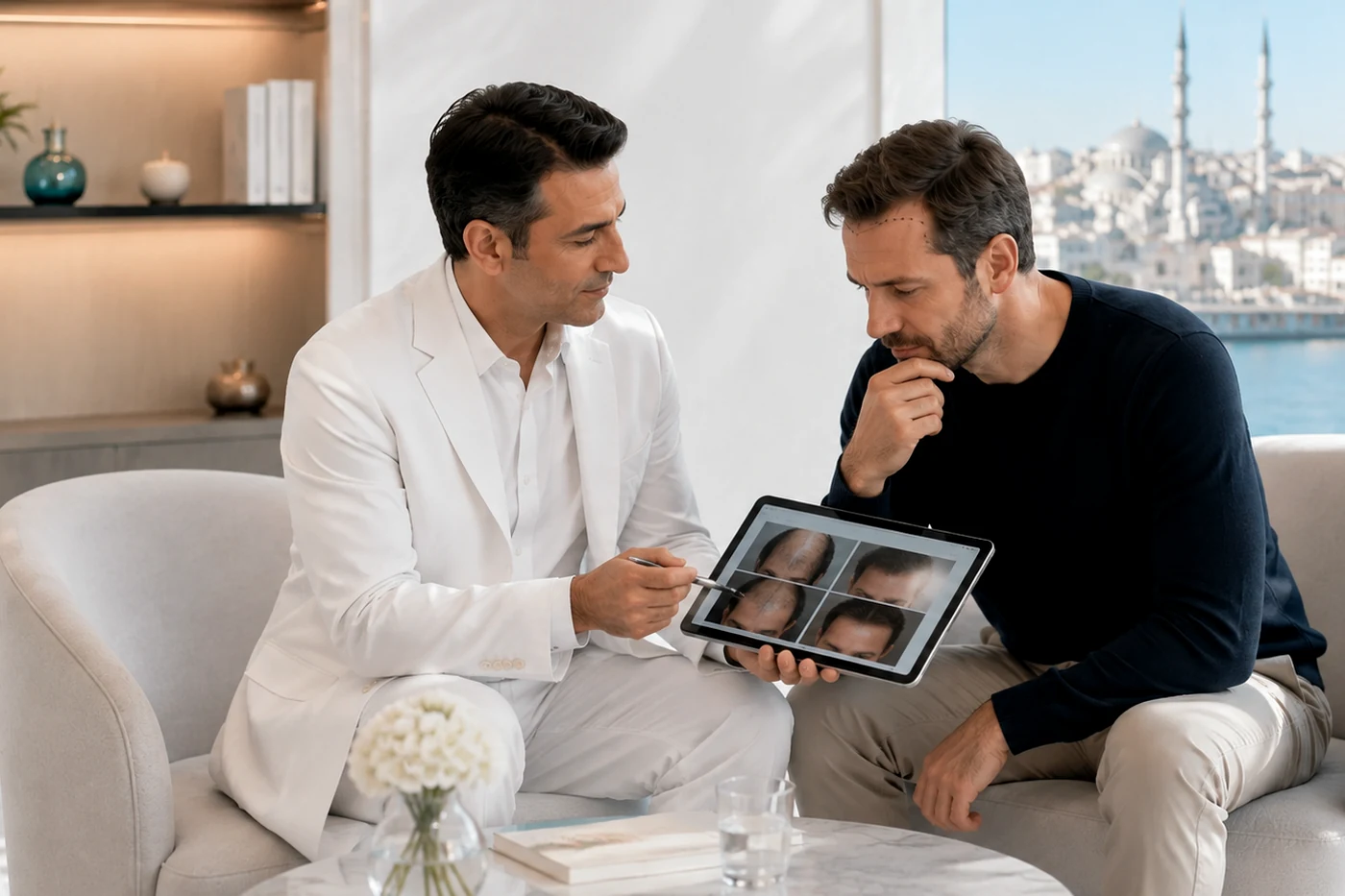
DHI is commonly used to describe implantation with a pen-style implanter after follicular units have been harvested.
View treatment guide →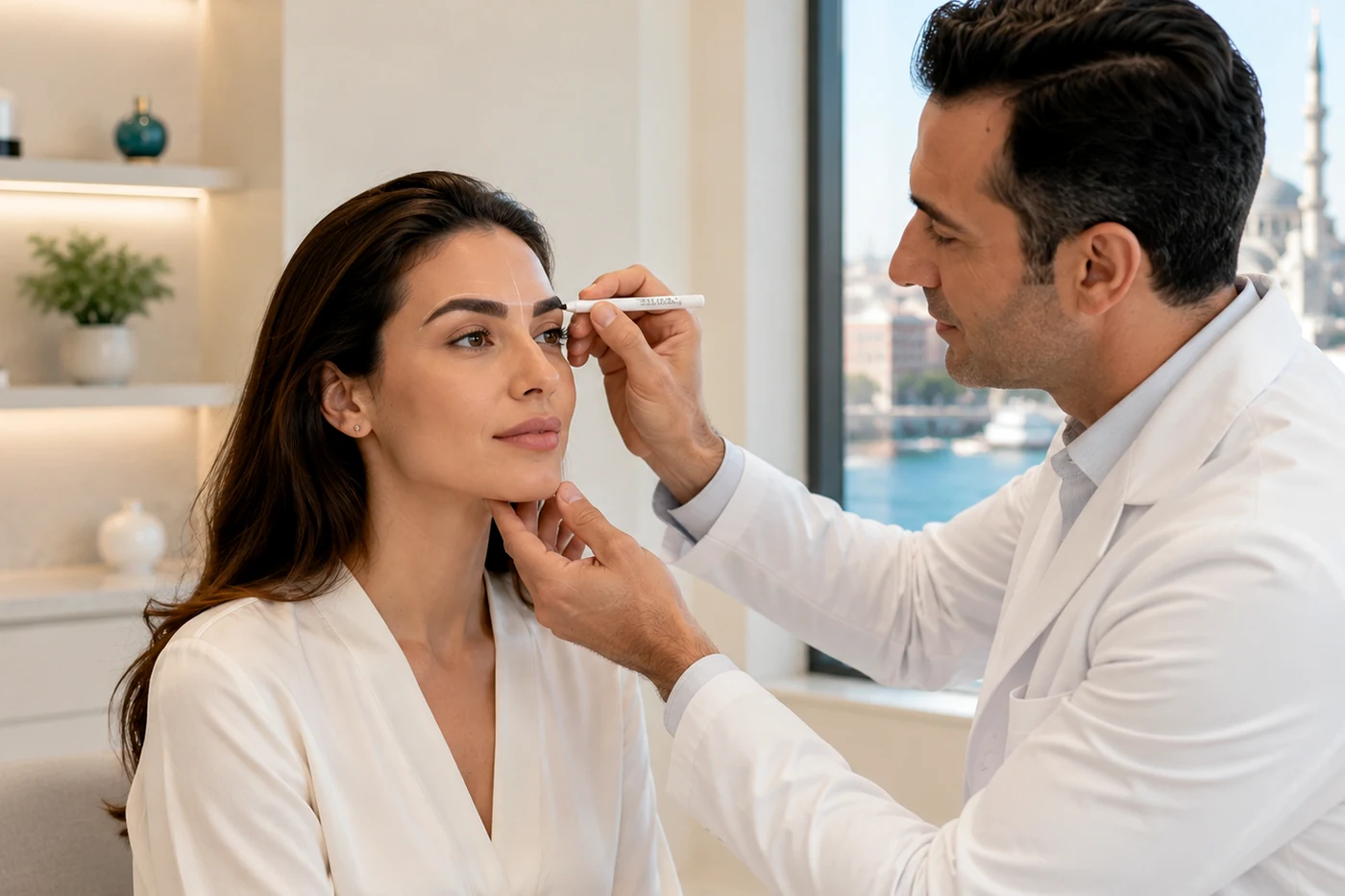
An eyebrow transplant places selected donor follicles into the brow using very careful angle, direction and density planning to match natural eyebrow growth.
View treatment guide →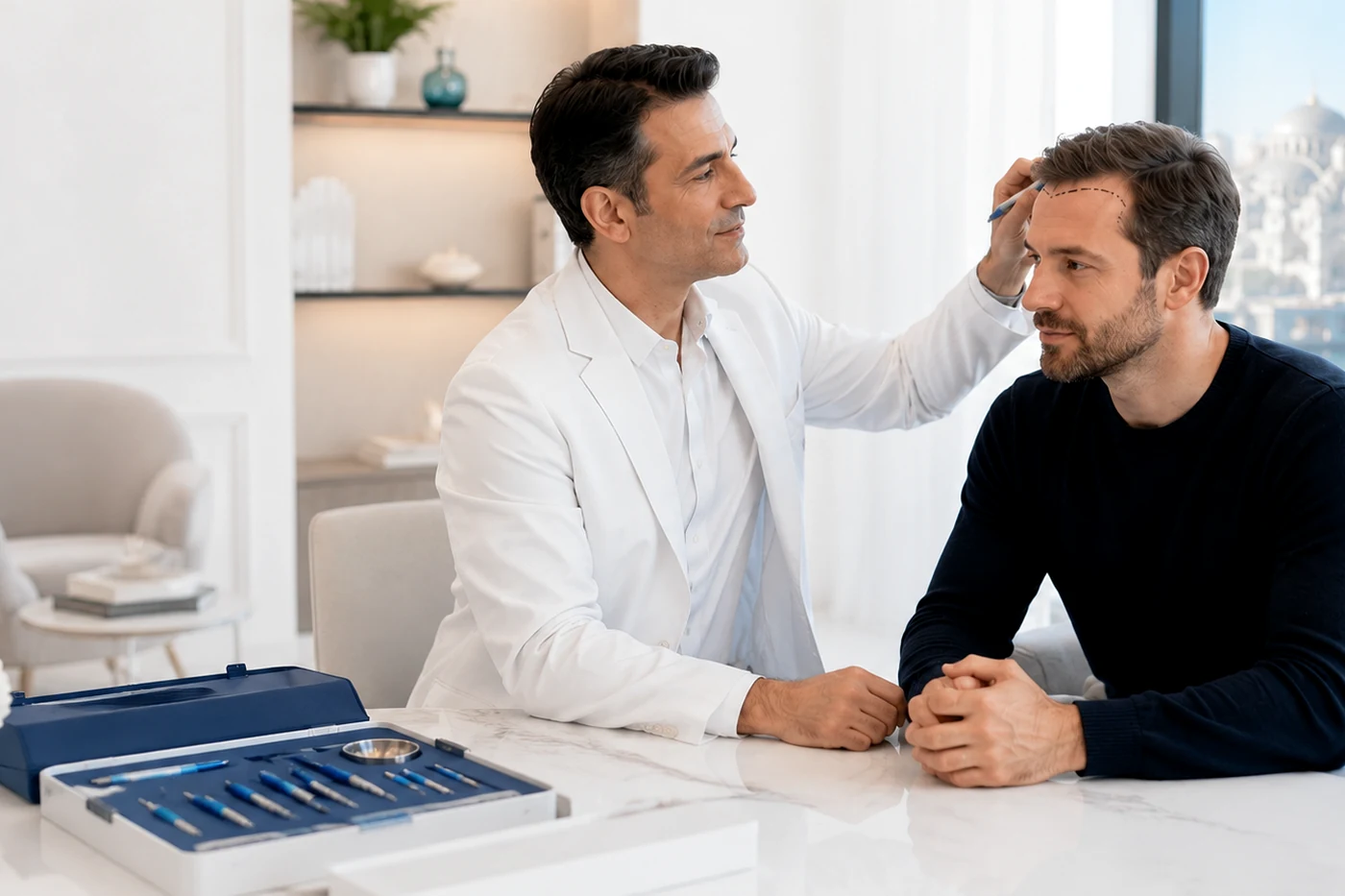
Female hair transplantation redistributes donor follicles into selected thinning areas after assessment of the hair-loss pattern and donor capacity.
View treatment guide →Tell us what you are considering. We organise the information for you and route the enquiry to a suitable independent treating clinic for an initial review.
No obligation to book after an enquiry.