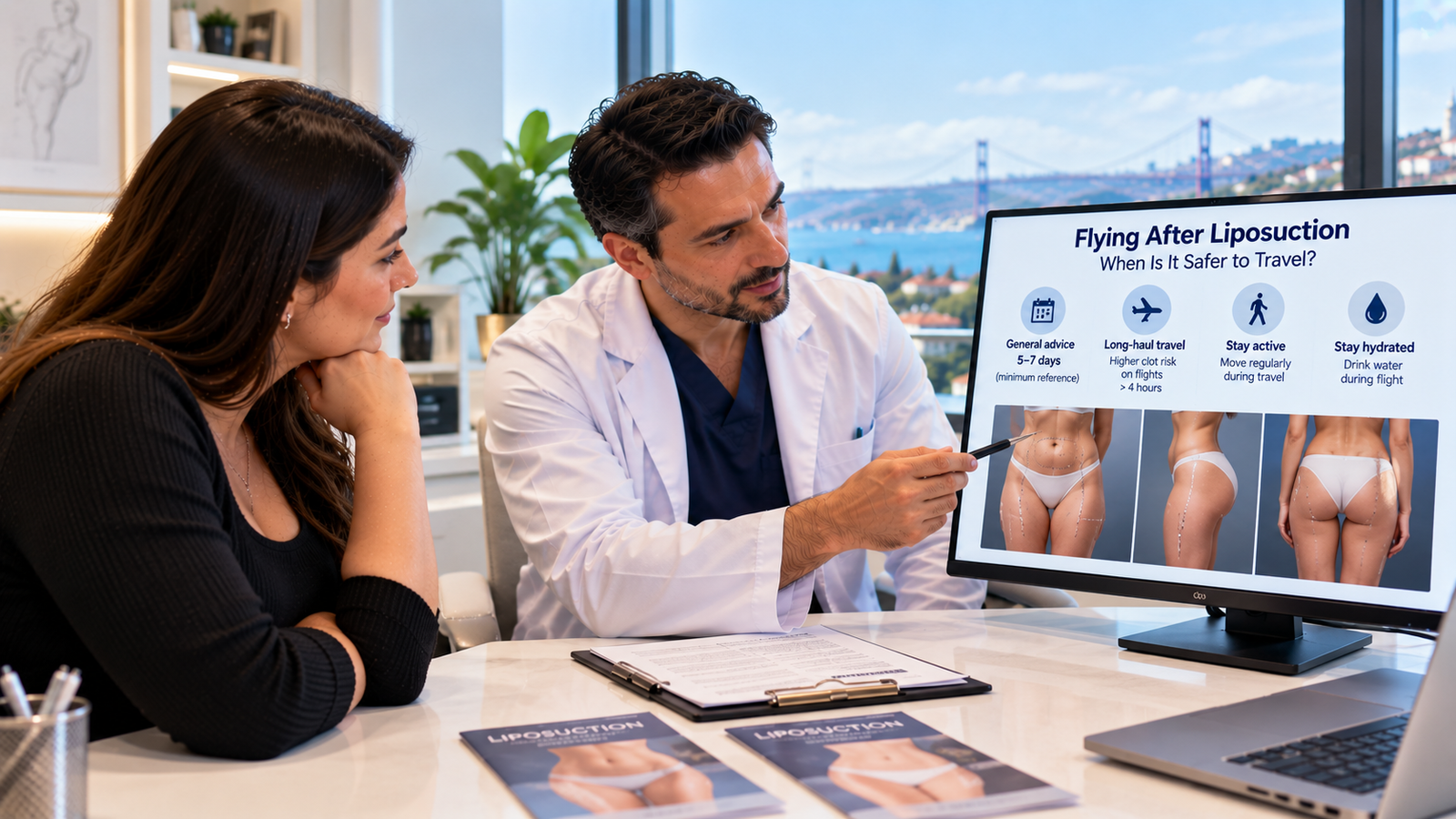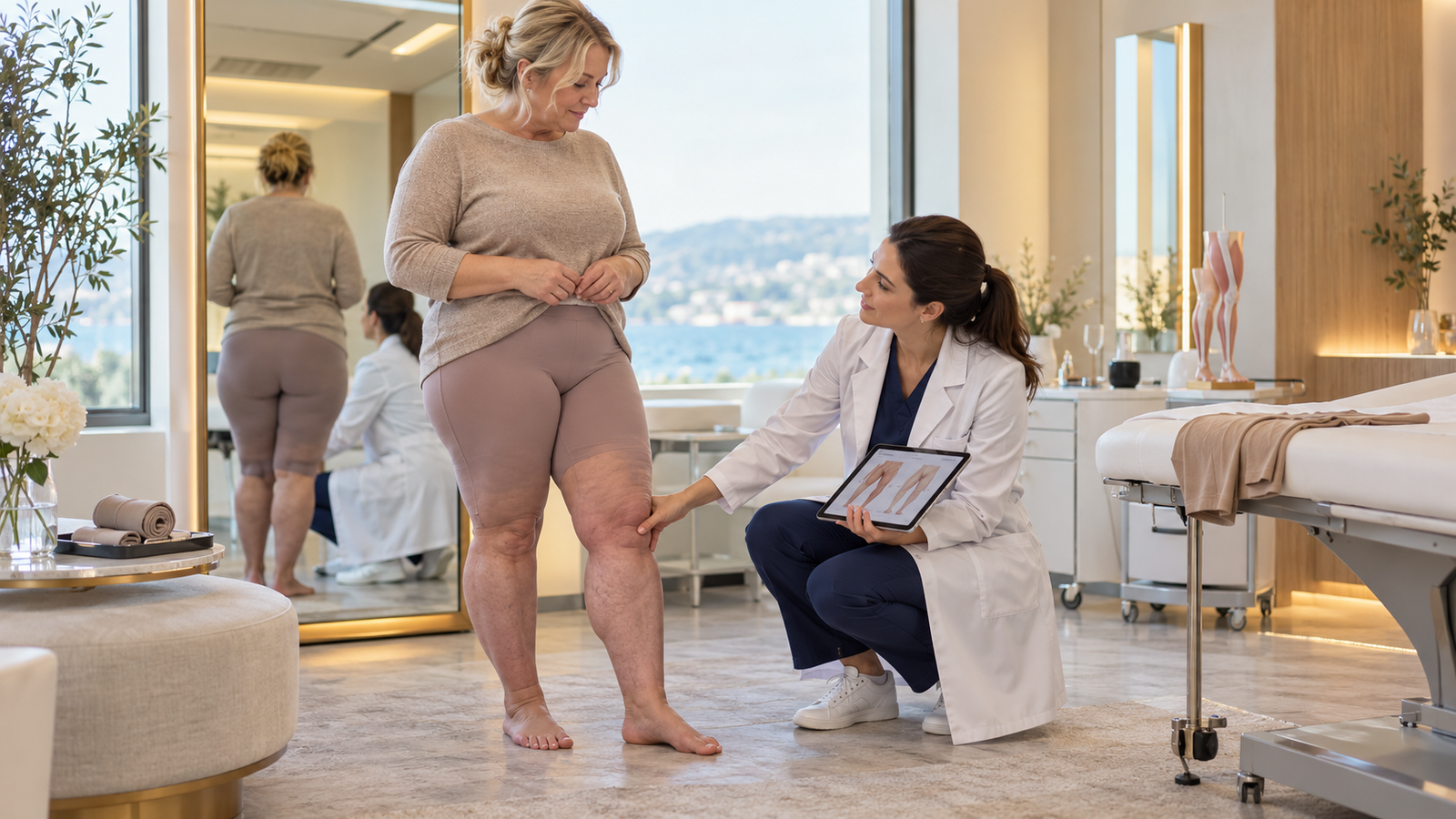
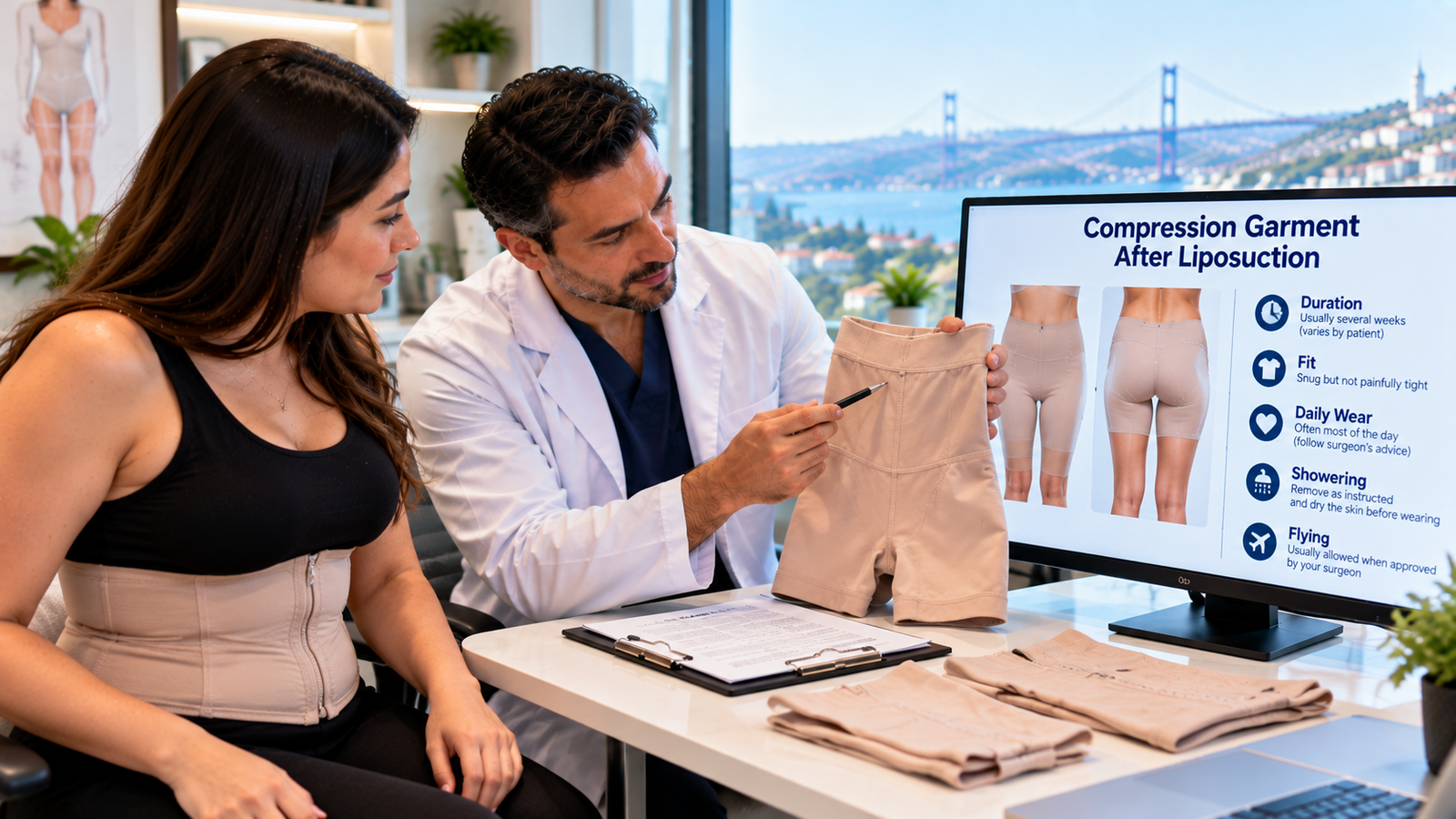
Compression garment after liposuction usually means a postoperative garment worn to support treated tissues and help manage swelling while early healing progresses. Plastic-surgery guidance commonly includes compression as part of liposuction recovery, but there is no single evidence-based number of weeks that applies to every patient, every body area or every surgical technique. The garment should be snug without compromising circulation, creating excessive pressure or damaging the skin. Start with the Turkelite treatment library and ask the operating surgeon for written instructions covering garment type, fit, hours of wear, washing, when it can be removed and when it should be stopped.
What A Compression Garment Is Intended To Do
After liposuction, tissues are swollen and the treated layer is healing. A fitted garment can provide external support, limit movement of swollen tissues and make swelling feel more controlled during early recovery.
It is part of postoperative management, not a substitute for surgical technique, wound care, mobility, hydration, nutrition or blood-clot prevention.
Does Compression Guarantee A Better Final Contour?
No. Compression is widely used in cosmetic-surgery recovery, but the scientific evidence for the ideal pressure, garment design and duration after cosmetic liposuction is limited and heterogeneous.
A garment should therefore not be sold as a guarantee against irregularity, fluid collection, fibrosis or revision. Final contour also depends on the amount and pattern of fat removal, skin elasticity, healing and surgical technique.
How Tight Should The Garment Be?
The garment should feel supportive and evenly snug, not painfully tight. Plastic-surgery guidance warns against excessive compression that can interfere with circulation or create pressure injury.
Deep folds, severe pressure pain, increasing numbness, marked colour change, cold skin, blistering or worsening wound irritation are reasons to contact the treating team and have the fit checked.
A Smaller Size Is Not Automatically Better
More compression is not always more effective. A garment that is too small can roll, crease, create focal pressure and make swelling or skin irritation harder to manage.
Use the size and compression level selected or approved by the surgical team rather than buying a tighter garment because swelling is present.
How Long To Wear A Compression Garment After Liposuction
There is no universal schedule. Patient guidance from the American Society of Plastic Surgeons describes compression continuing through the early weeks, with some recovery pathways using garments to around week 4 and many patients no longer needing them by around week 6 unless the surgeon advises otherwise.
Those time points are examples, not a prescription. The surgeon may recommend a shorter or longer duration depending on the treated area, amount of liposuction, swelling, skin condition, combined procedures and individual healing.
How Many Hours Per Day Should It Be Worn?
Some surgeons recommend near-continuous wear early in recovery with short breaks for washing and hygiene, then gradually reduce wear later. Other protocols differ.
Ask for the daily schedule in writing. Do not assume that wearing the garment for more hours than prescribed will improve the result.
When Can The Garment Be Removed For Showering?
Timing depends on wound dressings, incision care and the surgeon’s protocol. The team should explain when showering is allowed, how long the garment can stay off and how to dry the skin before putting it back on.
If removing the garment causes significant dizziness, sudden pain or difficulty standing during the first days, tell the treating team.
Garment Fit Can Change As Swelling Falls
A garment that fits correctly during the first swollen days can become loose as swelling decreases. Some patients therefore need a different size or a second garment later in recovery.
The need for a replacement should be based on fit and clinical advice, not on a fixed marketing stage or a promise that a tighter garment will shape the body.
What About Foam, Boards Or Additional Compression?
Some postoperative protocols use foam pads, boards or other inserts under a garment. These are not universal requirements and can create local pressure if positioned incorrectly.
Use additional compression only if the treating team has explained where it should sit, how long it should be used and which skin changes mean it should be stopped.
Compression Does Not Replace Walking
Early safe mobility is important after surgery. A garment does not prevent blood clots by itself and should not be used as a reason to remain inactive.
Follow the surgeon’s walking and activity plan, together with any individual clot-prevention measures prescribed by the clinical team.
Compression Garment After Tummy Tuck
Compression after abdominoplasty is a separate question because the operation involves skin excision and may include abdominal-wall repair. Surgeons use different binders and garment protocols depending on technique.
Evidence does not support claiming that every abdominal binder prevents fluid collection or protects a muscle repair. In a randomised trial of 34 women undergoing abdominoplasty with quilting sutures, an abdominal binder did not reduce seroma at 7 or 14 days and did not reduce recurrent abdominal separation at 6 months.
How Long To Wear Compression After Tummy Tuck
There is no single universal duration. The operating surgeon should set the schedule according to incision healing, swelling, abdominal-wall repair, comfort and the specific technique used.
Do not copy a liposuction-only schedule onto a tummy-tuck recovery plan, especially when muscle repair, drains or wound problems are present.
Flying In A Compression Garment
If the surgeon has cleared you to fly, you may be told to continue wearing the prescribed postoperative garment during travel. The garment should remain correctly fitted and should not be deliberately tightened for the flight.
Check for rolling edges, deep creases, numbness, painful pressure or skin colour change during a long journey. If the garment causes concerning symptoms, seek clinical advice rather than simply tolerating the pressure.
A Surgical Garment Is Not The Same As Medical Travel Stockings
A liposuction garment supports the surgical area. Graduated medical compression stockings used for selected travellers at increased risk of blood clots are designed to apply a specific pressure pattern to the legs.
The United States Centers for Disease Control and Prevention notes that clinicians may consider graduated compression stockings or preventive anticoagulation for selected long-distance travellers with substantially increased clot risk. Your postoperative garment should not be assumed to provide the same clot-prevention function.
When Should You Contact The Clinic About The Garment?
- Severe or increasing pain under the garment.
- Numbness that is new or worsening.
- Cold, pale, blue or markedly discoloured skin.
- Blisters, pressure sores or skin breakdown.
- A garment edge cutting into an incision.
- Sudden one-sided leg swelling or calf pain.
- Shortness of breath or chest pain.
- A fit that has become too loose to provide the support prescribed.
Questions To Ask Before Leaving Turkey
- Which exact garment should I use?
- How tight should it feel?
- How many hours per day should I wear it?
- For how many weeks is it currently planned?
- When can I remove it for showering and washing?
- When should I change size or replace the garment?
- Should I use any foam, board or additional insert?
- Should I wear it during my flight home?
- Do I separately need medical compression stockings for travel?
- Which symptoms mean the garment should be checked urgently?
How Turkelite Medcare Coordinates Garment Instructions
Turkelite Medcare is a patient coordination service, not the operating plastic-surgery clinic. We do not prescribe garment pressure, decide how long compression should continue or replace the surgeon’s wound and circulation assessment.
Our role is to organise written instructions, provider questions, follow-up timing, travel and the return-home handover around the plan confirmed by the independent treating team. See patient services.
Frequently Asked Questions
How Long Should I Wear A Compression Garment After Liposuction?
There is no universal duration. Some plastic-surgery recovery guidance describes use through the first several weeks, sometimes around 4 weeks and in some patients toward 6 weeks, but your surgeon should set the actual schedule.
Should A Compression Garment Feel Very Tight?
No. It should be supportive and snug without causing severe pressure, circulation problems, numbness or skin injury.
How Long Should I Wear A Compression Garment After Tummy Tuck?
The schedule is surgeon-specific and depends on the operative technique, swelling, incision healing and whether abdominal-wall repair was performed. Evidence does not support one fixed duration for everyone.
Can I Fly Wearing My Liposuction Garment?
If the operating team has cleared you to fly and instructed continued garment use, it can usually remain on as prescribed. It should not be tightened for travel, and it is not a substitute for any separate blood-clot prevention plan.
Use Compression As Prescribed, Not As A Test Of Endurance
A postoperative garment should support recovery without creating harmful pressure. The useful plan defines fit, daily wear, duration, skin checks, travel instructions and the point at which compression can safely be reduced or stopped.
This content is for general information and does not replace individual medical advice, diagnosis or treatment. Discuss treatment suitability, risks and recovery with a qualified healthcare professional.