Quick answer
Flying After Liposuction: When Is It Safer To Fly?: the right answer depends on diagnosis, the actual treatment plan and individual risk factors. Use this article to prepare for consultation, then have the treating clinic confirm timing, medicines, suitability and travel planning for your case.
- Do not confirm treatment before adequate clinical assessment.
- Get scope, risks, aftercare and return-travel criteria in writing.
- For care in Turkey, verify the authorised facility and responsible clinician.
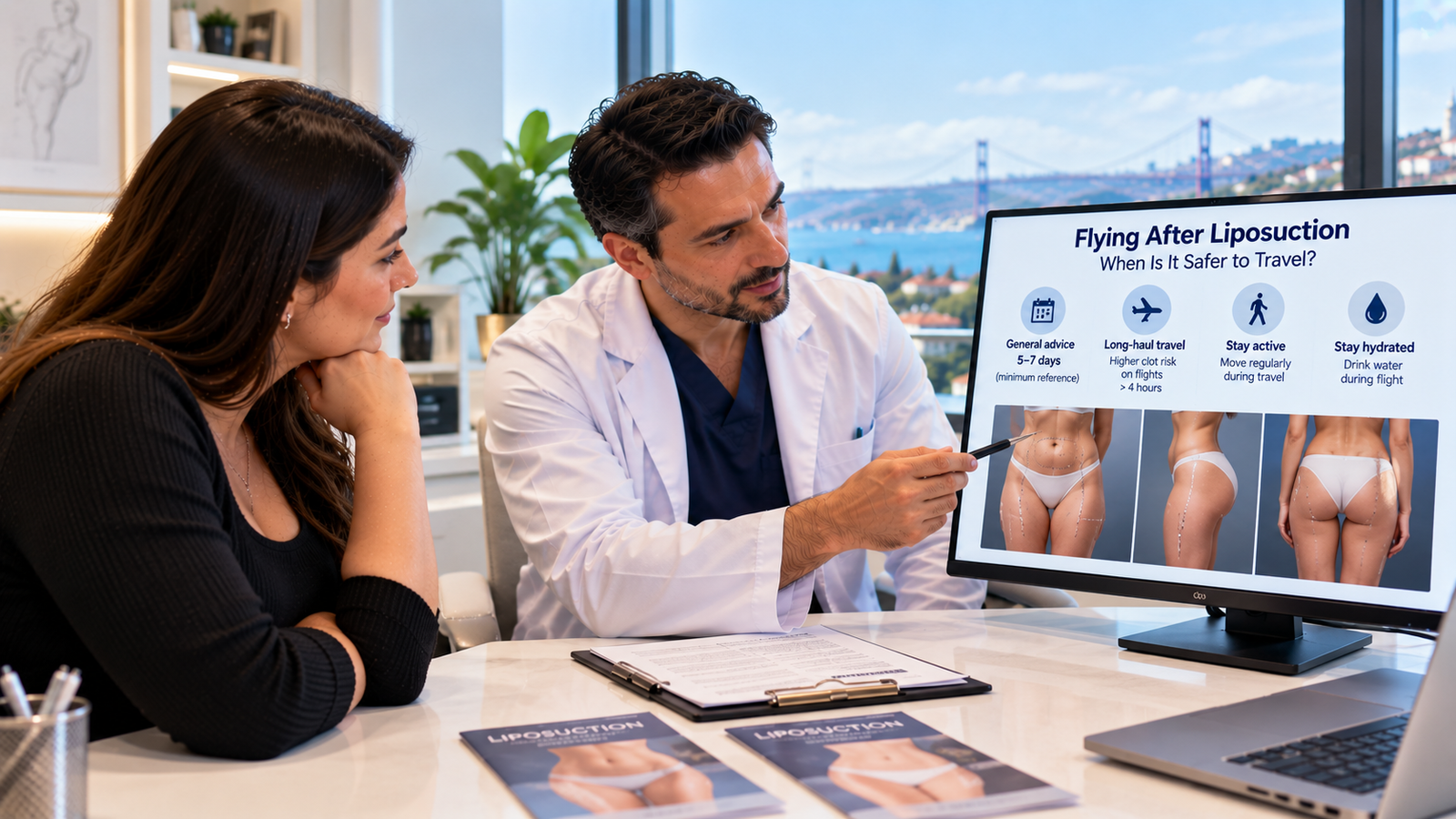
Flying after liposuction needs to be planned around surgical recovery and blood-clot risk, not around the earliest available flight. Liposuction is surgery, and recent surgery is a recognised risk factor for venous thromboembolism. Long periods of immobility during travel add another risk. The American Society of Plastic Surgeons advises that patients having body procedures such as liposuction should generally wait about 5–7 days before flying, but this is a general minimum suggestion rather than an individual fit-to-fly clearance. More extensive liposuction, combined surgery, complications or higher clot risk can require a longer stay. Start with the Turkelite treatment library and ask the operating surgeon to set your return-travel timing before you book a non-refundable flight.
Why Flying Soon After Liposuction Needs Extra Caution
After surgery, inflammation, reduced mobility, tissue injury and individual medical factors can increase the tendency for blood to clot. Sitting still for a long journey can add venous stasis, especially on travel lasting more than 4 hours.
The concern is not that flying itself damages liposuction results. The main safety questions are blood clots, mobility, hydration, pain control, bleeding, swelling and whether an early complication could be managed during or after travel.
What The 5–7 Day Guidance Means
Plastic-surgery travel guidance has suggested waiting approximately 5–7 days after body procedures such as liposuction before air travel. This should be treated as a general reference point, not a promise that every patient is safe to fly on day 5 or day 7.
The operating surgeon should confirm that your wounds, mobility, vital signs, swelling and complication risk are acceptable and that no treatment issue requires you to remain near the clinic.
Long-Haul Travel Adds Another Risk Layer
The United States Centers for Disease Control and Prevention describes long-distance travel, generally more than 4 hours, as a setting in which travel-associated blood clots can occur. The absolute risk is low for healthy travellers, but it rises when additional risk factors such as recent surgery are present.
A short domestic flight and a long international journey are therefore not identical recovery situations, even if they occur on the same postoperative day.
Your Personal Blood-Clot Risk Matters
Risk can be higher with previous blood clots, known clotting disorders, active cancer, obesity, limited mobility, older age, oestrogen-containing medicines, pregnancy or the postpartum period and other medical factors.
The surgeon and anaesthesia team should decide whether you need a specific clot-prevention plan. Do not start anticoagulant medicine or change prescribed doses for travel without clinical instruction.
Walking And Mobility Are Part Of Fit-To-Fly Planning
Before a long journey, you should be able to move safely enough to walk, use the bathroom and follow the surgeon’s activity instructions without severe dizziness or uncontrolled pain.
During approved travel, periodic movement and calf activity may be advised. The exact plan should account for your operation, medicines and individual clot risk.
How Long To Stay In Turkey After Liposuction
There is no universal stay length. The 5–7 day plastic-surgery travel suggestion is a useful minimum reference for uncomplicated body procedures, but the real stay should include the surgeon’s early postoperative review and enough time to identify problems that would make travel unsafe.
If more areas are treated, another operation is combined, drains are present or recovery is slower than expected, the stay may need to be longer.
Flying After Circumferential Liposuction
The phrase circumferential liposuction is often used for treatment around the abdomen, waist, flanks and back. It is not one universally standardised operation, and the amount of fat removed, number of areas treated and anaesthesia plan can differ substantially.
A larger treatment area can mean more swelling, fluid shifts, soreness and mobility limitation. The surgeon should base flight timing on the actual surgical scope rather than the marketing label.
Combined Surgery Can Change The Timeline
Liposuction is sometimes combined with abdominoplasty, breast surgery or another procedure. Combined surgery can increase operative time, wound burden and recovery demands.
If another operation is performed, return-travel timing should follow the most restrictive part of the combined recovery plan, not the liposuction timeline alone.
What About Swelling On The Flight?
Swelling is expected after liposuction and can fluctuate with activity and time spent sitting. Travel may make swelling feel more noticeable, but sudden one-sided leg swelling, warmth, redness or significant calf pain should not be dismissed as normal postoperative swelling.
Those symptoms can be compatible with deep-vein thrombosis and need urgent medical assessment.
Warning Signs Of A Pulmonary Embolism
Unexplained shortness of breath, chest pain that may worsen with breathing, coughing up blood, fainting or a rapid unexplained deterioration can be warning signs of a pulmonary embolism.
These symptoms require emergency medical care. Do not continue a journey or wait for an overseas clinic to reply.
Compression Stockings Are Not The Same As A Liposuction Garment
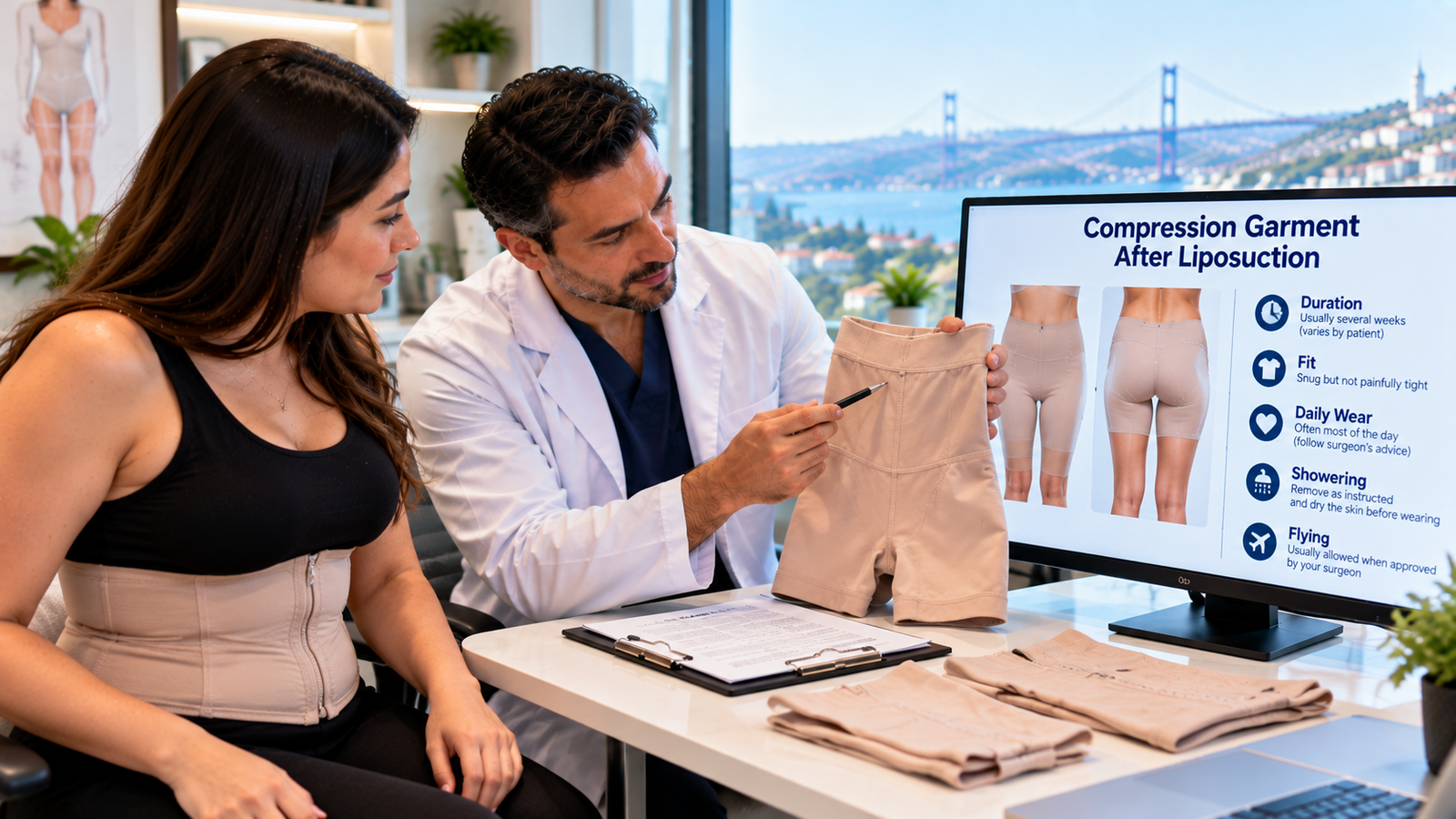
A postoperative liposuction garment is designed for surgical support and swelling management. Graduated medical compression stockings used for travel-related clot prevention are a different product with a different purpose.
For travellers with substantially increased clot risk, the Centers for Disease Control and Prevention notes that clinicians may consider graduated compression stockings or preventive anticoagulation in selected cases. That decision should be individualised; do not assume your surgical garment provides the same protection.
Pain Medicine And Travel Need Planning
You should be alert enough to walk safely and manage the journey. Some pain medicines can cause drowsiness, dizziness, nausea or constipation, which can complicate travel.
Ask which medicines to take on the travel day, how to carry them and whether any medicine affects blood-clot or bleeding risk.
Hydration Matters, But It Is Not A Substitute For Clot Prevention
Maintaining appropriate fluid intake is sensible during recovery and travel, especially if nausea or reduced intake has been a problem. However, drinking water alone does not cancel the clot risk created by recent surgery and prolonged immobility.
Follow the complete prevention plan given by the treating team, including mobility and any medically indicated measures.
What Should The Surgeon Check Before You Fly?
- My mobility and ability to walk safely.
- My wounds and any active bleeding or drainage problem.
- The pattern and severity of swelling.
- My pain control and current medicines.
- My individual blood-clot risk.
- Whether another procedure was combined with liposuction.
- Whether drains or other devices are still present.
- Any fever, infection concern or unexpected shortness of breath.
- The duration and complexity of my journey home.
- The plan for urgent care after I arrive.
How Turkelite Medcare Coordinates Return Travel
Turkelite Medcare is a patient coordination service, not the operating plastic-surgery clinic. We do not issue medical fit-to-fly clearance, prescribe blood-thinning medicine or decide when a patient is safe to board a flight.
Our role is to organise provider communication, appointments, travel changes, records and the return-home handover around the timing confirmed by the independent treating team. See patient services.
Frequently Asked Questions
How Soon Can I Fly After Liposuction?
Plastic-surgery travel guidance suggests approximately 5–7 days after uncomplicated body procedures such as liposuction as a general reference, but your operating surgeon must confirm the actual timing for your case.
How Long Should I Stay In Turkey After Liposuction?
Stay long enough for the planned early postoperative review and individual fit-to-fly assessment. More extensive or combined surgery and any complication can require longer than the general 5–7 day reference.
Is Flying After Circumferential Liposuction Different?
It can be. A larger circumferential treatment area may mean more swelling, soreness and mobility limitation, so timing should follow the actual surgical scope and recovery.
What Symptoms Mean I Should Not Fly?
New breathing difficulty, chest pain, fainting, significant one-sided leg swelling or pain, uncontrolled bleeding, fever or another important postoperative concern needs clinical assessment before travel.
Your Return Flight Is Part Of The Surgical Plan
The safest return date is the date supported by your recovery, clot-risk assessment and surgeon’s examination, not simply the first flight after a package ends. Build enough flexibility into travel for the possibility that recovery takes longer than expected.
Sources and further reading
- NHS: Before you have a cosmetic procedure
- NHS: Choosing who will do your cosmetic procedure
- Republic of Türkiye Ministry of Health: International health tourism regulation
These sources support general patient information. Individual medical recommendations must come from the treating clinician.
View the related treatment area
This content is for general information and does not replace individual medical advice, diagnosis or treatment. Discuss treatment suitability, risks and recovery with a qualified healthcare professional.