If you are researching lipoedema surgery in Turkey, the first question is whether you have a confirmed lipoedema diagnosis and whether surgery is being proposed for the right reason. Lipoedema is not simply unwanted fat, and surgery for it should not be treated as ordinary cosmetic liposuction. The 2024 German evidence-based lipoedema guideline supports liposuction for selected patients with documented, treatment-resistant symptoms after conservative care, using tissue- and lymphatic-sparing techniques and structured follow-up. UK guidance from the National Institute for Health and Care Excellence is substantially more restrictive: because it considers the evidence on safety and efficacy inadequate and notes serious potential complications, it recommends liposuction for chronic lipoedema only in research. These different positions should be explained openly. Start with our Liposuction page, then ask a clinician experienced in lipoedema to confirm diagnosis, non-surgical treatment, surgical indication and aftercare before travel.
Lipoedema Surgery Is Not The Same As Cosmetic Liposuction
Cosmetic liposuction is usually performed to change body contour in selected areas. Lipoedema surgery is intended to reduce pathologic subcutaneous fat in a condition characterised by disproportionate limb enlargement and, importantly, symptoms such as pain, tenderness and easy bruising.
The German guideline treats pain as a central feature of lipoedema and bases surgical indication on symptoms and functional burden rather than appearance alone. A patient seeking surgery only because of leg size needs a proper differential diagnosis before the operation is labelled lipoedema treatment.
Ask the provider to state in writing whether the proposed procedure is cosmetic liposuction or medically indicated lipoedema-reduction surgery and what diagnostic findings support that classification.
Confirm The Diagnosis Before Planning Surgery
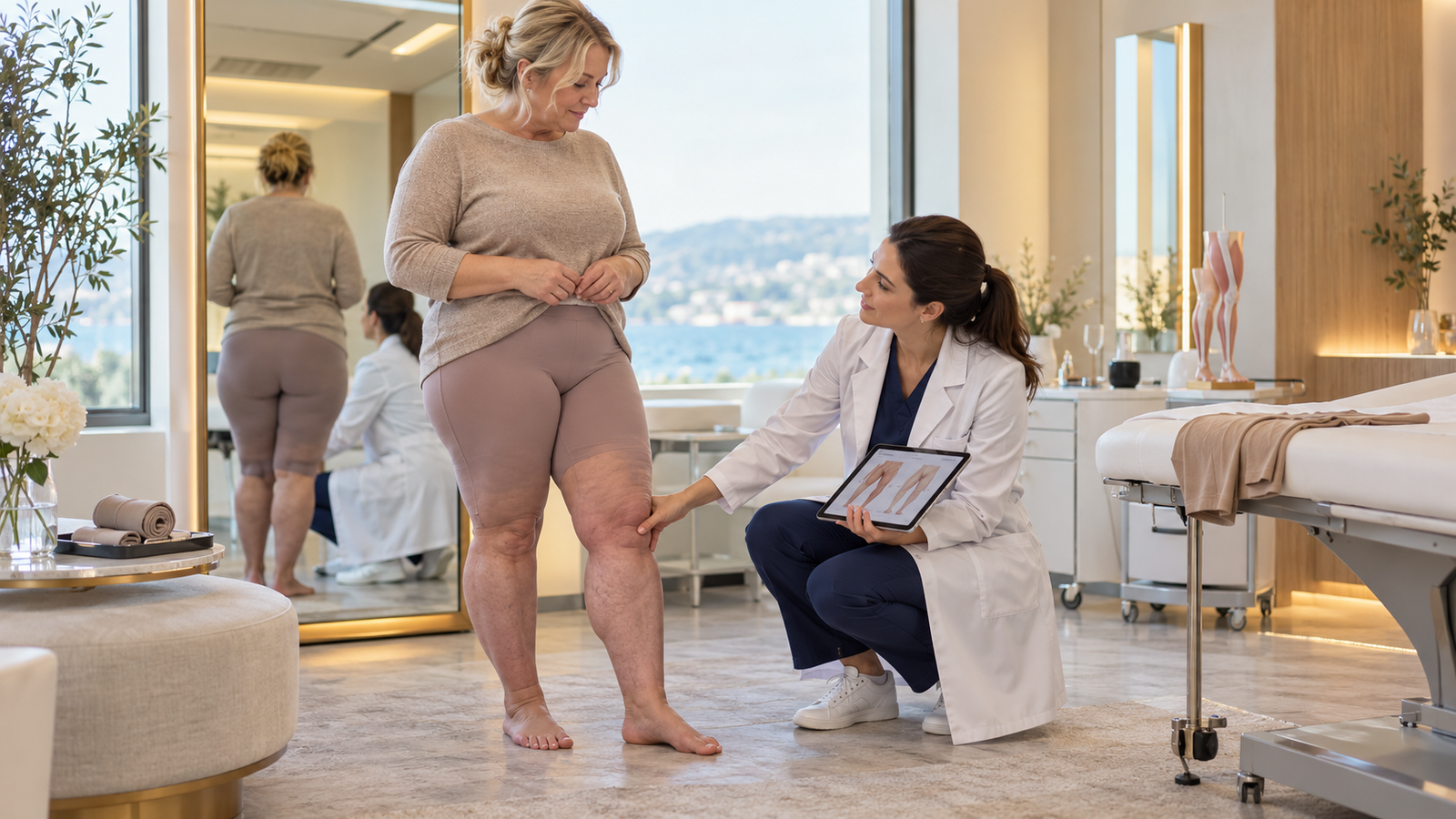
Lipoedema can be confused with obesity, lymphoedema, venous disease, normal body-shape variation and other causes of limb enlargement. Diagnosis is clinical and should include history, symptom pattern and physical examination.
Typical lipoedema patterns are usually symmetrical and may spare the feet, but no single visual sign should replace a full assessment. Ask whether the clinician has considered lymphatic disease, chronic venous insufficiency, obesity and other causes of swelling or pain.
If significant swelling is present in addition to lipoedema, the German guideline recommends addressing associated oedema before surgery when appropriate.
Conservative Treatment Still Matters
Conservative lipoedema care can include compression, exercise, movement, skin care, weight management when obesity is also present, and symptom-focused therapy. The goal is not to claim that conservative care removes lipoedema fat; it is to manage pain, swelling, mobility and related health factors.
The 2024 German guideline recommends considering liposuction when symptoms remain despite appropriate conservative treatment and the indication is documented. The US standard-of-care consensus also describes conservative therapy as part of management before surgery.
Ask what conservative measures have been tried, for how long, which symptoms persisted and how the clinic documented treatment resistance.
What The German 2024 Guideline Says About Surgery
The German guideline supports liposuction for selected lipoedema patients when symptoms such as pain remain despite conservative treatment or when mobility, dermatological or orthopaedic problems create a surgical indication.
It emphasises tissue- and lymphatic-sparing techniques and recognises that more than one procedure may be needed because safe treatment volumes are limited. It also states that liposuction does not cure lipoedema and that conservative treatment should continue after surgery according to remaining symptoms.
This is important when comparing marketing claims. A clinic should not promise that surgery permanently eliminates the condition or guarantees that compression and long-term care will never be needed again.
What UK Guidance Says
UK guidance is more restrictive. The National Institute for Health and Care Excellence states that evidence on the safety and efficacy of liposuction for chronic lipoedema is inadequate and recommends the procedure only in the context of research.
The guidance highlights potentially serious complications including fluid imbalance, fat embolism, deep-vein thrombosis and toxicity from local anaesthetic. It also says patient selection should involve a multidisciplinary team and that procedures should be performed in specialist centres by clinicians with appropriate experience.
International patients should understand this difference before interpreting a Turkish clinic's offer as equivalent to a treatment pathway routinely endorsed in the UK.
Lipoedema Surgery In The UK Versus Abroad
The central difference is not simply country or price. It is the evidence framework, access pathway, clinician experience, operative technique, complication support and long-term aftercare surrounding the operation.
Someone travelling from the UK should know that current UK guidance recommends the procedure only in research, while German guidance supports selected use under defined clinical conditions. Neither position means that every patient should or should not have surgery.
Ask the Turkish provider which published guideline it follows, how its patient-selection criteria compare with those guidelines and how postoperative complications would be managed after you return home.
Body Mass Index And Obesity Need Separate Assessment
Lipoedema and obesity can occur together, but they are not the same condition. The German guideline gives a critical indication for liposuction when body mass index is above 40 kg/m² or waist-to-height ratio is above 0.55 and recommends treating coexisting obesity first when appropriate.
This does not mean body mass index alone diagnoses or excludes lipoedema. It means overall metabolic and surgical risk needs to be addressed before elective reduction surgery.
Ask how the clinic distinguishes lipoedema tissue from general obesity and what weight-related risk reduction is recommended before surgery.
Technique Should Be Designed To Protect Tissue And Lymphatics
Lipoedema surgery requires a technique intended to reduce affected fat while minimising injury to lymphatic vessels and surrounding tissue. German and US guidance both emphasise lymphatic-sparing principles.
Ask what infiltration method, cannula size, direction of cannula movement and volume strategy the surgeon uses, and how the technique is modified around areas with important lymphatic structures.
A brand name for a liposuction device does not by itself prove that the operation is lymphatic-sparing. The surgeon's training, planning and technique matter.
Multiple Operations May Be Needed
Lipoedema can involve large areas of both legs and sometimes the arms. Treating all affected tissue in one session may not be appropriate because of blood loss, fluid shifts, anaesthesia duration and other safety limits.
The German guideline recognises staged treatment. Ask how many areas will be treated in each operation, how procedures are spaced and what clinical factors would delay the next stage.
Do not choose a single-session plan simply because it reduces travel costs if the surgeon believes staged surgery is safer.
Blood-Clot Risk Needs A Specific Plan
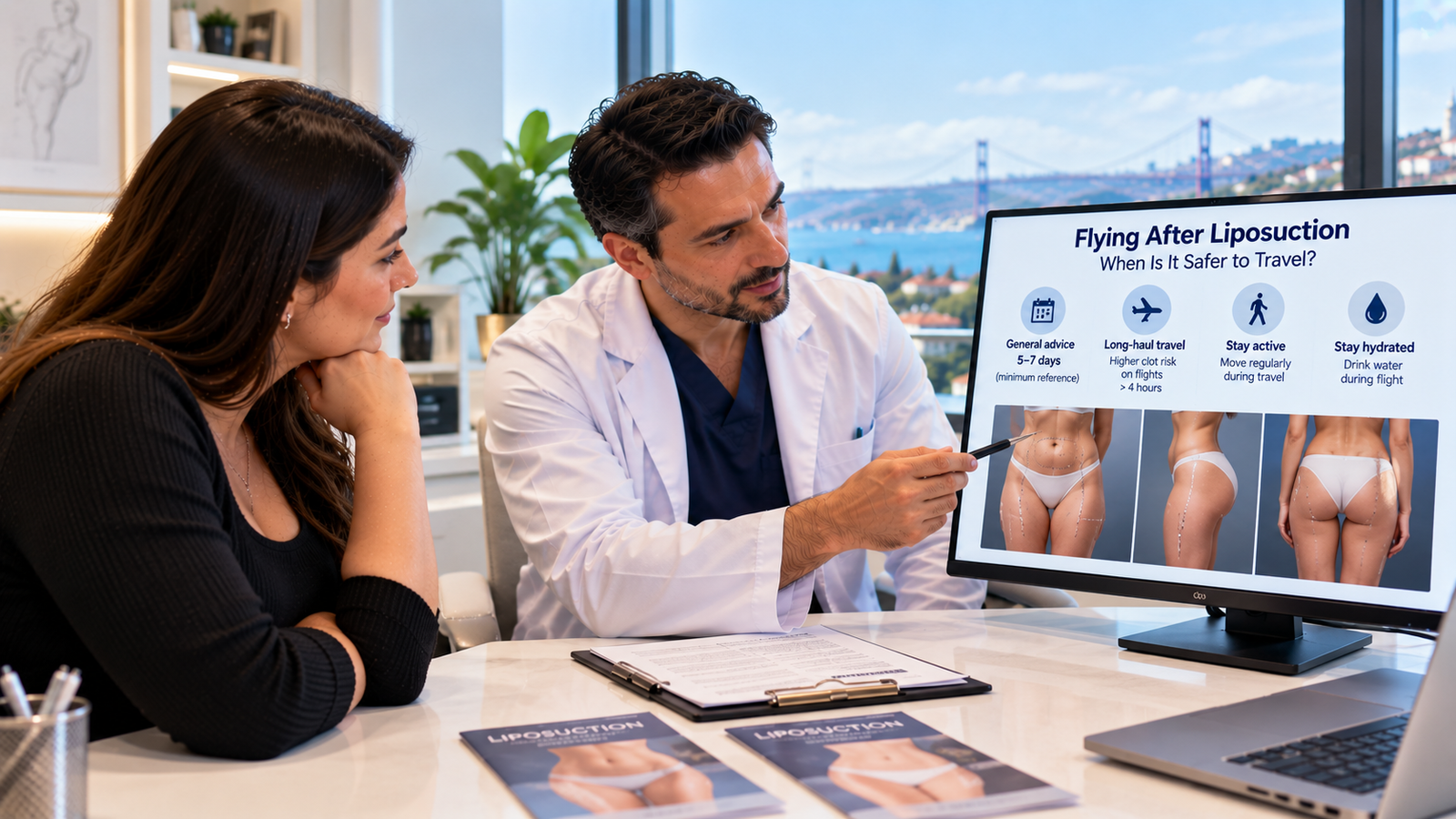
Lipoedema patients may have additional factors that influence venous-thromboembolism risk, and liposuction can involve long operating times and reduced mobility. UK guidance specifically lists deep-vein thrombosis among serious potential complications.
The surgeon should assess personal clot history, family history, obesity, hormone use, smoking, mobility, procedure duration and travel plans. Preventive measures must be individualised.
Do not start aspirin, anticoagulants or compression treatment solely from an online checklist. The treating team should prescribe the prevention plan.
Compression And Decongestion May Continue After Surgery
Surgery does not automatically end the need for compression or other conservative treatment. German guidance says conservative treatment should continue according to remaining symptoms after liposuction.
If associated oedema is present, preoperative decongestion may also be recommended. Postoperative compression instructions can vary with the procedure and the patient's lymphatic or venous status.
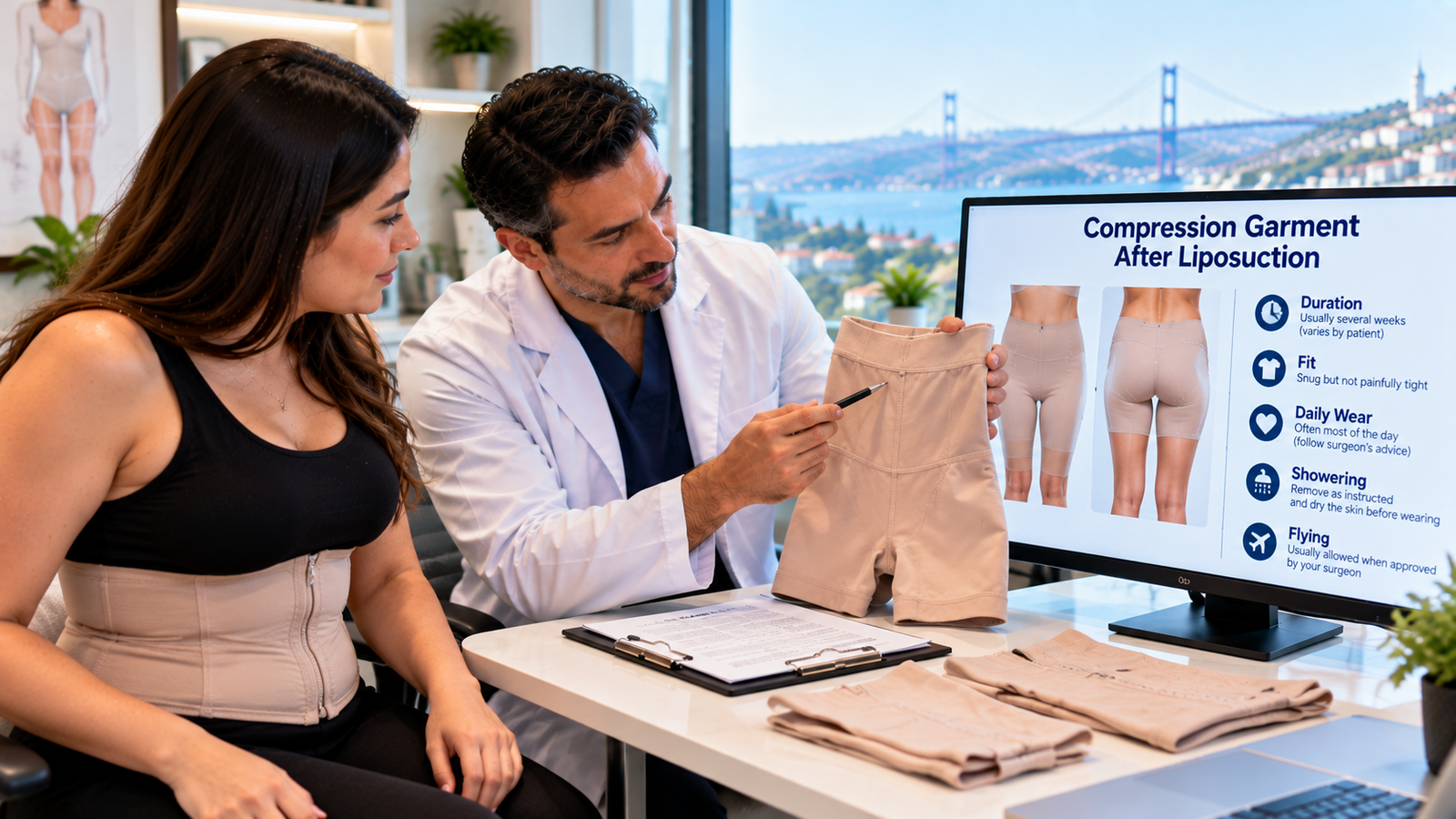
Ask which garments are required, how long they should be worn, who checks fit and what signs suggest the compression is too tight or poorly tolerated.
Know The Surgical Risks
Potential complications include bleeding, infection, fluid imbalance, contour irregularity, altered sensation, wound problems, anaesthetic complications, deep-vein thrombosis, pulmonary embolism, fat embolism and lymphatic injury.
The purpose of listing these risks is not to suggest that they occur in every patient. It is to ensure that consent reflects the seriousness of the procedure rather than presenting it as a simple cosmetic treatment.
Ask the surgeon which complications it has seen in its own lipoedema practice and what level of hospital care is available if a major complication occurs.
How Long Should You Stay In Turkey?
There is no universal safe number of hotel nights. The stay should cover surgery, immediate observation, early mobilisation, wound review, compression review and the treating surgeon's decision that return travel is appropriate.
If surgery is staged, each trip needs its own recovery and flight plan. A patient with extensive bilateral leg surgery may need a different stay from someone having a smaller area treated.
Ask what findings would delay the return flight and whether flexible accommodation is available if the medical plan changes.
Aftercare At Home Must Be Arranged Before Travel
Postoperative care can include wound checks, compression management, mobility guidance, swelling review, thrombosis assessment and monitoring for infection or lymphatic complications. These needs may continue after you leave Turkey.
Identify a clinician at home who is willing and able to review you if problems occur. Ask the Turkish surgeon what records, operative details and postoperative instructions that clinician will need.
The patient services page explains how Turkelite Medcare coordinates travel and return-home handover around the provider-confirmed clinical plan.
Warning Signs After Lipoedema Surgery
- Chest pain, sudden breathlessness or coughing blood.
- New one-sided leg swelling or severe calf pain.
- Fainting, severe weakness or signs of significant blood loss.
- Rapidly increasing swelling or severe pain out of proportion.
- Fever, spreading redness, pus or unpleasant wound discharge.
- Persistent vomiting or inability to maintain fluids.
- Cold, pale, blue or darkening skin in a treated area.
- Any sudden deterioration that makes you seriously unwell.
These symptoms need prompt medical assessment. Do not wait for a remote message if urgent local care is needed.
Questions To Ask Before Booking Lipoedema Surgery In Turkey
- Who confirmed my lipoedema diagnosis and what differential diagnoses were considered?
- Which symptoms make surgery medically indicated in my case?
- What conservative treatment has been tried and documented?
- Which lipoedema guideline does the surgeon follow?
- How is the technique designed to protect lymphatic structures?
- Will treatment be staged and why?
- How are blood loss, fluid balance and clot risk managed?
- What compression or decongestion is needed before and after surgery?
- What hospital support is available for complications?
- Who provides follow-up after I return home?
How Turkelite Medcare Coordinates The Journey
Turkelite Medcare is a patient coordination service, not the surgeon and not a lipoedema diagnostic clinic. We do not diagnose lipoedema, decide that surgery is indicated or choose the operative technique.
Our role is to keep provider communication, records, appointments, accommodation, transfers and the return-home handover organised around the independent clinician's confirmed plan.
If the specialist assessment does not support surgery, the travel plan should not override that clinical decision.
Frequently Asked Questions
Is Liposuction An Accepted Treatment For Lipoedema?
Guidelines differ. The 2024 German guideline supports liposuction for selected patients with persistent symptoms despite conservative treatment, using tissue- and lymphatic-sparing techniques. Current UK guidance considers the evidence inadequate and recommends the procedure only in research.
Does Lipoedema Surgery Cure Lipoedema?
No. The German guideline specifically states that liposuction does not cure lipoedema. It can reduce affected fat and may reduce pain and improve function in selected patients, but ongoing conservative care may still be needed.
Is Lipoedema Surgery The Same As Cosmetic Liposuction?
No. Lipoedema surgery should follow a confirmed diagnosis, symptom-based indication and technique designed to protect lymphatic structures. Cosmetic liposuction performed only for contour change is a different clinical pathway.
Can I Have Lipoedema Surgery If My Body Mass Index Is Over 40?
The 2024 German guideline treats body mass index above 40 kg/m² or waist-to-height ratio above 0.55 as a critical indication and recommends addressing coexisting obesity first when appropriate. Your surgical risk still needs individual assessment.
How Many Lipoedema Operations Might I Need?
Some patients need staged procedures because affected areas can be extensive and safe treatment volume is limited. The number of stages depends on anatomy, symptoms, health, technique and the surgeon's safety plan.
What Should I Arrange Before Travelling Home?
Have a written postoperative plan covering wounds, compression, mobility, clot prevention, medicines, warning signs, follow-up contacts and who can assess you locally if a complication appears after you return.
Compare Clinical Pathways, Not Just Countries
Whether lipoedema surgery in Turkey is appropriate cannot be answered by price or destination alone. Confirm the diagnosis, understand the difference between German and UK guidance, document why surgery is being considered, check the surgeon's lymphatic-sparing approach and make sure aftercare exists at home. The quality of that clinical pathway matters more than the package surrounding it.
This content is for general information and does not replace individual medical advice, diagnosis or treatment. Discuss treatment suitability, risks and recovery with a qualified healthcare professional.