
Quick answer
Does a Hair Transplant Hurt? Pain & Recovery Guide: the right answer depends on diagnosis, the actual treatment plan and individual risk factors. Use this article to prepare for consultation, then have the treating clinic confirm timing, medicines, suitability and travel planning for your case.
- Do not confirm treatment before adequate clinical assessment.
- Get scope, risks, aftercare and return-travel criteria in writing.
- For care in Turkey, verify the authorised facility and responsible clinician.
Does a hair transplant hurt? Usually, the procedure is performed under local anaesthesia, so the main discomfort is often the injections used to numb the scalp. International Society of Hair Restoration Surgery patient guidance describes hair transplantation as a relatively minor procedure with little or no discomfort in the grafted area for many patients, while some feel donor-area tightness for one to two days. Start with our Hair Restoration pathway and ask how pain is managed before, during and after surgery.
What Hurts During The Procedure?
The local-anaesthetic injections can sting or burn briefly. Once the scalp is numb, extraction and implantation should be much more comfortable.
If sharp pain occurs during surgery, tell the clinical team.
Does Hair Transplant Hurt After Surgery?
After the anaesthetic wears off, donor-area tightness, tenderness or aching can occur. The recipient area is often less painful but may feel sensitive.
Use pain medicine only as directed by the treating clinician.
Different Techniques Can Feel Different
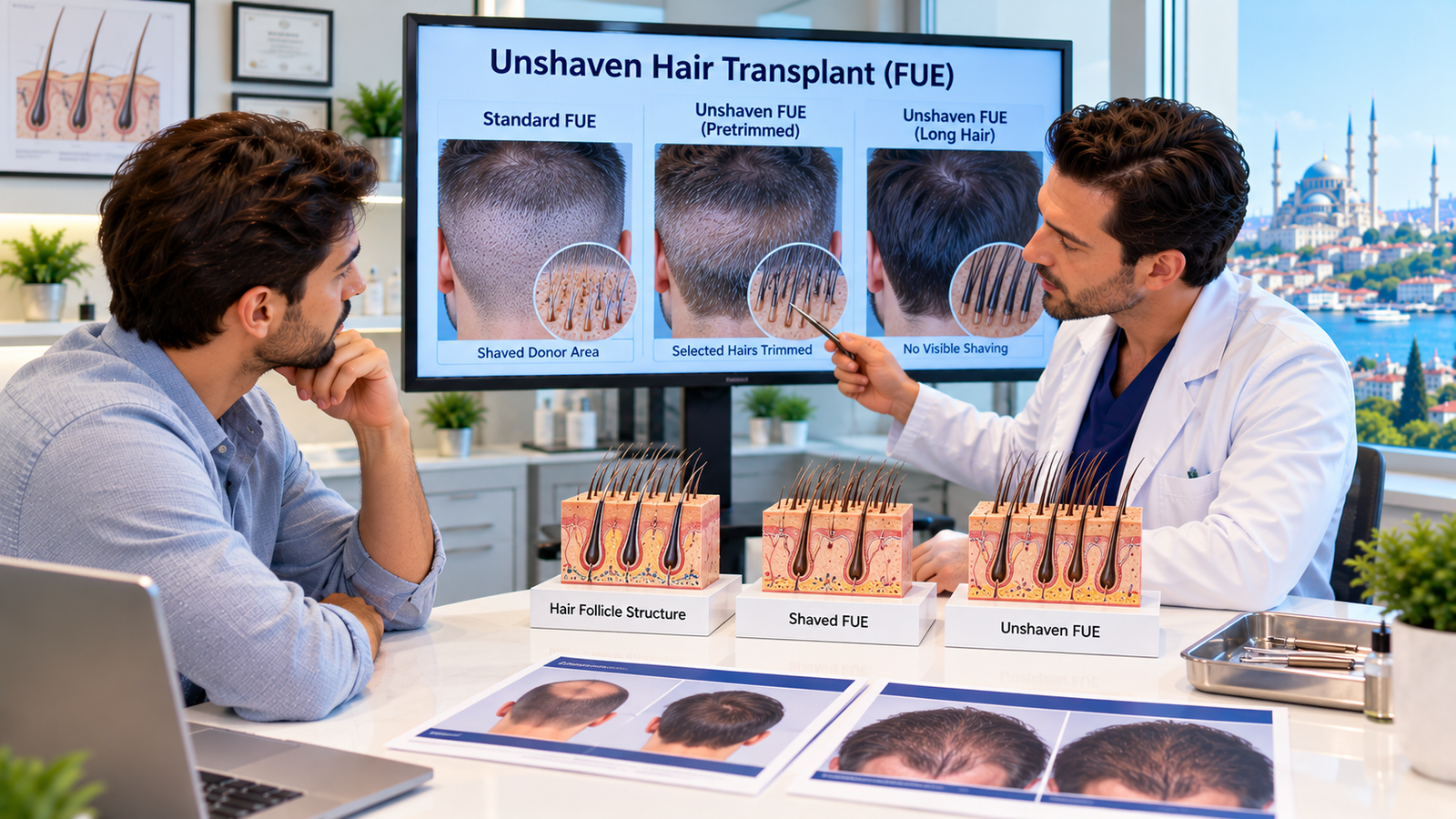
Individual-follicle extraction creates many small donor wounds, while strip surgery creates a linear donor wound closed with sutures or staples.
These approaches can produce different patterns of discomfort and tightness.
What Is Normal Pain?
- Brief stinging from anaesthetic injections.
- Mild donor soreness or tightness for a few days.
- Scalp tenderness when washing begins.
- Temporary numbness or tingling.
What Pain Is Not Normal?
Severe or rapidly worsening pain, especially with fever, pus, spreading redness, significant swelling or heavy bleeding, needs medical review.
Do not assume strong pain is normal if it is getting worse.
Anxiety Can Make Pain Feel Stronger
Knowing the sequence of the procedure can reduce uncertainty. Ask how long the injections take, whether breaks are planned and how long the session is expected to last.
Any additional medication for anxiety or comfort should be discussed in advance.
How Turkelite Medcare Coordinates Pain-Management Questions
Turkelite Medcare is a patient coordination service, not the treating clinic. We do not prescribe pain medicine or decide how much anaesthetic is required.
Our role is to organise provider questions, treatment scope, travel, records and follow-up around the clinician’s plan. See patient services.
Frequently Asked Questions
Is A Hair Transplant Painful?
For many patients, discomfort is limited and the local-anaesthetic injections are the most noticeable part.
How Long Does Pain Last?
Mild donor discomfort often lasts a few days. Pain that becomes stronger should be assessed.
Can I Take Painkillers?
Use only medicines approved by your treating clinician.
Should I Feel Sharp Pain During Surgery?
Tell the team if you feel sharp pain so they can check the anaesthesia.
Comfort Should Be Managed, Not Endured
Mild discomfort can occur, but significant or worsening pain deserves clinical attention.
Sources and further reading
- NHS: Hair transplant
- NHS: Choosing who will do your cosmetic procedure
- Republic of Türkiye Ministry of Health: International health tourism regulation
These sources support general patient information. Individual medical recommendations must come from the treating clinician.
View the related treatment area
This content is for general information and does not replace individual medical advice, diagnosis or treatment. Discuss treatment suitability, risks and recovery with a qualified healthcare professional.