Quick answer
Hair Transplant Recovery Day by Day: the right answer depends on diagnosis, the actual treatment plan and individual risk factors. Use this article to prepare for consultation, then have the treating clinic confirm timing, medicines, suitability and travel planning for your case.
- Do not confirm treatment before adequate clinical assessment.
- Get scope, risks, aftercare and return-travel criteria in writing.
- For care in Turkey, verify the authorised facility and responsible clinician.
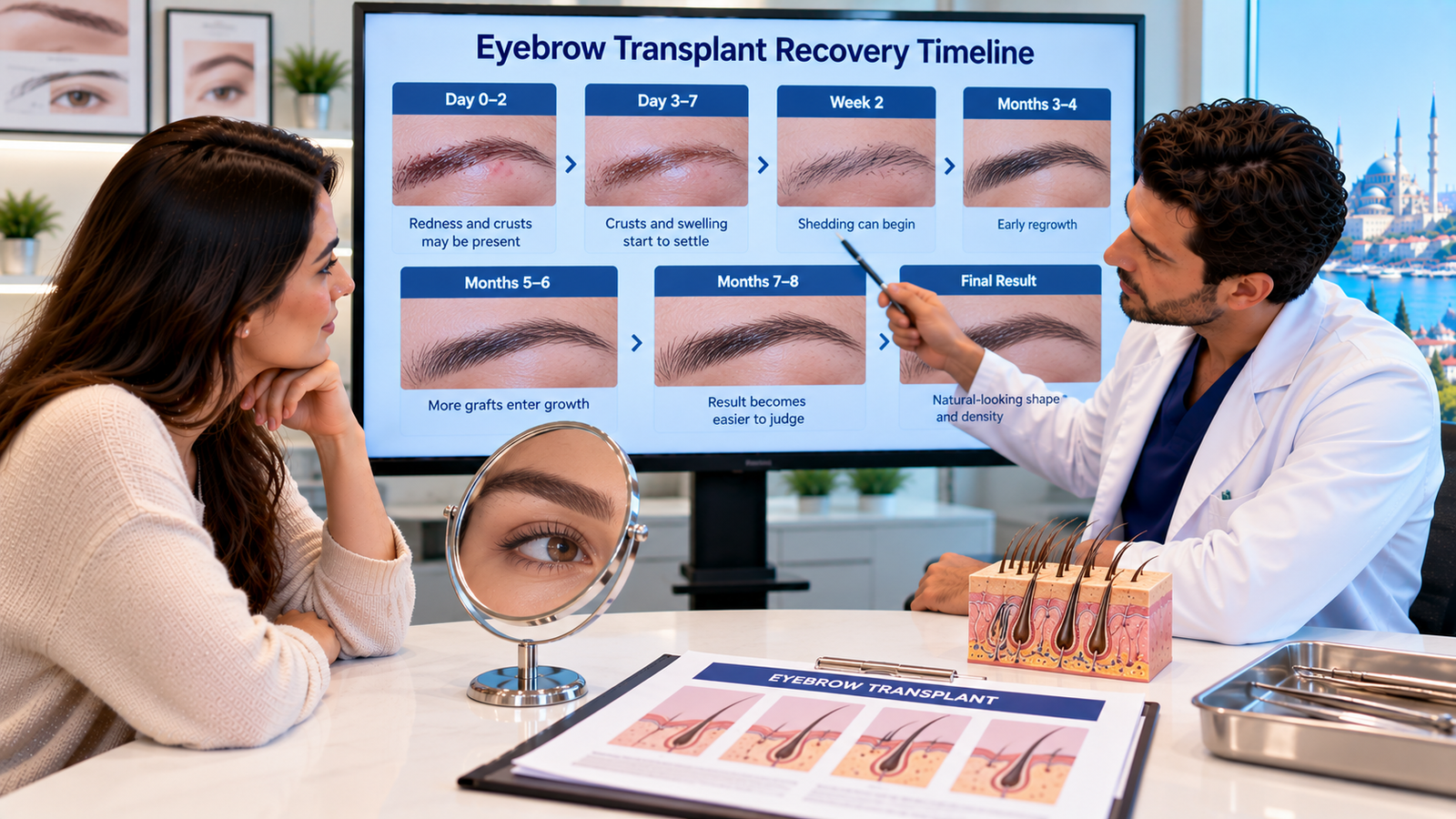
Hair transplant recovery day by day is easier to understand when you separate scalp healing from hair growth. During the first two weeks, the main issues are graft protection, swelling, crusting, washing and donor-area comfort. International Society of Hair Restoration Surgery patient guidance notes that small crusts can flake away during roughly days 5 to 14, while transplanted hair shafts may later shed even though the follicles remain in the scalp. Start with our Hair Restoration pathway and follow the operating clinic’s written instructions because washing, headwear and exercise rules can vary.
Day 0 To Day 2
The first priority is protecting newly placed grafts from rubbing, pressure and accidental impact. Mild tightness or tenderness in the donor area is common, and some patients are advised to sleep with the head elevated for the first few nights.
Use only the washing or spray routine given by your own clinical team.
Day 3 To Day 5
Swelling may still be visible around the forehead while tiny crusts remain around the grafts. The donor area can feel dry or tight.
Do not pick crusts. Washing should be gentle and should follow the clinic’s timing.
Day 6 To Day 9
Crusting generally begins to loosen more clearly during this period. Redness may fade, although it can last longer in some skin types.
If the clinic has given a staged washing plan, washing often becomes more normal during this phase.
Hair Transplant Day 10
By day 10, many patients have much less visible crusting and the grafts are becoming more secure. The scalp can still look pink or dry, and the donor area may remain mildly sensitive.
Day 10 is not a universal “all healed” date. Persistent swelling, increasing pain, spreading redness or discharge should be assessed.
Hair Transplant Day 14
By day 14, most surface crusts are usually gone or close to gone. Some redness, dryness or temporary numbness can remain.
The transplanted shafts may begin to shed over the following weeks. This is expected and does not mean the follicles have been lost.
Weeks 3 To 8
The American Academy of Dermatology notes that transplanted hair commonly sheds between about two and eight weeks after surgery. During this stage the hair can look thinner than expected.
Judge healing by scalp health and clinic review, not by the amount of visible hair.
What Is Normal During Healing?
- Mild donor-area tenderness or tightness.
- Temporary swelling of the forehead or around the eyes.
- Small crusts that gradually loosen.
- Redness that slowly fades.
- Temporary numbness or altered sensation.
- Shedding of transplanted shafts during the first several weeks.
Warning Signs That Need Medical Review
Contact the treating clinic or seek local medical assessment for increasing pain, fever, pus, spreading redness, persistent heavy bleeding, rapidly increasing swelling or another sudden deterioration.
Do not delay urgent care because you are waiting for a reply from an overseas clinic.
How Turkelite Medcare Coordinates Recovery
Turkelite Medcare is a patient coordination service, not the treating hair-transplant clinic. We do not decide the washing schedule, prescribe medication or determine whether a wound is infected.
Our role is to keep provider communication, appointments, travel, records and the return-home handover organised around the clinical instructions confirmed by the treating team. See patient services.
Frequently Asked Questions
What Should A Hair Transplant Look Like On Day 10?
Many patients have much less crusting by day 10, but some redness, dryness and donor tenderness can remain.
Are Grafts Secure By Day 14?
They are usually far more secure than in the first few days, but the scalp is still healing.
Is Shedding After Two Weeks Normal?
Yes. Transplanted hair shafts commonly shed while the follicles remain in place.
When Does The Scalp Look Normal Again?
Surface healing improves substantially over the first two weeks, but redness, dryness and altered sensation can last longer.
Healing Comes Before Growth
The first two weeks are mainly about protecting grafts and allowing the scalp to heal. Visible hair growth is a later process.
Sources and further reading
- NHS: Hair transplant
- NHS: Choosing who will do your cosmetic procedure
- Republic of Türkiye Ministry of Health: International health tourism regulation
These sources support general patient information. Individual medical recommendations must come from the treating clinician.
View the related treatment area
This content is for general information and does not replace individual medical advice, diagnosis or treatment. Discuss treatment suitability, risks and recovery with a qualified healthcare professional.