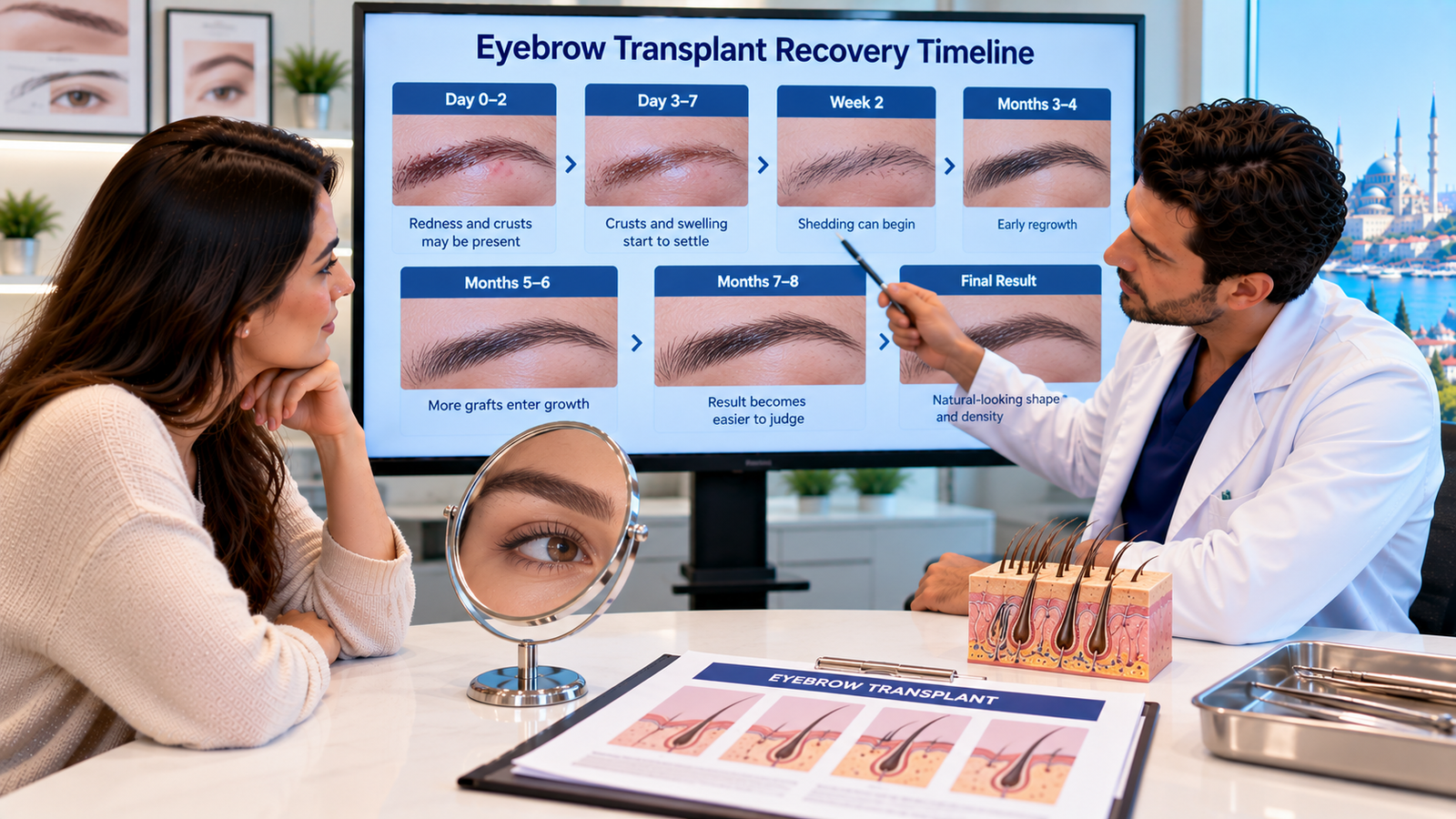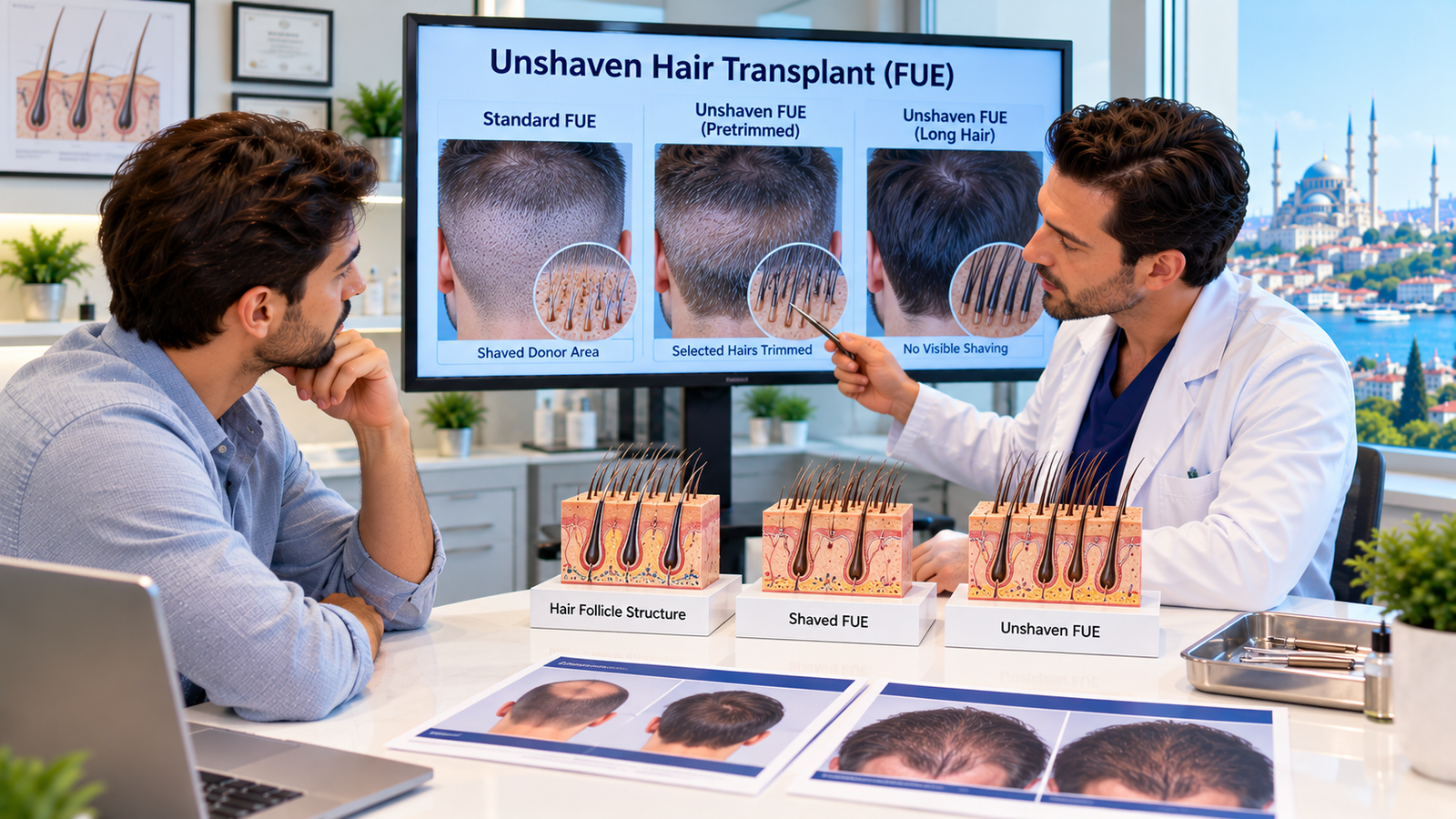

Hair transplant shock loss is a temporary shedding response that can affect existing native hair near the recipient area or, less commonly, hair in the donor area after surgery. It is different from the expected shedding of the transplanted hair shafts themselves. Published hair-transplant literature describes recipient-area shock loss as often beginning roughly 2–8 weeks after surgery, while donor-area postoperative effluvium can also appear after a few days to several weeks. In most temporary cases, regrowth becomes visible over the following months. The important distinction is that heavily miniaturised native hairs may not always recover, and donor thinning caused by overharvesting or tissue injury should not be labelled automatically as harmless shock loss. Start with our Hair Restoration pathway, then ask the treating clinic which type of shedding it believes you have and what findings support that assessment.
What Does Shock Loss Mean After A Hair Transplant?
In hair-transplant literature, shock loss usually refers to postoperative shedding of hairs that were already present before the transplant. It is thought to result from temporary disruption of the normal hair-growth cycle after surgical trauma, inflammation or changes around the treated tissue.
Shock loss can occur in the recipient area, where native hair surrounds newly implanted grafts, or in the donor area, where follicles were harvested. The two locations have different practical questions and should be examined separately.
The term should not be used as a catch-all explanation for every thin area after surgery. Patchy depletion from excessive harvesting, infection, skin injury or scarring requires a different assessment.
Shock Loss And Normal Graft Shedding Are Not The Same Thing
Transplanted follicles commonly shed the visible hair shaft in the first weeks after surgery. This does not mean that the transplanted follicle itself has fallen out. Published reviews describe transplanted-hair shedding commonly around 3–4 weeks, followed by a resting period before new growth develops.
Shock loss, by contrast, refers mainly to shedding of native non-transplanted hair around the recipient area or hair in the donor area. Both events can happen in the same recovery period, which is why patients often confuse them.
Ask the clinic to identify whether the hairs being lost are transplanted shafts, pre-existing native hairs or donor-area hairs. The answer changes how the pattern should be interpreted.
What Is The Typical Shock Loss Timeline?
Current reviews describe recipient-area shock loss most often beginning around 2–8 weeks after transplantation. Some earlier literature describes the common onset around 3–4 weeks. Donor-area effluvium may begin within a few days to several weeks and is often most noticeable around 2–4 weeks.
Temporary recipient shock loss often begins to regrow around 3 months, while donor-area recovery is commonly described over about 3–6 months. Individual timing varies, and visible cosmetic recovery can take longer because new hairs first emerge fine and short.
A timeline can guide expectations, but it cannot diagnose the cause of a thin patch without examining the scalp.
Why Does Recipient-Area Shock Loss Happen?
The recipient area contains newly implanted grafts as well as native hairs that may already be affected by androgenetic hair loss. Surgical incisions, local inflammation and temporary changes in the growth cycle can push some surrounding native hairs into a shedding phase.
Miniaturised hairs are especially vulnerable. Reviews note that some weak native follicles may not fully recover if they were already approaching the end of their productive life before surgery.
This is one reason the preoperative assessment should document existing miniaturisation rather than planning only around the empty scalp.
Can Shock Loss Be Permanent?
Most postoperative shock loss described in otherwise healthy follicles is temporary. However, permanent loss is possible when the affected native hairs are severely miniaturised or when the problem is not true shock loss at all.
For example, a donor area that has been overharvested may remain visibly depleted because too many follicles were removed. Tissue damage, vascular compromise, infection or scarring can also create persistent loss.
If the clinic calls every persistent thin area “shock loss” without examining donor density, skin condition and the surgical pattern, ask for an in-person review or an independent specialist opinion.
Shock Loss In The Donor Area
Donor-area shock loss is usually described as postoperative effluvium affecting hairs that were not removed. It can appear as temporary thinning around harvested areas rather than the uniform appearance patients expected after the donor hair is cut short.
Published reviews describe donor effluvium as relatively uncommon and usually temporary, with onset often around 2–4 weeks and improvement over roughly 3–6 months. The scalp should remain healthy while the hair cycle recovers.
Donor-area thinning that is sharply geometric, extremely sparse or associated with skin colour change, severe pain, crusting, discharge or scarring deserves prompt clinical review.
Donor Shock Loss Versus Overharvesting
The distinction matters because the long-term outlook is different. Shock loss affects hairs that remain in the scalp and may regrow. Overharvesting means an excessive number of follicles have actually been removed from an area.
Overharvesting can leave a moth-eaten, patchy or visibly low-density donor region, especially with very short hair. The risk depends on donor density, extraction pattern, follicle spacing and how aggressively harvesting was performed.
A proper donor examination should compare the extraction pattern with remaining follicular density rather than waiting indefinitely for every thin area to recover.
Recipient Shock Loss Versus Poor Graft Growth
Recipient shock loss affects native hairs. Poor graft growth concerns the transplanted follicles themselves. Early in recovery, the two problems can look similar because transplanted shafts have shed and native hair may also be thinner.
It is generally too early to judge final graft growth in the first few months. New transplanted growth often begins after the resting phase and develops progressively over many months.
If a clinic diagnoses poor graft survival very early, ask what objective evidence it is using. Likewise, do not assume a sparse appearance at 6–8 weeks means the transplant has failed.
Does The Crown Behave Differently?
The crown can be visually slow to improve because of its whorl pattern, larger surface area and the way density is perceived under overhead light. If native crown hairs are miniaturised, temporary shock loss can make the area look worse before growth improves.
Do not use the crown alone to judge the entire procedure during the early shedding phase. Ask the clinic how it documented pre-existing miniaturisation and how much of the crown was actually transplanted.
Long-term planning is important because using too much donor hair in the crown can reduce options for future hair loss elsewhere.
Does Shock Loss Mean The Surgery Was Done Badly?
Not necessarily. Temporary postoperative shedding is a recognised complication even when surgery is performed appropriately. The presence of shock loss by itself does not prove negligence or technical failure.
However, the pattern, severity and associated scalp findings matter. Excessive donor extraction, poor recipient-site planning, vascular injury, infection or delayed treatment of complications are separate issues that should not be hidden behind the label.
The clinic should be able to explain what it expected, what it sees now and what objective signs support a temporary diagnosis.
Can Shock Loss Be Prevented?
No method can guarantee that shock loss will not occur. Risk can be reduced by careful candidate selection, recognising vulnerable miniaturised hair, conservative donor planning, appropriate surgical technique and a treatment plan that considers ongoing hair loss.
Some clinicians may discuss medical therapy for androgenetic hair loss before or after transplantation. Those medicines have contraindications and possible side effects, so they should be prescribed or recommended by a qualified clinician after individual assessment.
Do not start medication, steroid treatment or unproven scalp products solely because an online post claims they prevent shock loss.
What Should The Clinic Check If You Report Shock Loss?
- Whether the thinning is in the recipient area, donor area or both.
- Whether the hairs lost were transplanted shafts or pre-existing native hair.
- The timing of onset after surgery.
- The donor extraction pattern and remaining density.
- Whether the scalp shows redness, infection, scarring or tissue injury.
- Whether native hairs were already miniaturised before surgery.
- Whether there is pain, discharge, bleeding or another unexpected symptom.
- Whether photographs show stable, improving or worsening density over time.
When Should You Contact The Clinic Promptly?
Contact the treating team if shedding is accompanied by worsening pain, marked redness, spreading swelling, pus or unpleasant discharge, fever, black or dusky skin, persistent bleeding or another sign of wound trouble. These are not typical features of simple hair-cycle shedding.
Also seek review if the donor area becomes severely patchy or visibly depleted, if thinning continues to worsen beyond the expected early period or if there is no sign of recovery over the months when regrowth would normally be expected.
Urgent symptoms should be assessed locally rather than managed only through photographs if waiting could delay necessary treatment.
How To Photograph The Area For Follow-Up
Use consistent lighting, distance, hairstyle and camera angle. Photograph the same recipient and donor zones every few weeks rather than taking daily photographs in changing conditions.
Wet hair, harsh overhead light and very short clipping can make density look dramatically different. Standardised photographs are more useful for comparing progression.
Send the images according to the treating clinic's follow-up schedule and keep the originals for your records.
What To Ask Before A Hair Transplant About Shock Loss
- How much miniaturised native hair is present in the recipient area?
- What is my risk of temporary or permanent recipient shock loss?
- How will you avoid excessive donor harvesting?
- What donor density will remain after the planned extraction?
- When do you normally expect transplanted shafts to shed?
- When do you normally expect native shock loss to appear and recover?
- Who reviews the scalp if donor thinning develops after I return home?
- What symptoms would make you suspect something other than temporary shock loss?
- When would you recommend an in-person examination instead of remote review?
- How will ongoing native hair loss be managed long term?
How Turkelite Medcare Coordinates Follow-Up
Turkelite Medcare is a patient coordination service, not the hair-transplant clinic. We do not diagnose shock loss, determine whether follicles are permanently damaged or prescribe medicines for shedding.
Our role is to keep provider communication, requested photographs, appointments, travel arrangements and the return-home handover organised around the medical plan confirmed by the independent treating provider.
The patient services page explains this practical coordination role.
Frequently Asked Questions
When Does Hair Transplant Shock Loss Start?
Recipient-area shock loss is commonly described around 2–8 weeks after surgery, with some literature placing the typical onset around 3–4 weeks. Donor-area effluvium can begin within days to several weeks and is often noticed around 2–4 weeks.
How Long Does Shock Loss Last?
Temporary recipient hairs often begin to regrow around 3 months. Donor-area effluvium commonly improves over roughly 3–6 months. Cosmetic recovery can take longer because new hairs initially emerge short and fine.
Is Donor-Area Shock Loss Normal?
It is a recognised but relatively uncommon postoperative event and is usually temporary. Severe patchiness, skin injury, infection, scarring or a pattern suggesting overharvesting should be examined rather than assumed to be normal shock loss.
What Is The Difference Between Shock Loss And Shedding?
Expected graft shedding usually means the visible shafts of transplanted hairs fall out while the follicles remain in the scalp. Shock loss usually refers to temporary shedding of native non-transplanted hairs in the recipient or donor area.
Can Shock Loss Be Permanent?
Most true shock loss is temporary, but severely miniaturised native hairs may not recover. Persistent donor thinning may also reflect overharvesting, scarring or another problem rather than temporary shock loss.
When Should I Worry About A Thin Donor Area?
Ask for clinical review if the donor area is severely patchy, continues worsening, shows pain, redness, discharge, scarring or skin colour change, or fails to show recovery over the expected months. An examination can distinguish temporary effluvium from structural donor depletion.
Use The Pattern And Timeline, Not The Label Alone
Shock loss is a recognised part of hair-transplant recovery, but it is not a universal explanation for every area of thinning. Distinguish transplanted-shaft shedding from native recipient shock loss and donor-area effluvium, then check whether the timing, scalp condition and recovery pattern fit a temporary process. When they do not, the treating clinician should investigate rather than simply asking you to wait.
This content is for general information and does not replace individual medical advice, diagnosis or treatment. Discuss treatment suitability, risks and recovery with a qualified healthcare professional.