Quick answer
Is Gastric Sleeve Surgery in Turkey Safe?: the right answer depends on diagnosis, the actual treatment plan and individual risk factors. Use this article to prepare for consultation, then have the treating clinic confirm timing, medicines, suitability and travel planning for your case.
- Do not confirm treatment before adequate clinical assessment.
- Get scope, risks, aftercare and return-travel criteria in writing.
- For care in Turkey, verify the authorised facility and responsible clinician.
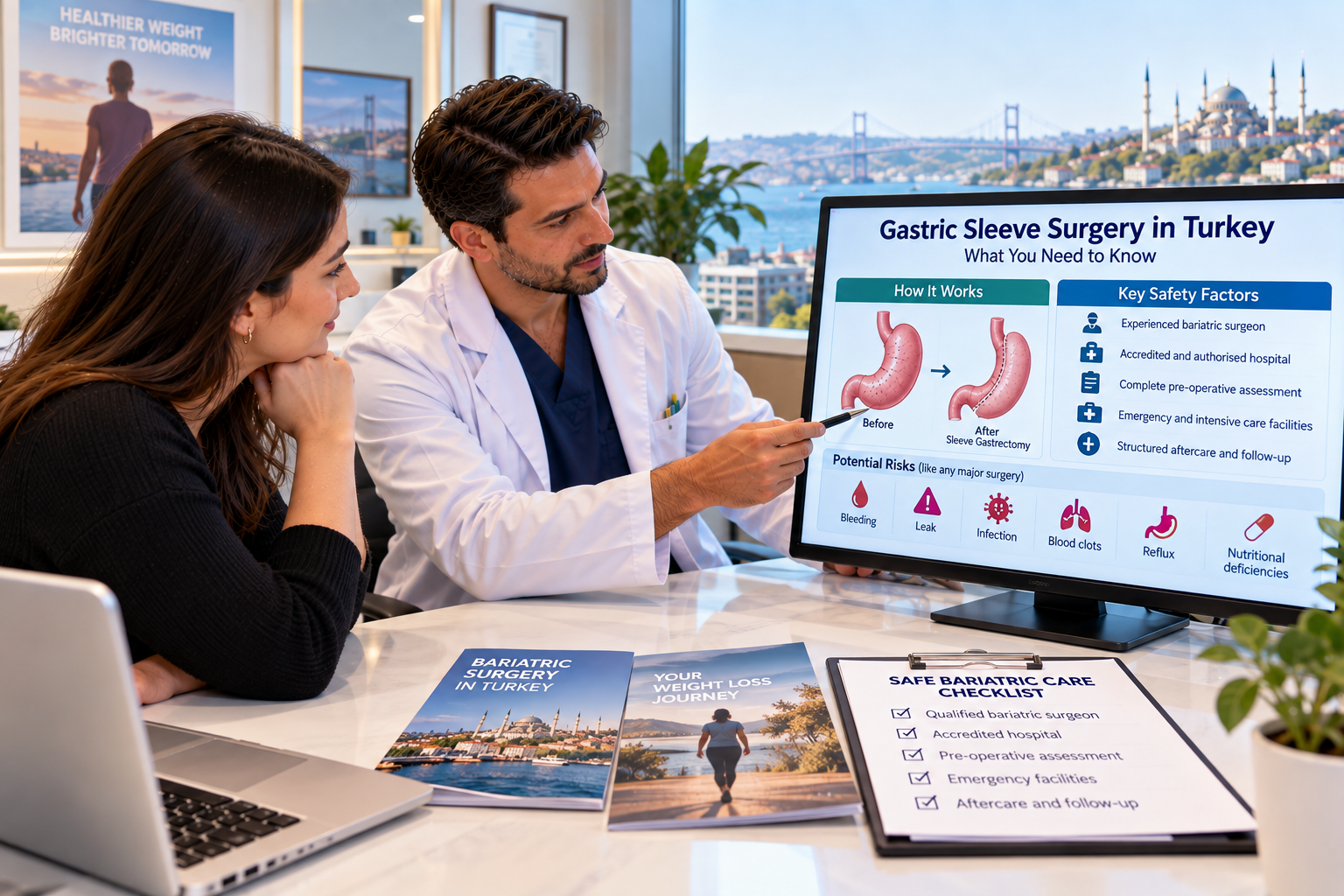
Is gastric sleeve surgery in Turkey safe? The country name alone cannot answer that question. Sleeve gastrectomy is an established bariatric operation with low peri-operative mortality in large international registries, but it still carries real surgical risks, and cross-border treatment adds questions about provider verification, pre-operative assessment, discharge timing and follow-up after you fly home. The safest way to assess a Turkish programme is to verify the hospital, named bariatric surgeon, clinical eligibility process and long-term aftercare rather than relying on price, social media or a package label. Start with our Bariatric & Weight Loss pathway and treat safety as a provider-and-care-pathway question.
What The Global Bariatric Data Say
Metabolic and bariatric surgery is now performed at large scale worldwide. The International Federation for the Surgery of Obesity and Metabolic Disorders reports that reliable registry data show peri-operative mortality generally below 1 per 1,000 procedures across participating health systems.
That global figure is useful context, but it is not a Turkey-specific sleeve mortality rate and it cannot tell you the risk at a particular clinic or for a particular patient.
Sleeve Gastrectomy Has Specific Risks
Recognised early risks include bleeding, staple-line leak, infection, blood clots and anaesthetic complications. Longer-term issues can include reflux, nutritional deficiencies, vomiting, inadequate weight loss or later weight regain.
Risk depends on patient health, surgical technique, hospital systems, early monitoring and how quickly complications are recognised and treated.
Safety Starts With Patient Selection
A safe programme should not confirm surgery from a sales conversation alone. Current bariatric guidance expects medical assessment and consideration of obesity severity, diabetes and other conditions, previous treatment, nutrition, psychological or behavioural factors and surgical risk.
A patient who is not suitable for sleeve gastrectomy may need another bariatric option, medical treatment or more optimisation before any operation.
Verify The Hospital And The Named Surgeon
Ask for the legal hospital or clinic name, treatment address and the full name of the surgeon who will perform the operation. Ask about the surgeon’s bariatric training, procedure-specific experience and who provides cover if a complication occurs overnight or after discharge.
Turkey’s Ministry of Health publishes authorised international health-tourism providers. Authorisation is a useful verification step, but it does not replace checking the surgeon, hospital capability and clinical plan.
Ask What Emergency Capability Exists On Site
A bariatric operation should be performed in a setting that can manage bleeding, leak, anaesthetic complications, respiratory problems and blood clots. Ask whether imaging, endoscopy, intensive care, interventional radiology and emergency re-operation are available on site or through a clearly defined transfer pathway.
If the clinic cannot explain how a serious complication would be managed, the treatment package is not complete from a safety perspective.
Do Not Use A Low Price As A Safety Measure
Price can reflect many factors, including local labour and operating costs, but it does not prove quality or lack of quality. A high price does not guarantee safe care, and a low price does not by itself prove unsafe care.
The useful comparison is what the written package includes: hospital level, surgeon, anaesthesia, tests, medicines, inpatient monitoring, emergency care, follow-up and what happens if the stay must be extended.
What Official UK Travel Advice Says
Current UK travel advice warns that standards of medical facilities and treatments can vary and reports that 7 British nationals died in Turkey in 2025 following medical procedures. The same advice notes that some British nationals have needed further treatment or surgery after complications.
That figure covers medical procedures generally and is not a sleeve-gastrectomy complication rate. It should be understood as a warning to verify care carefully, not as a way to calculate an individual bariatric risk.
What Research On Bariatric Tourism Adds
Recent systematic reviews of bariatric medical tourism describe problems when pre-operative optimisation, counselling or follow-up fall outside recognised standards. Another 2026 review found that published complication reports from medical tourism do not provide enough denominator data to calculate the true overall risk of travelling abroad for surgery.
This means neither reassuring marketing claims nor complication case reports can substitute for verified provider-level outcome data.
Return Travel Can Change The Risk
Flying home too early can make assessment and treatment of a developing complication harder. The treating team should specify discharge criteria, review timing, mobility and blood-clot prevention, hydration, diet progression and when air travel is considered appropriate.
Do not set the return flight only around the cheapest ticket. Clinical readiness should determine the timing.
Aftercare Is Part Of Safety
Obesity is a chronic disease, and sleeve gastrectomy requires long-term nutrition, supplementation, weight monitoring and review of reflux or other symptoms. A programme that ends when the patient leaves the hotel is incomplete.
Before travel, confirm who will answer clinical questions after you return home, how records are transferred and which local clinician will be involved in nutrition and medical follow-up.
Red Flags That Need Urgent Medical Assessment
- Severe or rapidly worsening abdominal or chest pain.
- Persistent fast heart rate or faintness.
- Fever or rapidly worsening illness.
- Repeated vomiting or inability to keep fluids down.
- Shortness of breath or new chest symptoms.
- Leg swelling or pain suggesting a possible blood clot.
- Black stools, vomiting blood or other significant bleeding.
After surgery abroad, urgent symptoms should be assessed locally rather than waiting for a reply from the overseas clinic.
Questions To Ask Before Booking Surgery In Turkey
- Who is the named bariatric surgeon and what is their procedure-specific experience?
- Which hospital will perform the surgery?
- Is the provider authorised for international health tourism?
- What medical, nutritional and psychological assessment is required before surgery?
- How are leak, bleeding and blood-clot risks prevented and monitored?
- What emergency services are available at the hospital?
- How many nights of inpatient monitoring are planned?
- What clinical criteria must I meet before discharge and flying home?
- Who manages complications after I return to my country?
- What long-term nutritional monitoring and supplementation plan will I receive?
What Outcome Data Should A Clinic Be Able To Explain?
Ask for the clinic’s own recent sleeve volume, re-operation rate, leak rate, readmission pathway and how it defines and records complications. Raw marketing percentages without a time period, denominator or definition are difficult to interpret.
It is also reasonable to ask whether outcomes are audited by an external registry or quality programme.
How Turkelite Medcare Approaches Safety Questions
Turkelite Medcare is a patient coordination service, not the treating hospital or bariatric surgeon. We do not certify that surgery is risk-free and we do not make the medical eligibility decision.
Our role is to help structure provider questions, records, appointments, travel and follow-up around the plan confirmed by independent licensed clinicians. See patient services.
Frequently Asked Questions
Is Weight Loss Surgery In Turkey Safe?
It can be delivered safely in an appropriately selected patient by a qualified team in a capable hospital, but safety varies by provider, patient and follow-up pathway. The country alone is not a guarantee.
Is Sleeve Gastrectomy A High-Risk Operation?
Large international registry data show low peri-operative mortality overall, but serious complications such as leak, bleeding and blood clots can occur and require rapid treatment.
How Do I Check A Bariatric Clinic In Turkey?
Verify the legal provider, named surgeon, Ministry of Health authorisation where relevant, hospital capability, written treatment scope, emergency plan and long-term follow-up.
Does A Short Hospital Stay Mean The Surgery Is Safer?
No. Length of stay should reflect the clinical pathway and recovery, not be used as a quality score. The important issue is whether discharge criteria and follow-up are appropriate for the patient.
Safety Is A Chain, Not A Country Label
A safe bariatric journey depends on correct eligibility, a qualified surgeon, an appropriate hospital, complication readiness, realistic discharge and travel timing, and long-term follow-up. Evaluate every link in that chain before booking.
Sources and further reading
- NHS: What is weight loss surgery?
- NHS: Overweight and obesity in adults
- Republic of Türkiye Ministry of Health: International health tourism regulation
These sources support general patient information. Individual medical recommendations must come from the treating clinician.
View the related treatment area
This content is for general information and does not replace individual medical advice, diagnosis or treatment. Discuss treatment suitability, risks and recovery with a qualified healthcare professional.