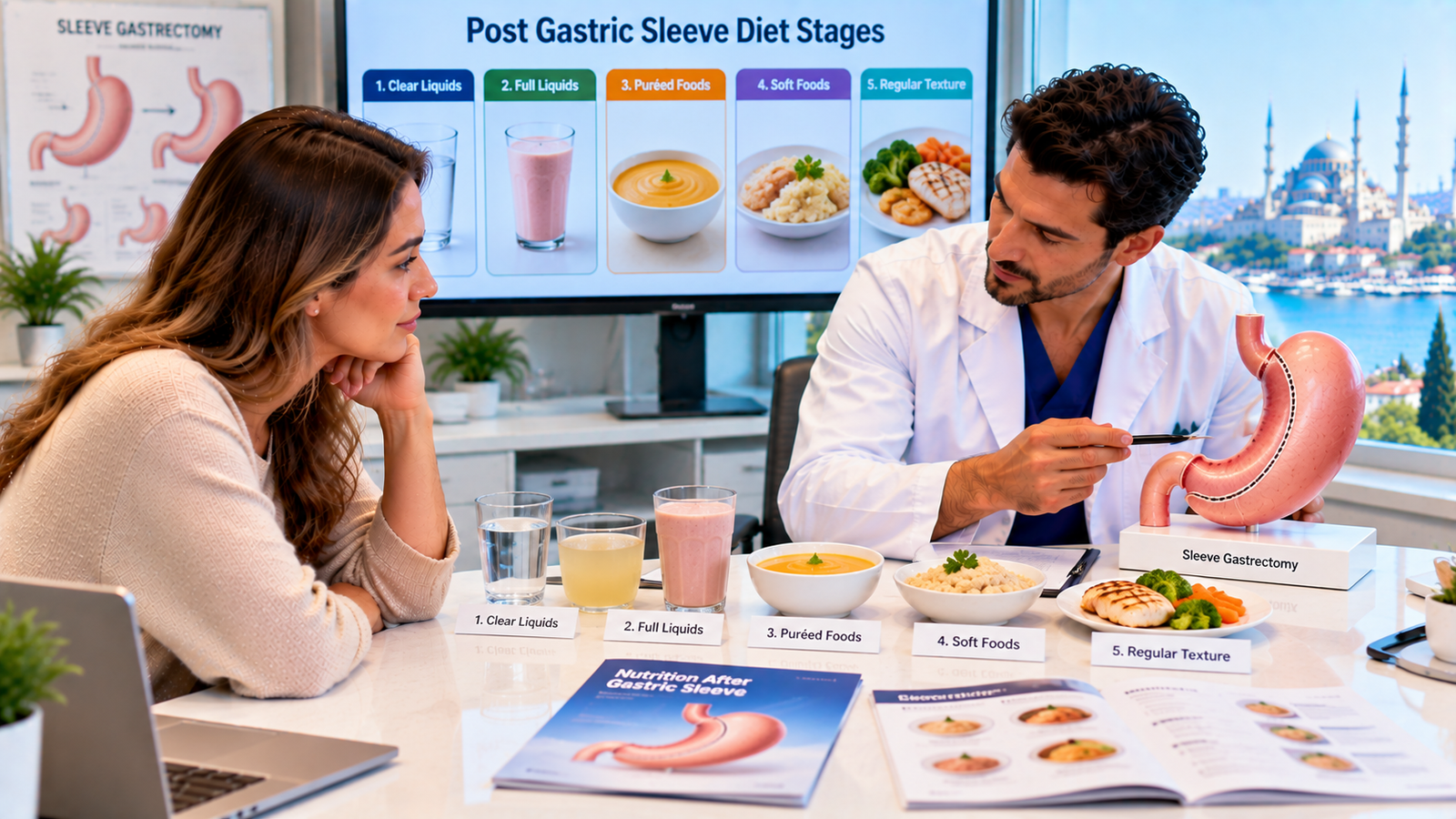
Liquid diet after gastric sleeve is the first part of a staged nutrition plan designed to protect healing tissues, maintain hydration and gradually reintroduce food after surgery. Professional bariatric guidance describes progression from liquids to puréed foods, then soft foods and eventually more regular textures, but the exact timing differs between programmes. The American Society for Metabolic and Bariatric Surgery gives general patient targets of at least 64 fluid ounces, about 1.9 litres, of fluid per day and roughly 60–100 grams of protein per day, while the treating bariatric team may set different targets for an individual. Start with our Sleeve Gastrectomy page and follow the written diet stages from your own surgical programme rather than copying another patient’s calendar.
Why The Diet Starts With Liquids
Immediately after surgery, the new stomach sleeve is swollen and healing. Liquids are used first because they can provide hydration with less mechanical stress than solid food. The early goal is not rapid progression; it is tolerating fluids safely without repeated vomiting or dehydration.
Stage 1: Clear Or Thin Liquids
Many programmes begin with small sips of water and other approved clear or thin liquids once the surgical team confirms that drinking can start. The exact hospital protocol varies, and some centres move to fuller liquids earlier than others.
Do not force large volumes at once. Frequent small sips are usually easier to tolerate than drinking quickly.
Stage 2: Full Liquids And Protein
After clear liquids are tolerated, programmes commonly introduce fuller liquids that can help meet protein and energy needs. Examples depend on the dietitian’s plan and can include approved protein drinks or other smooth liquids without solid pieces.
Protein becomes increasingly important because intake is small and the body needs protein during healing. General bariatric patient guidance often uses a daily protein target of about 60–100 grams, but your own programme should confirm the amount appropriate for you.
Stage 3: Puréed Foods
The next stage commonly introduces completely smooth puréed foods. The purpose is to increase nutritional variety without requiring the healing stomach to manage normal food texture immediately.
Food should be eaten slowly in very small portions. Stop when fullness, pressure, nausea or discomfort begins rather than trying to finish a planned portion.
Stage 4: Soft Foods
Soft, moist foods are introduced when the bariatric team decides the puréed stage is being tolerated. Chewing becomes important even though the food texture remains gentle.
This stage is not permission to return to unrestricted eating. Portion size remains small, protein remains a priority and foods that are dry, tough or difficult to chew may still be poorly tolerated.
Stage 5: Progressing Toward Regular Textures
More regular solid foods are introduced gradually according to tolerance and the programme’s timetable. Long-term eating usually focuses on nutrient-dense foods, adequate protein, small portions, slow eating and careful chewing.
There is no single date on which every patient should be eating a normal diet. Healing, symptoms and clinical review matter more than matching a calendar.
How Much Should You Drink?
The American Society for Metabolic and Bariatric Surgery advises bariatric patients to stay hydrated and gives a general target of 64 fluid ounces or more per day, which is about 1.9 litres. Your programme may adjust this for your body size, kidney or heart conditions, climate, vomiting, diarrhoea or other medical factors.
Signs of dehydration can include dark urine, low urine output, dizziness, dry mouth, weakness or difficulty keeping fluids down.
How Should You Drink After Sleeve Surgery?
Small, regular sips are usually better tolerated than large drinks. Many programmes advise avoiding gulping and carbonated drinks during the early recovery period.
As solid foods are reintroduced, some programmes also separate drinking from meals so the small stomach is not filled rapidly with both food and fluid. Follow the timing used by your own dietitian or surgical team.
Protein Comes Before Large Food Volume
Because stomach capacity is reduced, patients cannot rely on eating large portions to meet protein needs. Protein drinks can help early on, and later stages usually move toward protein-rich foods that fit the allowed texture.
If you repeatedly fail to meet your programme’s protein target, tell the bariatric dietitian rather than increasing portion size without guidance.
Vitamins And Minerals Still Matter During The Diet Stages
Sleeve gastrectomy can lead to vitamin and mineral deficiencies because food intake is reduced and eating patterns change. Bariatric programmes usually prescribe long-term supplements and scheduled blood monitoring.
Do not stop prescribed supplements simply because the diet is still liquid unless the treating team tells you how and when each supplement should be taken.
Vomiting Is Not A Normal Diet Stage
Persistent vomiting, difficulty swallowing or repeated regurgitation should not be accepted as a normal consequence of bariatric surgery. Professional guidance recommends investigation because these symptoms can reflect dehydration, narrowing, intolerance or another complication.
Prolonged vomiting also increases the risk of thiamine deficiency, which can become serious quickly. Seek clinical advice early rather than waiting for the next routine appointment.
Warning Signs That Need Prompt Medical Review
- Inability to keep fluids down.
- Repeated or prolonged vomiting.
- Severe or increasing abdominal pain.
- Fever or feeling acutely unwell.
- Rapid heart rate, faintness or marked weakness.
- Very low urine output or other signs of dehydration.
- Difficulty swallowing that is new or worsening.
- Shortness of breath, chest pain or leg swelling.
Diet Planning When You Travel Home After Surgery
Before leaving Turkey, take a written diet schedule that states your current stage, the criteria for moving to the next stage, fluid and protein targets, supplements, warning signs and the clinical contact for problems.
Check that the protein products and suitable foods recommended by the programme are realistically available in your home country. Travel should not force you to advance the diet early.
Questions To Ask The Bariatric Dietitian
- Which diet stage am I on when I leave hospital?
- What must I tolerate before moving to the next stage?
- What is my personal daily fluid target?
- What is my personal daily protein target?
- Which protein drinks are acceptable?
- When do I start puréed and soft foods?
- When should fluids be separated from meals?
- Which vitamins and minerals do I start and when?
- What symptoms mean I should stop progressing the diet?
- Who do I contact if I cannot drink or I keep vomiting after I return home?
How Turkelite Medcare Coordinates Nutrition Handover
Turkelite Medcare is a patient coordination service, not the treating bariatric unit or dietitian. We do not prescribe a diet stage, protein target, supplement dose or progression date.
Our role is to organise provider questions, written discharge information, travel and the return-home handover around the nutrition plan confirmed by the bariatric team. See patient services.
Frequently Asked Questions
How Long Is The Liquid Diet After Gastric Sleeve?
There is no universal duration. Programmes progress at different speeds, and the treating team should decide when you move from liquids to purée, soft foods and regular textures.
How Much Protein Do I Need After Gastric Sleeve?
General bariatric patient guidance often uses about 60–100 grams per day, but your individual target should be set by your bariatric team or dietitian.
How Much Fluid Should I Drink?
General bariatric guidance often uses at least 64 fluid ounces, about 1.9 litres, per day. Your target may need adjustment for your medical condition and tolerance.
Is Vomiting Normal When I Move To The Next Diet Stage?
No. Occasional intolerance to a new texture can happen, but persistent vomiting or difficulty swallowing needs clinical assessment and should not be treated as a routine stage of recovery.
Progress By Tolerance And Clinical Advice, Not By The Calendar Alone
The safest gastric sleeve diet progression is the one confirmed by your own bariatric programme. Liquids, purée, soft foods and regular textures are stages, not deadlines. Hydration, protein, supplements and warning signs matter more than reaching solid food quickly.
This content is for general information and does not replace individual medical advice, diagnosis or treatment. Discuss treatment suitability, risks and recovery with a qualified healthcare professional.