Quick answer
Questions to Ask Before Hair Transplant: Clinic Checklist: the right answer depends on diagnosis, the actual treatment plan and individual risk factors. Use this article to prepare for consultation, then have the treating clinic confirm timing, medicines, suitability and travel planning for your case.
- Do not confirm treatment before adequate clinical assessment.
- Get scope, risks, aftercare and return-travel criteria in writing.
- For care in Turkey, verify the authorised facility and responsible clinician.
The best questions to ask before hair transplant surgery are not limited to price or graft count. A useful consultation should establish why you are losing hair, whether transplantation is suitable, how much donor hair can be used safely, who performs the key clinical steps, what result is realistic and what happens if your non-transplanted hair continues to thin. The American Academy of Dermatology notes that candidacy depends on having enough healthy donor hair and the ability to grow hair in the thinning area, while the International Society of Hair Restoration Surgery emphasises diagnosis, donor density, the area to be covered and realistic expectations. Begin with the broader Hair Restoration pathway, then take the questions below into your clinical consultation.
1. What Is The Diagnosis Behind My Hair Loss?
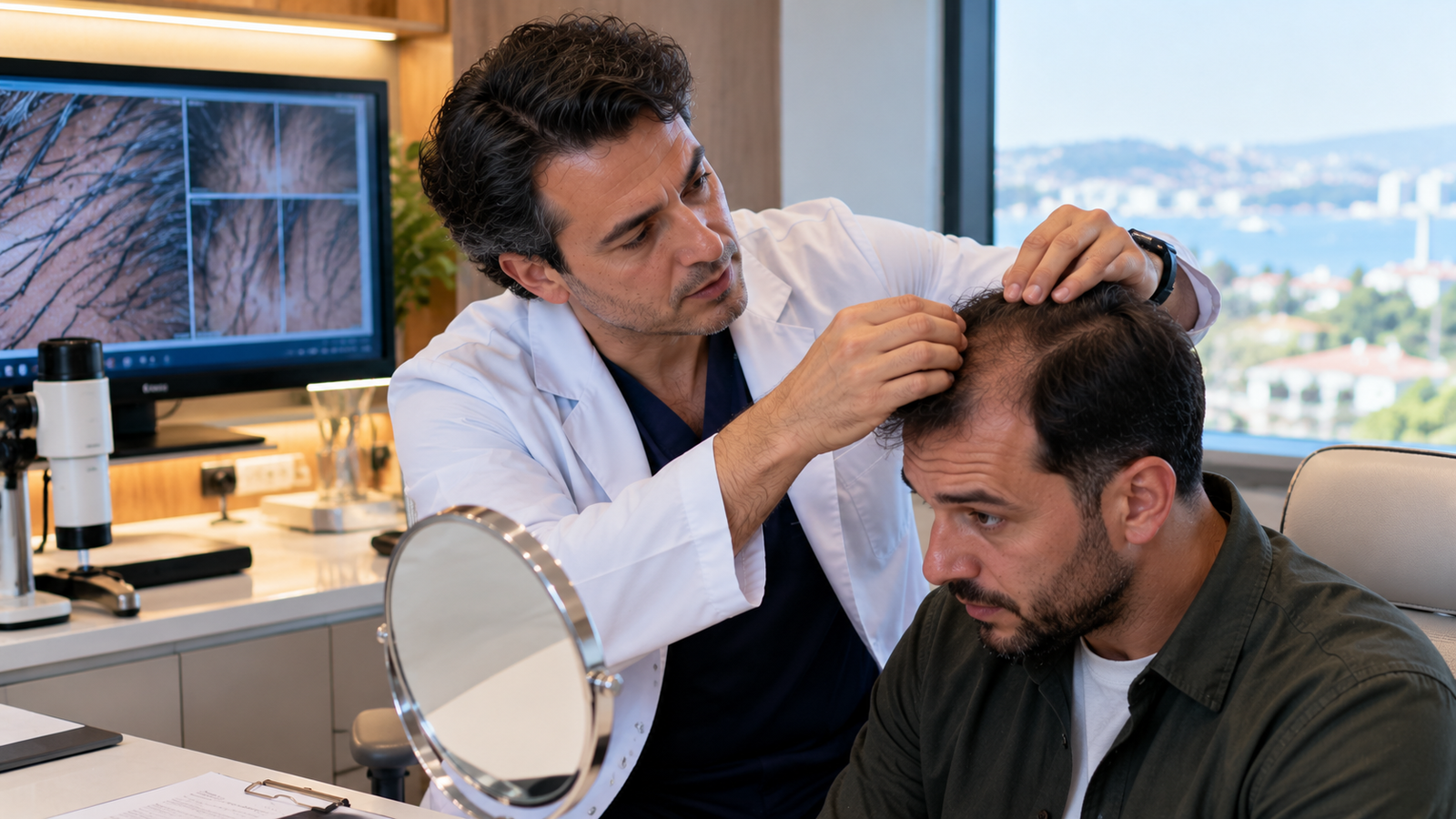
A hair transplant moves existing follicles; it does not diagnose why hair is being lost. The American Academy of Dermatology explains that hair loss has many causes and that an accurate diagnosis may require scalp examination, medical history, blood tests or, in selected cases, a scalp biopsy. That matters because not every type of hair loss should be treated first with transplantation.
Ask the clinic to name the diagnosis rather than simply saying that you are “a good candidate.” Find out whether the pattern appears stable, whether there are signs of inflammation or scarring and whether another medical condition should be treated before surgery.
A clinic that plans the hairline before establishing the cause of hair loss is starting with the cosmetic drawing rather than the medical problem.
2. Am I Actually A Good Candidate For Transplantation?
The American Academy of Dermatology describes two basic requirements: enough healthy hair in a donor area and the ability to grow transplanted hair in the thinning area. The International Society of Hair Restoration Surgery adds factors such as general health, hair texture, donor density, the size of the donor and recipient areas, previous procedures and the patient's goals.
Ask which findings make you suitable and which findings could make the surgeon delay, modify or decline surgery. If you are young and the hair-loss pattern is still changing quickly, ask how future progression affects the plan.
Suitability should be explained as a clinical judgement, not as a sales approval.
3. How Strong Is My Donor Area?
The donor area is a limited biological resource. Transplantation redistributes existing follicles; it does not create new ones. Ask how the clinic assesses donor density, hair calibre, miniaturisation and the amount of hair that should be preserved for future loss.
Do not focus only on the largest possible graft number. A high number may sound attractive, but the more important question is whether harvesting that amount is safe for your donor area and consistent with a long-term plan.
Ask the surgeon what the donor area is expected to look like after healing and what options would remain if you need another procedure years later.
4. Who Will Examine Me And Who Will Perform The Key Steps?
You should know the identity and role of the clinician who is medically responsible for your assessment, consent, treatment plan and follow-up. Ask who designs the hairline, who administers anaesthesia, who performs donor harvesting, who creates recipient sites and who places grafts.
The American Society of Plastic Surgeons recommends asking about the surgeon's training, experience, facility and the number of similar procedures performed. The important point is not a title on a marketing page but knowing which person performs which clinical step.
Get the responsible clinician's name before paying or travelling, and ask what happens if that person is unavailable on the treatment day.
5. Why Is This Technique Being Recommended For Me?
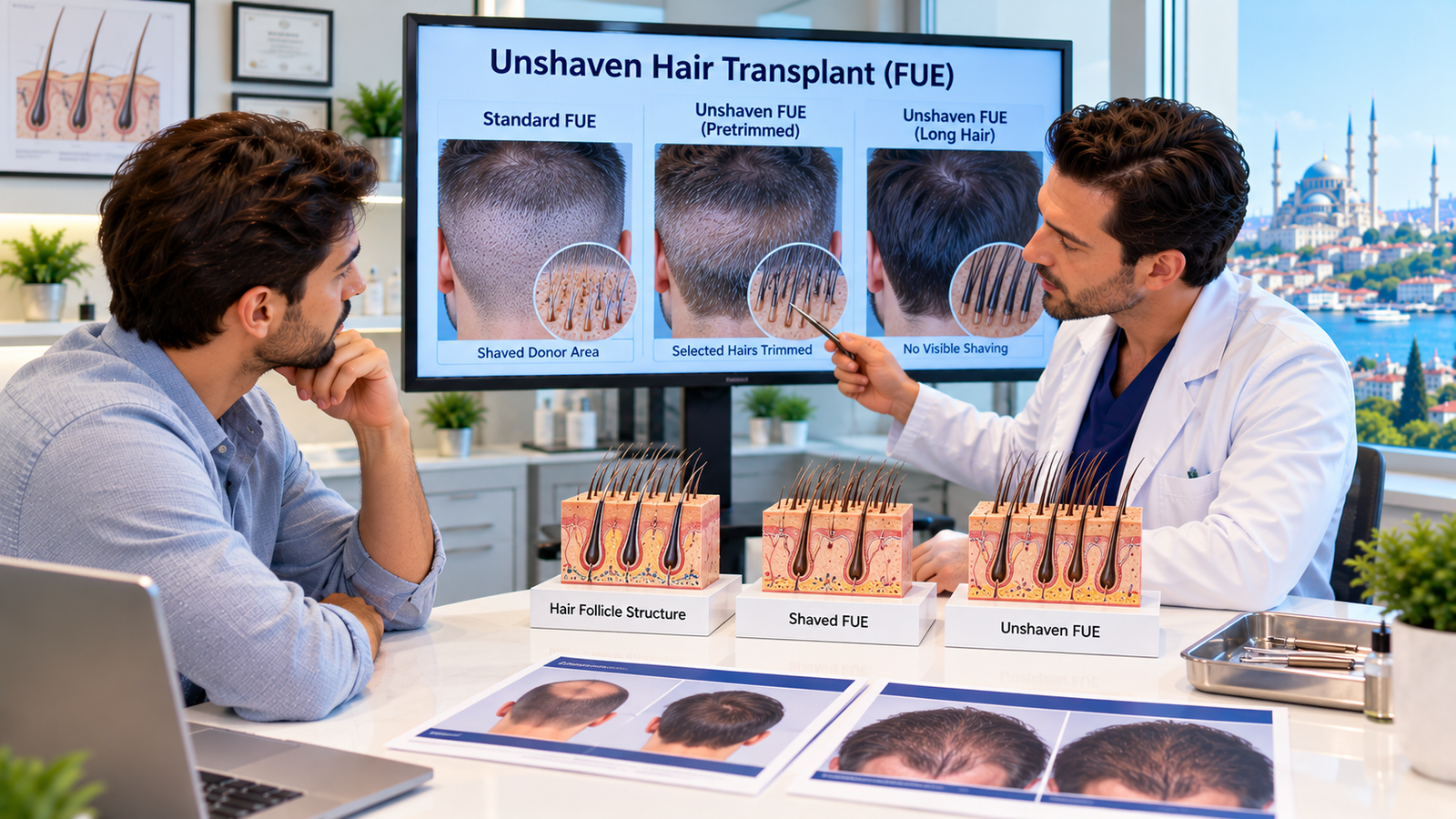
Hair transplantation can involve individual follicular-unit extraction, strip harvesting or variations in how follicles are implanted. A technique name is not a complete treatment plan. Ask why the proposed approach fits your donor characteristics, hairstyle, scarring preferences, recipient area and long-term needs.
The American Society of Plastic Surgeons advises patients to be cautious if a clinician claims one technique can do everything. A good explanation should include reasonable alternatives and the trade-offs of each approach.
Ask what would make the surgeon change technique after examining you in person.
6. How Is My Hairline Being Designed?
A hairline should be planned for your face, age, hair characteristics and expected future loss. Ask why the proposed height, shape, density and temple design are appropriate for you and how the surgeon avoids using too much donor hair at the front.
Request examples of results in patients with a similar pattern, hair calibre and degree of loss. Before-and-after photographs are useful only when the clinic can explain the procedure performed and the time point at which the result was photographed.
Ask what the design is expected to look like if the native hair behind the transplant continues to thin.
7. How Many Grafts Are Planned, And Is That Number An Estimate?
Graft numbers should be linked to the area being treated and the available donor supply. Ask how the estimate was calculated, which zones receive priority and what could change the count after shaving or direct examination.
Do not treat a graft number as a guaranteed density outcome. Follicular units contain different numbers of hairs, donor characteristics vary and survival cannot be promised as a fixed percentage for every patient.
Ask how grafts are counted, documented and allocated between the hairline, frontal area, mid-scalp or crown.
8. What Result Is Realistic For My Degree Of Hair Loss?
The International Society of Hair Restoration Surgery notes that transplantation redistributes existing hair and cannot create new follicles. The American Academy of Dermatology similarly explains that a completely full head of hair may be unrealistic, while a fuller appearance can be a reasonable goal for selected patients.
Ask the clinic to describe the likely visual improvement rather than using vague words such as “maximum density.” Discuss which areas may remain thin and whether complete crown coverage would consume too much donor reserve.
A realistic plan should protect future options as well as improve the current appearance.
9. What Happens If My Native Hair Keeps Thinning?
A transplant does not stop hereditary hair loss in non-transplanted follicles. The American Academy of Dermatology notes that medical treatment may be recommended to slow ongoing thinning and help maintain the overall result.
Ask whether the clinic expects your pattern to progress, what medical treatments may be appropriate for discussion and who will monitor them. Medication decisions should be made by a qualified clinician after reviewing contraindications and side effects.
Do not start, stop or change hair-loss medication only because it is included in a package.
10. What Medical History Or Medicines Could Change The Plan?
The American Society of Plastic Surgeons advises discussing medical conditions, smoking, previous surgery and medicines that can affect bleeding or healing. Tell the clinic about prescription medicines, supplements, allergies, scalp conditions and previous hair procedures.
Ask which medicines need review before surgery and who is authorised to tell you to stop or continue them. Never stop an important prescribed medicine solely on a coordinator's instruction.
If blood tests or other investigations are requested, ask what clinical question each test is intended to answer.
11. What Are The Main Risks And How Are Complications Managed?
Hair transplantation is surgery. Ask about bleeding, infection, scarring, poor growth, temporary shedding, altered sensation, unnatural direction, donor-area problems and the possibility that additional surgery may be needed.
The American Society of Plastic Surgeons recommends asking how complications are handled and what options exist if the cosmetic result is unsatisfactory. The answer should include a clinical contact, review pathway and a written explanation of any revision policy.
Ask which symptoms require urgent local medical care rather than waiting for an online reply.
12. What Should I Expect During The First Weeks?
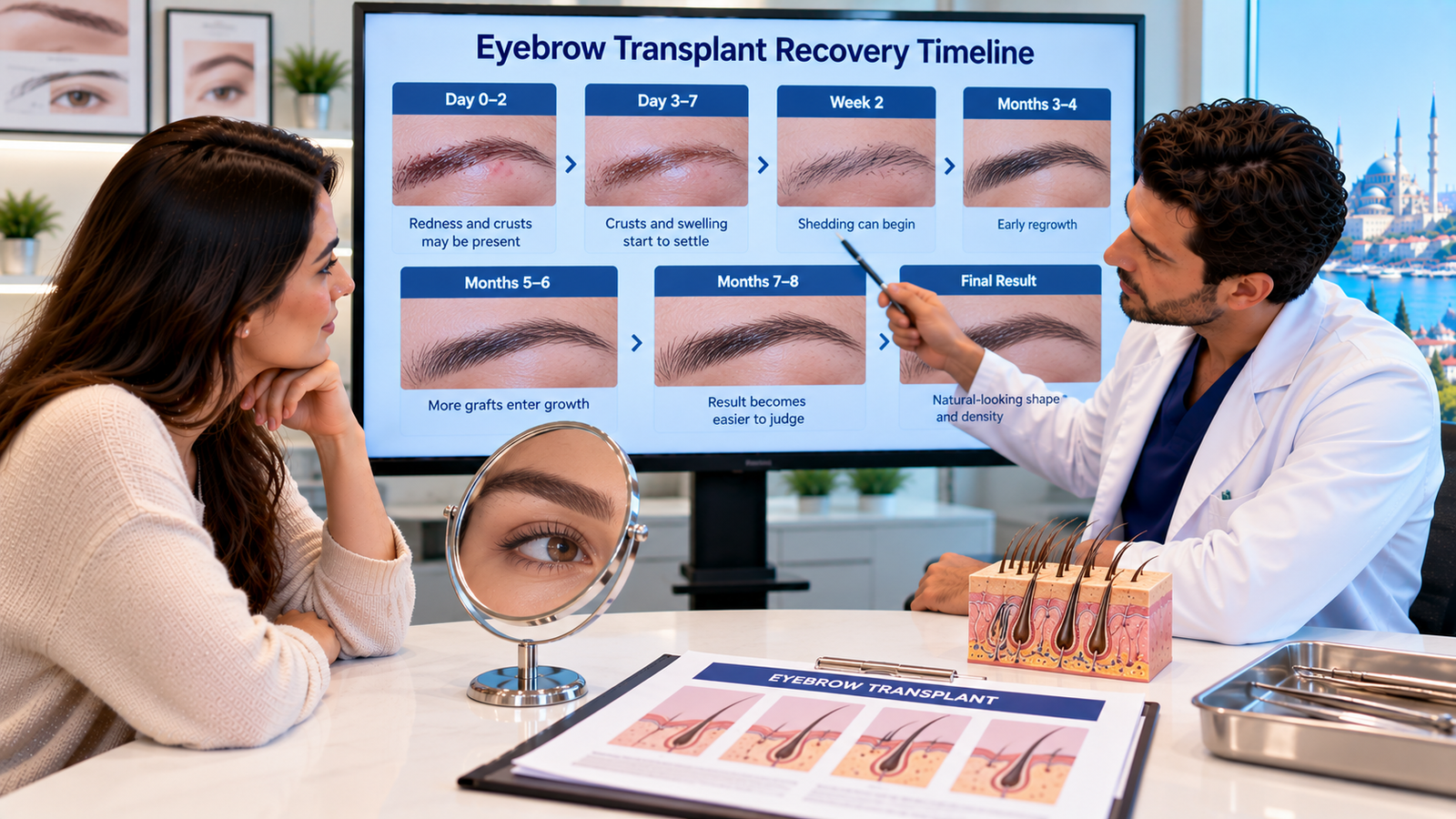
The American Academy of Dermatology notes that transplanted hairs commonly shed in the weeks after surgery and that visible growth develops gradually, often becoming more apparent over six to nine months and sometimes taking around a year. Ask the clinic for its own milestones for crusting, washing, swelling, donor healing, shedding and early regrowth.
Understanding this timeline helps prevent normal early changes from being mistaken for treatment failure. It also makes it easier to compare the clinic's promises with established biological recovery.
Ask when photographs should be sent and when the clinic considers it meaningful to judge density or growth.
13. What Are The Washing, Sleeping, Exercise And Haircut Rules?
Early aftercare protects the donor and recipient areas while the scalp heals. Ask for written instructions covering washing, sleeping position, pressure on grafts, exercise, sun exposure, headwear, hair products and the first haircut.
Do not rely on a general social-media timetable because protocols can differ according to technique, wound closure and individual healing. The clinic should explain which instructions apply specifically to you.
Ask what to do if you accidentally rub, hit or bleed from the recipient area.
14. How Long Should I Stay Before Flying Home?
The correct stay should cover the procedure, early review and any recovery milestone the treating clinic wants to assess in person. Ask when the clinic expects you to leave, what must be checked before departure and what findings would require a longer stay.
Do not let a hotel package determine your fit-to-travel date. The medical plan should come first, followed by flights and accommodation.
For broader booking questions, use our Questions Before Booking Treatment Abroad guide alongside the hair-specific checklist in this article.
15. What Is Included In The Quote?
Ask for a written scope that separates the medical procedure from travel services. Clarify consultation, diagnostics, medicines, anaesthesia, procedure, dressings, early reviews, accommodation, transfers and any item that may cost extra.
Find out whether the quote is based on an estimated graft range and what happens if the surgeon recommends fewer or more grafts after examination. Ask whether a price change requires your approval before treatment begins.
A low headline price is difficult to compare if the scope is unclear.
16. What Does The Revision Policy Actually Cover?
A revision policy should state what counts as a problem, when the result is assessed, how long the policy lasts, what treatment is included and which costs remain with the patient. Ask whether travel, hotel, medicines or additional procedures are excluded.
Do not confuse a revision policy with a guarantee of density. Hair growth depends on biology as well as technique, and the clinic should explain how it distinguishes a correctable technical issue from expected variation.
Keep the policy in writing with your treatment records.
17. What Records Will I Receive Before I Leave?
Ask for a treatment summary that names the clinic and responsible clinician, records the date and procedure, documents the donor and recipient plan, states the graft count used by the clinic and includes medication and aftercare instructions.
If photographs were taken for clinical records, ask how you can obtain them. Keep consent documents, invoices and follow-up contacts as well.
Records are especially important when follow-up happens across countries.
18. Who Is My Clinical Contact After I Return Home?
A coordinator can organise communication, but clinical questions need a qualified treating provider. Ask who reviews postoperative photographs, who answers urgent medical questions and how quickly the clinic normally responds.
Clarify what should be managed remotely and what requires a local doctor or dermatologist. If the clinic cannot describe a realistic follow-up route before treatment, that is a planning gap.
Turkelite Medcare coordinates the practical journey around provider-confirmed care; the treating clinic remains responsible for diagnosis, consent, surgery and medical aftercare.
A Short Checklist To Take Into The Consultation
- What is my exact diagnosis and is transplantation the right treatment now?
- How strong is my donor area and how much reserve should be preserved?
- Who is the named clinician responsible for assessment and surgery?
- Who performs harvesting, recipient-site creation and graft placement?
- Why is this technique being recommended over reasonable alternatives?
- How was the hairline and graft estimate planned?
- What result is realistic if my native hair continues to thin?
- What medicines, tests or health conditions could change the plan?
- What are the main risks and how are complications handled?
- What aftercare, travel and follow-up milestones apply to me?
- What exactly is included in the written quote and revision policy?
- What records and clinical contacts will I have after returning home?
How Turkelite Medcare Helps You Ask Better Questions
Turkelite Medcare is a patient coordination service, not the treating hair-transplant clinic. We do not diagnose hair loss, select a technique, design a hairline or decide how many grafts should be used. Those decisions belong to the independent licensed treating provider after assessment.
Our role is to keep provider questions, requested records, appointments, travel arrangements and the return-home handover organised around the confirmed medical plan.
If you want help structuring the questions and provider communication before committing to treatment, start your private enquiry.
Frequently Asked Questions
What Are The Most Important Questions To Ask Before Hair Transplant Surgery?
Start with diagnosis, candidacy, donor capacity, the responsible clinician, who performs each clinical step, technique choice, hairline design, realistic density, ongoing hair loss, risks, recovery, quote scope and aftercare. A consultation should answer why the procedure fits you, not only how many grafts can be sold.
What Should I Ask A Hair Transplant Clinic About The Donor Area?
Ask how donor density and miniaturisation are assessed, how much hair can be harvested safely, how the donor is expected to look after healing and how much reserve should remain for future hair loss or another procedure.
Should I Ask Who Performs The Procedure?
Yes. Ask who performs the medical assessment, hairline design, anaesthesia, donor harvesting, recipient-site creation and graft placement. You should know the named clinician responsible for your treatment and follow-up.
Is The Highest Graft Number Always Better?
No. The graft plan should balance the recipient area with a limited donor supply. A larger number is not automatically safer or better if it overuses the donor area or ignores future hair loss.
What Should I Know About Results Before Booking?
Hair transplantation redistributes existing follicles and cannot create unlimited density. Early shedding can occur and visible growth develops gradually over months. Ask what result is realistic for your pattern and when the clinic considers the result mature enough to assess.
What Should Be In Writing Before I Pay?
Have the clinic identity, responsible clinician, proposed procedure, estimated graft plan, inclusions, exclusions, possible changes after examination, recovery plan, follow-up contacts, revision policy and payment or cancellation terms in writing.
Good Questions Protect The Donor Area And The Long-Term Plan
A hair transplant should be planned as a long-term redistribution of a limited donor supply, not as a one-day graft purchase. The strongest consultation explains the diagnosis, preserves future options, identifies the responsible clinician and makes risks, recovery, costs and follow-up visible before travel is booked.
Sources and further reading
- NHS: Hair transplant
- NHS: Choosing who will do your cosmetic procedure
- Republic of Türkiye Ministry of Health: International health tourism regulation
These sources support general patient information. Individual medical recommendations must come from the treating clinician.
View the related treatment area
This content is for general information and does not replace individual medical advice, diagnosis or treatment. Discuss treatment suitability, risks and recovery with a qualified healthcare professional.