Quick answer
Things to Avoid After Hair Transplant: Recovery Guide: the right answer depends on diagnosis, the actual treatment plan and individual risk factors. Use this article to prepare for consultation, then have the treating clinic confirm timing, medicines, suitability and travel planning for your case.
- Do not confirm treatment before adequate clinical assessment.
- Get scope, risks, aftercare and return-travel criteria in writing.
- For care in Turkey, verify the authorised facility and responsible clinician.
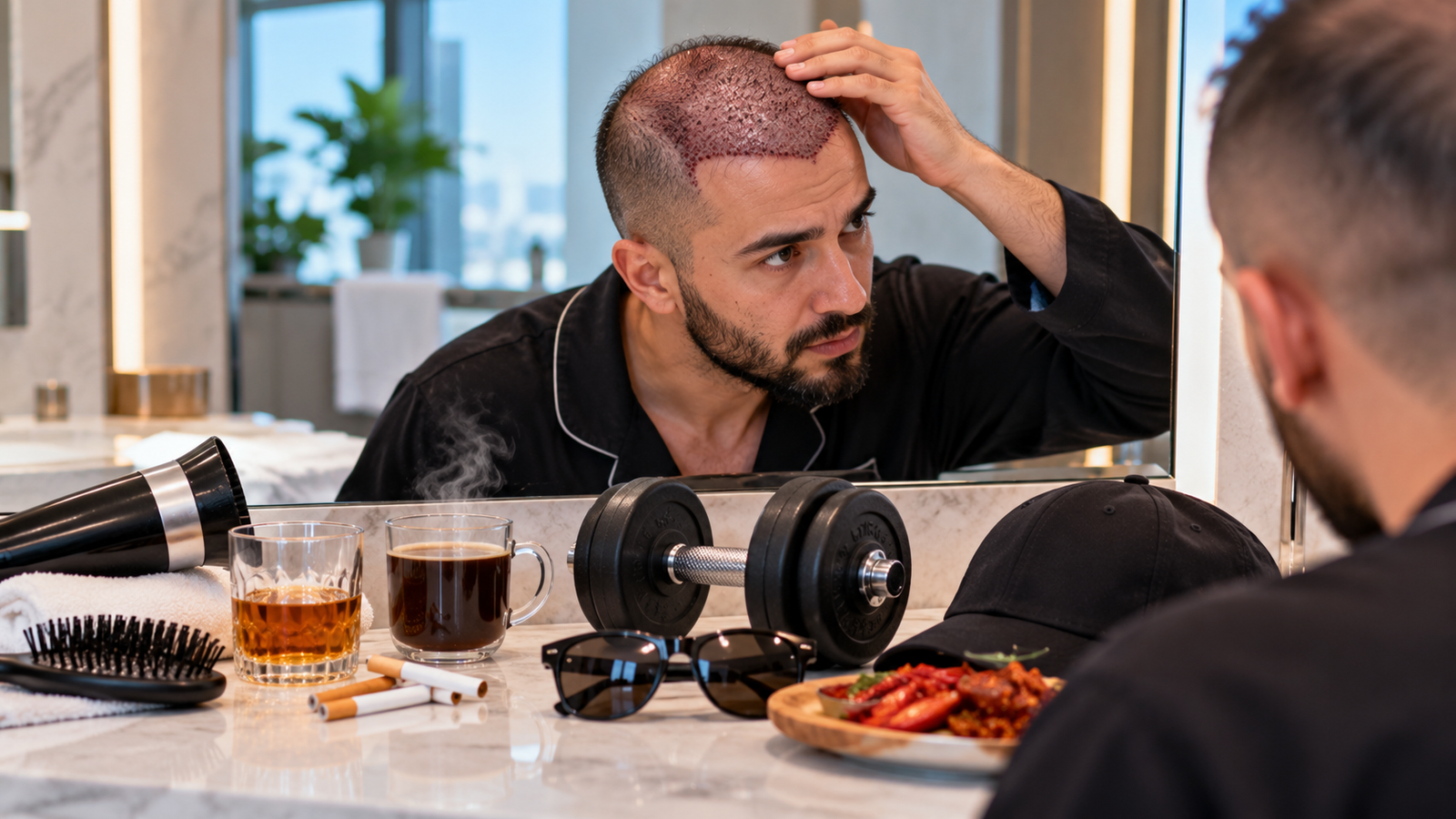
If you are looking for things to avoid after hair transplant surgery, the most important principle is simple: protect the recipient area while the grafts are still vulnerable, then return to normal activity gradually under the treating clinic's instructions. Published guidance does not give one identical timetable for every patient. The UK National Health Service says transplanted hair needs particular care for the first two weeks because the grafts are not yet secure, while an international expert consensus recommends avoiding pressure on the recipient area during those first two weeks. Your own plan can differ according to the procedure, graft distribution, donor area, stitches, healing and the clinic's protocol. Begin with the wider Hair Restoration pathway, then use the treating clinician's written aftercare instructions as the rule for your case.
What Not To Do After Hair Transplant Surgery
The first mistake is treating hair transplantation like a normal haircut appointment. It is a surgical procedure that creates many small wounds in the donor and recipient areas. Early aftercare is therefore about protecting healing skin, avoiding unnecessary pressure or friction and allowing the clinic to check that recovery is progressing as expected.
International expert consensus recommends avoiding pressure on the recipient area during the first two weeks. That means you should not rub, scratch or deliberately press the transplanted zone unless the treating clinic has told you to do something specific. The UK National Health Service likewise advises particular care during the first two weeks and says the grafts should not be touched in the first few days.
Do not replace your clinic's written instructions with a generic social-media schedule. Washing, sprays, dressings and donor-area care can differ between techniques and providers. If the clinic has given a day-by-day protocol, follow that plan and ask before adding products or changing the routine.
Avoid Pressure And Friction On The Recipient Area
Fresh grafts sit in healing recipient sites, so pressure and friction are central practical concerns. The international consensus specifically recommends avoiding pressure on the recipient area for two weeks. This has implications for sleeping position, tight headwear, towels, pillows, helmets and anything else that can rub the transplanted zone.
A loose-fitting hat may be acceptable under some protocols, and the expert consensus allows a loose cap or hat immediately after surgery. That does not make every hat safe. A tight cap, hard helmet or anything that presses directly onto grafts is a different situation. Ask the clinic which head covering is acceptable for the location of your grafts.
When drying or cleaning the scalp, do not improvise vigorous rubbing. The donor area and recipient area can have different instructions. If the clinic wants a particular spray, gentle wash or method of removing crusts, use that method rather than trying to make the scalp look normal quickly.
Do Not Wash The Scalp Like Normal Hair Too Early
Hair washing is one of the areas where published instructions differ. The UK National Health Service says gentle hand washing may be possible around day six, while the international expert consensus describes earlier donor-area washing and a gradual return to normal hair care. These are not necessarily contradictory because the donor and recipient areas are treated differently and clinics use different postoperative protocols.
The safe planning message is not to pick the earliest date from the internet. Ask exactly when the recipient area can be wetted, when shampoo can be used, whether water pressure should be avoided and when gentle rubbing of the donor area is permitted. The recipient area should not be scrubbed just because the donor area is ready for more active cleaning.
If crusts or scabs form, do not pick them off with fingernails. Temporary scabbing is expected after hair transplantation. The clinic should tell you when and how crusts can be softened or removed without unnecessary trauma to healing skin.
When Can I Exercise After Hair Transplant Surgery?
There is no single return-to-exercise date that every source uses. The international expert consensus recommends avoiding sport or physical activity during the first week to reduce possible trauma to the recipient zone. The American Society of Plastic Surgeons advises that some patients may be told to avoid vigorous exercise and contact sports for at least three weeks because strenuous activity increases blood flow to the scalp and may contribute to bleeding.
The UK National Health Service takes a broader approach and says patients may be told to cut down on exercise during the first month to reduce scarring. The difference shows why “exercise” needs to be defined. Gentle daily activity is not the same as running, heavy lifting, high-intensity training, swimming or a contact sport.
Ask your surgeon for a staged plan: when ordinary walking is acceptable, when light exercise can begin, when sweating and heavier training are acceptable and when contact or helmeted sports can resume. Do not assume that feeling energetic means the grafts and donor wounds are ready for the same workload.
Why Heavy Exercise Needs More Caution Than Walking
Vigorous exercise can raise blood pressure and increase blood flow to the scalp. The American Society of Plastic Surgeons notes that this may contribute to bleeding from transplants or incisions. Exercise also creates practical risks such as sweat, friction, accidental contact and the temptation to wear a tight cap or helmet.
That is why return to exercise should be progressive rather than all-or-nothing. A clinic may permit gentle activity before intense training. A patient with stitches, a larger procedure or slower healing may also receive a different timetable from someone whose early recovery is straightforward.
If exercise triggers bleeding, increasing pain, dizziness or an unexpected change in the scalp, stop and contact the treating clinic. A gym schedule is not more important than a postoperative review.
When Can I Cut My Hair After Hair Transplant Surgery?
An international expert consensus recommends waiting one month after hair transplantation before cutting or dyeing the hair. This is a useful evidence-informed reference point, but the treating clinic still needs to confirm how it applies to the donor and recipient areas in your case.
The reason to ask separately about the donor and recipient areas is that they do not heal in exactly the same way. The donor area may look ready for trimming before the recipient area is ready for clippers, scissors, comb pressure or barber manipulation. If stitches were used, their removal and wound healing also need to be considered.
When you do return to a barber or salon, explain that you recently had hair transplantation and follow the clinic's instructions about clippers, guards, scissors and contact with the recipient zone. Do not use a close cut simply to hide uneven early growth if the surgeon has not yet cleared it.
Avoid Hair Dye And Styling Products Too Early
The same expert consensus recommends waiting two weeks before using gels, creams, waxes and other styling products, and one month before dyeing the hair. These time points reflect the need to let the scalp recover before adding friction, chemicals or products that can irritate healing skin.
Do not interpret the absence of pain as proof that the scalp is ready for chemical treatment. Hair dye, bleaching, straightening and other salon procedures can expose the scalp to chemicals and manipulation. If your clinic uses a more conservative timetable, follow it.
When restarting products, introduce them gradually and stop if you develop significant irritation or an unexpected reaction. Ask the treating team before restarting any medicated scalp product that was paused around surgery.
Avoid Direct Sun On Healing Donor And Recipient Areas
The international expert consensus recommends avoiding direct sunlight on the donor and recipient areas for at least one month after transplantation. Healing scalp skin can be sensitive, and protecting it is different from simply hiding it for cosmetic reasons.
Ask the clinic what type of sun protection is appropriate during the early period. A loose hat may be permitted, but a tight hat that presses on the recipient area can create a different problem. Sunscreen timing should also follow the clinic's instructions because the skin must be healed enough for the product being used.
Do not plan long periods of outdoor exposure immediately after treatment just because you are staying in a warm destination. Medical recovery should set the itinerary rather than sightseeing plans.
Do Not Brush Or Style As If Nothing Happened
The expert consensus recommends waiting about one week before brushing the hair and then returning to the normal hair-care routine gradually. The key word is gradually. A brush or comb can create traction or accidental contact with the recipient area if used aggressively.
If you have longer existing hair around the transplant, ask the clinic how to manage it without dragging a comb across new grafts. Hair dryers, hot tools and styling routines should also be reintroduced cautiously according to the clinic's protocol.
Normal-looking hair is not the same as fully healed skin. Early styling should be driven by the condition of the donor and recipient areas rather than by the date of a social event or photograph.
Do Not Change Medicines Or Supplements On Your Own
Hair-transplant patients may receive individual instructions about pain relief, antibiotics, anti-inflammatory treatment, hair-loss medicines or supplements. Some medicines are stopped or restarted around surgery because of bleeding, irritation or interaction concerns. The correct plan depends on your medical history and the clinic's protocol.
Do not stop prescription medicine, start a blood thinner, restart a topical hair-loss treatment or add supplements simply because another patient did so. Confirm the timing directly with the clinician who knows your case.
Keep a written list of what you were told to take, avoid or restart and the date for each change. This becomes especially important when you travel home before the early recovery period is complete.
Do Not Ignore Severe Pain Or Unexpected Symptoms
The UK National Health Service advises contacting the clinic that performed the transplant as soon as possible if you have severe pain or unexpected symptoms. Hair transplantation is generally considered safe, but recognised surgical risks include bleeding, infection and reactions to anaesthetic medicines.
If you are seriously unwell, have uncontrolled bleeding, breathing difficulty or another emergency, seek urgent local medical care rather than waiting for an online message. The treating clinic should also give you a clear route for urgent questions after you return home.
Before travel, make sure you know who reviews photographs, who answers out-of-hours questions and what symptoms require local medical assessment. The patient services page explains how the practical follow-up handover can be kept connected to the provider-confirmed plan.
A Simple Recovery Checklist
- First days: protect the recipient area, avoid rubbing and follow the clinic's washing and spray instructions.
- First week: avoid sport and physical activity unless your treating team gives a different plan; return to brushing only when cleared.
- First two weeks: avoid pressure on the recipient area and delay styling products until the clinic's timeline allows them.
- First month: avoid direct sun on healing areas and use a clinician-confirmed plan for returning to harder exercise.
- Around one month: expert consensus recommends waiting before cutting or dyeing the hair, with final timing confirmed by your clinic.
These are planning milestones, not a substitute for your clinic's own instructions. If your procedure, wound healing or symptoms differ from the expected course, your timetable may need to change.
How Turkelite Medcare Coordinates Hair-Transplant Aftercare
Turkelite Medcare is a patient coordination service, not the treating clinic. We do not decide when you can exercise, cut your hair, wash the recipient area or restart medication. Those are clinical decisions for the independent treating team after assessment and surgery.
Our role is to keep the practical journey aligned with the medical plan. Once the clinic confirms the procedure, early review and aftercare schedule, Turkelite can coordinate travel, accommodation, transfers, provider communication and the return-home handover around those dates.
If you want help organising provider communication and travel around a clinician-confirmed hair-restoration plan, Start your private enquiry.
Frequently Asked Questions
What Are The Main Things To Avoid After Hair Transplant Surgery?
Avoid pressure, rubbing and unnecessary contact with the recipient area during the early healing period. Also follow the clinic's restrictions on exercise, washing, sun exposure, styling products and haircuts. Published guidance supports extra care during the first two weeks, but your clinic's written timetable should control the details.
When Can I Exercise After Hair Transplant Surgery?
International expert consensus recommends avoiding sport or physical activity during the first week. The American Society of Plastic Surgeons notes that vigorous exercise and contact sports may be restricted for at least three weeks, while the UK National Health Service says some patients are told to reduce exercise during the first month. Ask your surgeon for a staged return based on your procedure and healing.
When Can I Cut My Hair After Hair Transplant Surgery?
International expert consensus recommends waiting one month before cutting the hair. Your clinic should still confirm whether the donor and recipient areas need different handling and whether stitches or slower healing change the timing.
When Can I Use Hair Gel Or Styling Products?
The international expert consensus recommends waiting two weeks before gels, creams, waxes and other styling products. Restart gradually and follow your clinic if it uses a more conservative schedule.
When Can I Go In Direct Sunlight?
International expert consensus recommends avoiding direct sunlight on the donor and recipient areas for at least one month. Ask the clinic what head covering or sun protection is safe without pressing on healing grafts.
What If I Accidentally Touch Or Knock The Grafts?
Do not keep checking or pressing the area. Contact the treating clinic, explain what happened and send photographs if they request them. Significant bleeding, severe pain or another unexpected symptom should be assessed rather than ignored.
Protect The Grafts First, Then Return To Normal Gradually
The best aftercare plan is not the fastest one. Protect the grafts during the vulnerable early period, follow the clinic's washing and pressure rules, return to exercise in stages and delay cutting, dyeing and styling until the scalp has reached the relevant recovery milestone. Your treating clinician's instructions take priority over generic online schedules.
Sources and further reading
- NHS: Hair transplant
- NHS: Choosing who will do your cosmetic procedure
- Republic of Türkiye Ministry of Health: International health tourism regulation
These sources support general patient information. Individual medical recommendations must come from the treating clinician.
View the related treatment area
This content is for general information and does not replace individual medical advice, diagnosis or treatment. Discuss treatment suitability, risks and recovery with a qualified healthcare professional.