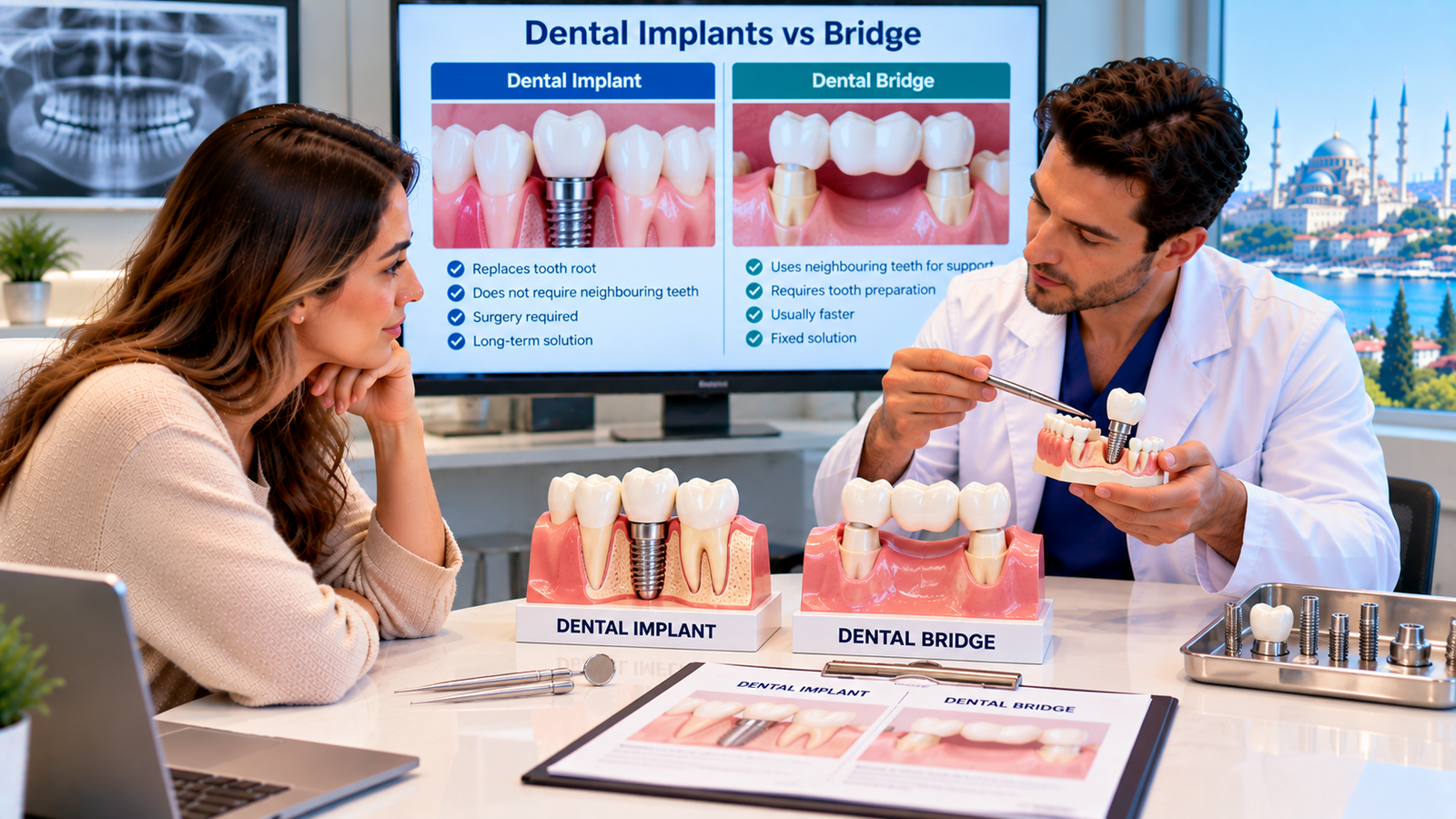
If you are asking will the NHS fix Turkey teeth, the most accurate answer is that the NHS is not a free warranty service for cosmetic dental work completed abroad, but that does not mean you are automatically excluded from NHS dental care after returning to the UK. In England, NHS policy says patients who develop an acute dental problem or complication after self-funded treatment, including treatment carried out abroad, are entitled to access NHS dental care for assessment and evaluation to stabilise the condition. Any care beyond stabilisation depends on clinical need, complexity, NHS acceptance criteria and the dentist's judgement. Cosmetic dissatisfaction alone is different from clinically necessary treatment. Start with our Dental pathway, and make aftercare part of the treatment plan before you travel rather than assuming the NHS will remake overseas work if something later goes wrong.
NHS Help After Turkey Teeth: Separate Urgent Care From A Free Remake
The phrase “Turkey teeth” is informal and can refer to crowns, veneers, implants or mixed restorative work completed in Turkey. The NHS does not treat the country of origin as the main clinical question. The important questions are what problem you now have, whether treatment is clinically necessary and what care is appropriate under NHS rules.
NHS England published a specific policy in 2024 for patients who need NHS dental intervention after self-funded dental treatment in the UK or abroad. It states that patients with an acute presentation or complication are entitled to access NHS dental care for assessment and evaluation to stabilise their condition. Treatment beyond stabilisation is then assessed according to complexity, need and NHS acceptance criteria.
That is not the same as saying the NHS will automatically replace every overseas crown or veneer. The NHS Business Services Authority also explains that when the original treatment was provided elsewhere, the usual free repair or replacement protections linked to the original NHS provider do not apply.
Clinically Necessary Care And Cosmetic Correction Are Different
NHS dental treatment is designed to provide clinically necessary care needed to keep the mouth, teeth and gums healthy. The NHS states that decisions about appropriate treatment are based on the dentist's assessment and clinical judgement, and that cosmetic treatments usually need to be provided privately.
This distinction is central after cosmetic treatment abroad. If a crown fractures and causes pain, an infection develops, a restoration becomes loose or the underlying tooth needs treatment, that can create a clinical need. If the teeth are healthy but you dislike the shade, shape, size or general cosmetic appearance, the request is much more likely to be considered cosmetic rather than an NHS obligation.
The dentist who examines you decides what is clinically appropriate. A patient cannot automatically choose a complete cosmetic remake and require it to be provided on the NHS simply because the original work was completed abroad or because the result is disappointing.
Will The NHS Help With Turkey Teeth In An Emergency?
Yes, urgent NHS dental pathways can be relevant when you have symptoms that meet urgent-care criteria. NHS guidance says you should seek urgent dental advice for severe dental or mouth pain, swelling that is increasing or not resolving, and a broken or loose filling, denture, crown, bridge or veneer.
Urgent treatment is intended to assess and manage the immediate problem. Depending on the diagnosis, that can involve examination, radiographs, temporary treatment, management of infection, refixing certain restorations, treatment of a painful tooth or another intervention needed to make the situation safe and stable.
Urgent care does not guarantee that the final long-term cosmetic reconstruction will be completed through the same emergency pathway. Once the acute problem is controlled, a separate plan may be needed for definitive treatment.
When To Use NHS 111 Or Emergency Dental Care
If you are in England and need urgent dental care but cannot get an emergency appointment from a dentist, NHS guidance directs patients to NHS 111 for advice. A broken or loose crown, bridge or veneer is specifically included among problems for which urgent dental advice may be appropriate.
Some symptoms are more serious. Heavy mouth bleeding that will not stop, severe swelling of the mouth, lips, throat or neck with difficulty breathing, or a serious facial or jaw injury require emergency medical assessment rather than waiting for routine dental aftercare.
Do not delay urgent assessment while trying to obtain a response from the overseas clinic. Contact the treating clinic as well, but immediate patient safety comes first when severe symptoms are present.
What NHS Dentists May Do After Dental Treatment Abroad
The NHS Business Services Authority says that dealing with a patient who has been treated abroad is not automatically different from seeing a patient previously treated by another provider. If the patient is accepted for NHS care and treatment is clinically necessary within NHS mandatory services, appropriate treatment can be provided with the patient's consent.
The exact treatment will depend on the diagnosis. A dentist may need to examine the restorations, take radiographs, assess the bite, test the underlying teeth, check gum health or review an implant-related problem. The treatment plan can then range from observation or temporary stabilisation to root-canal treatment, extraction, a clinically necessary crown or another suitable option.
The important point is that the new dentist is treating the condition they find now. They are not automatically assuming responsibility for the original overseas treatment plan, materials, guarantee or cosmetic promise.
Why Free Repair Or Replacement Rules May Not Apply
Patients sometimes assume that if a crown or bridge fails soon after treatment abroad, the NHS must replace it free of charge. That is not how the NHS repair rules work. The NHS Business Services Authority states that when the original treatment was not provided by the current NHS contract provider, the standard provisions for further treatment within two months and free repair or replacement do not apply.
This is a major aftercare planning point. The overseas clinic may have its own guarantee or revision policy, but that is a separate agreement between you and that provider. You should know what the clinic will repair, how long the guarantee lasts, what exclusions apply and who pays for travel, accommodation, laboratory costs or additional treatment.
Do not use an NHS emergency pathway as a substitute for reading the overseas clinic's aftercare and guarantee terms before treatment.
Can The NHS Fix My Teeth If The Problem Is Not Cosmetic?
Potentially, if the treatment is clinically necessary and you can access an NHS dentist who accepts you for care. NHS guidance says treatment needed to keep the teeth, mouth and gums healthy can be provided on the NHS, while the dentist decides which option is clinically appropriate.
For example, a damaged or infected tooth may need treatment even if the problem began under an overseas crown. The clinically appropriate NHS solution may not be identical to the cosmetic restoration you originally purchased. NHS dentistry is based on health need rather than reproducing a private cosmetic package.
If there are several possible treatments, the dentist should explain which options are available through the NHS and which alternatives are private. Ask for the reason behind the recommended option and what the long-term plan will be.
Veneers, Crowns And Implants Do Not Have The Same NHS Position
NHS information says most common dental treatments are normally available when clinically necessary, but veneers and dental implants are generally only available on the NHS in particular circumstances. Veneers are usually provided privately unless there is a clinical need. Crowns can be available on the NHS when they are clinically required, but the material and design offered may differ from a private cosmetic restoration.
This means a patient with twenty cosmetic veneers or crowns should not assume the NHS will reproduce all twenty units because one part of the treatment has failed. The dentist will assess the health problem tooth by tooth and decide what treatment is clinically justified.
Implant aftercare can be more complex because the clinician may need information about the implant system, components and previous surgery. This is one reason complete treatment records matter before you leave the overseas clinic.
UK Dentists Need Records, Not Just Before-And-After Photos
The General Dental Council advises patients considering overseas dentistry to speak to their own dentist before travelling because that dentist may later be involved if complications occur. It also recommends asking the overseas provider what aftercare is included, who can be contacted after treatment and who pays for further treatment, flights or accommodation if something goes wrong.
Before returning home, request a written record of exactly what was done. For crowns and veneers, this should identify which teeth were treated and what restorations were placed. For implants, request the implant brand, model, size where available, component information, surgical details and relevant radiographs.
Also keep discharge instructions, medication information, pre-treatment and post-treatment imaging, laboratory information where relevant and the overseas clinic's guarantee or revision terms. A UK dentist can assess you without perfect records, but complete documentation reduces uncertainty.
Do Not Assume A UK Dentist Will Recreate The Overseas Treatment Plan
A dentist in the UK has to make an independent clinical judgement. They may agree with the previous treatment, recommend a repair, suggest a different restoration or conclude that a tooth cannot predictably support another crown. They are not required to follow the original overseas plan simply because you already paid for it.
This matters especially after extensive full-mouth restorative treatment. If there is pain, bite difficulty, recurrent decay, gum disease, root-canal problems or fractured restorations, the new dentist may need to separate urgent issues from longer-term reconstruction.
A second opinion may therefore produce a different plan from the overseas clinic's warranty proposal. Ask each provider to explain the clinical reason for their recommendation rather than judging only by whether the repair is free.
Aftercare In The UK Should Be Planned Before You Fly
NHS guidance on treatment abroad says patients should be clear about how aftercare will be coordinated and should stay in the treatment country for a suitable recovery period before travelling home. The General Dental Council similarly recommends discussing aftercare and possible complications before committing to overseas treatment.
A useful plan should name the overseas clinical contact, identify the first follow-up point, explain what can be reviewed remotely and state which problems require an in-person dentist in the UK. If the treatment includes implants, staged work or extensive crowns, ask what routine maintenance will be needed over the next several years.
The patient services page explains how Turkelite Medcare keeps the practical return-home handover connected to the provider-confirmed treatment plan. Clinical aftercare remains the responsibility of qualified treating dentists.
Know Who Pays If You Need Remedial Treatment
The General Dental Council specifically recommends asking overseas providers what happens if you are unhappy with the result, whether complications and further treatment are included, and who pays for extra flights, hotels and remedial work. These questions should be answered before treatment rather than after a restoration fails.
A clinic guarantee can be useful but may not cover every cost. The clinic may offer to replace a crown while requiring you to pay for travel, or it may exclude problems involving another dentist's intervention. Read the conditions rather than relying on the word “guarantee.”
Likewise, NHS dental care is not the same as an overseas clinic warranty. NHS treatment charges may apply, and clinically unnecessary cosmetic changes may need to be funded privately.
England, Wales, Scotland And Northern Ireland Do Not Use Identical Dental Systems
The United Kingdom has separate NHS dental arrangements in its four nations. The most specific official guidance about NHS treatment after overseas dentistry cited in this guide comes from NHS England and the NHS Business Services Authority, including guidance that also refers to Wales.
If you live in Scotland or Northern Ireland, check the current local NHS dental access and charging rules rather than assuming every England-specific process is identical. The clinical principle remains useful: urgent health problems should be assessed, while cosmetic remake and original-provider guarantees are separate issues.
If you are unsure which service to use, contact your local dental service or health advice line and describe your current symptoms rather than simply saying that you have “Turkey teeth.”
What To Do If Something Goes Wrong After You Return
- Identify urgency: severe pain, swelling, uncontrolled bleeding, breathing difficulty or a loose restoration may need prompt assessment.
- Contact the treating clinic: tell them what happened and ask for your records and their clinical advice.
- Contact a UK dentist: request an assessment and explain exactly what treatment was carried out abroad.
- Use urgent services when needed: in England, NHS 111 can direct you when you cannot access urgent dental care.
- Bring records: treatment plans, radiographs, implant information, medication history and guarantee documents can help.
- Separate stabilisation from reconstruction: solve the immediate health problem first, then decide how definitive repair should be funded and delivered.
Do not wait for a warranty decision if you have symptoms suggesting a serious infection or another urgent problem. Administrative responsibility can be discussed after immediate safety has been addressed.
Questions To Ask Before Dental Treatment Abroad
- Who is clinically responsible for my treatment and aftercare?
- What exact crowns, veneers, implants or other restorations are being placed?
- What records will I receive before I travel home?
- Who do I contact if I develop pain, swelling or a loose restoration in the UK?
- What does the clinic's guarantee actually cover?
- Who pays for repeat flights, accommodation and laboratory costs if remedial work is needed?
- What maintenance should a UK dentist provide after I return?
- Does the clinic expect me to return to Turkey for complications or routine reviews?
- What symptoms require urgent UK dental care rather than waiting for the overseas clinic?
- What parts of future care are likely to be NHS, private or covered by the overseas provider?
The General Dental Council recommends asking many of these questions before committing to overseas dental treatment. If a provider cannot explain the aftercare route clearly before payment, the plan is incomplete.
How Turkelite Medcare Coordinates The Return-Home Plan
Turkelite Medcare is a patient coordination service, not an NHS dental provider and not the treating clinic. We cannot promise that the NHS will replace overseas work, decide what an NHS dentist must provide or guarantee that a UK dentist will continue a particular cosmetic plan.
Our role is to keep the practical journey connected to the treatment plan confirmed by the independent provider. That includes organising questions about records, follow-up contacts, return timing and the handover needed when the patient goes home.
If you are considering dental treatment and want the aftercare route clarified before travel, start your private enquiry. The aim is to know who is responsible for each step before treatment begins.
Frequently Asked Questions
What Can The NHS Do After Dental Treatment In Turkey?
The NHS may assess and stabilise clinically necessary problems after self-funded dental treatment abroad, but it is not an automatic free warranty service for overseas cosmetic work. Longer-term treatment depends on the diagnosis, clinical need, NHS criteria and the dentist's judgement.
Will The NHS Help With Turkey Teeth If I Am In Pain?
Urgent NHS dental care may be appropriate for severe or persistent pain, swelling, infection concerns or a broken or loose crown, bridge or veneer. In England, contact a dentist for an urgent appointment or use NHS 111 if you cannot access urgent care.
Can The NHS Replace A Crown Fitted In Turkey?
A dentist may provide a clinically necessary crown or another appropriate treatment if NHS criteria are met, but the free repair or replacement rules linked to the original NHS provider do not apply to a crown originally fitted abroad. The new treatment is based on the current clinical problem.
Will The NHS Replace Turkey Veneers Because I Do Not Like Them?
Cosmetic dissatisfaction alone does not usually create an NHS treatment requirement. Veneers are generally private unless there is a clinical need. If there is pain, fracture, decay or another health problem, the dentist can assess that problem separately.
Can A UK Dentist Refuse To Follow The Turkish Clinic's Repair Plan?
A UK dentist must make their own clinical assessment and is not required to reproduce another provider's plan. They may recommend a different repair or treatment if they believe it is safer or more appropriate for the tooth and surrounding tissues.
What Records Should I Bring Home After Dental Treatment Abroad?
Bring the written treatment plan, the teeth and restorations treated, relevant radiographs, medication and aftercare instructions, and implant brand and component information if implants were used. Keep the clinic's guarantee and contact details as well.
Plan Aftercare Before You Need It
The NHS can be an important safety net for clinically necessary and urgent dental problems, but it should not be treated as the guaranteed repair service for overseas cosmetic dentistry. The better plan is to know the overseas clinic's aftercare responsibility, bring complete records home, understand how urgent NHS access works and have a local maintenance route before treatment begins.
This content is for general information and does not replace individual medical advice, diagnosis or treatment. Discuss treatment suitability, risks and recovery with a qualified healthcare professional.