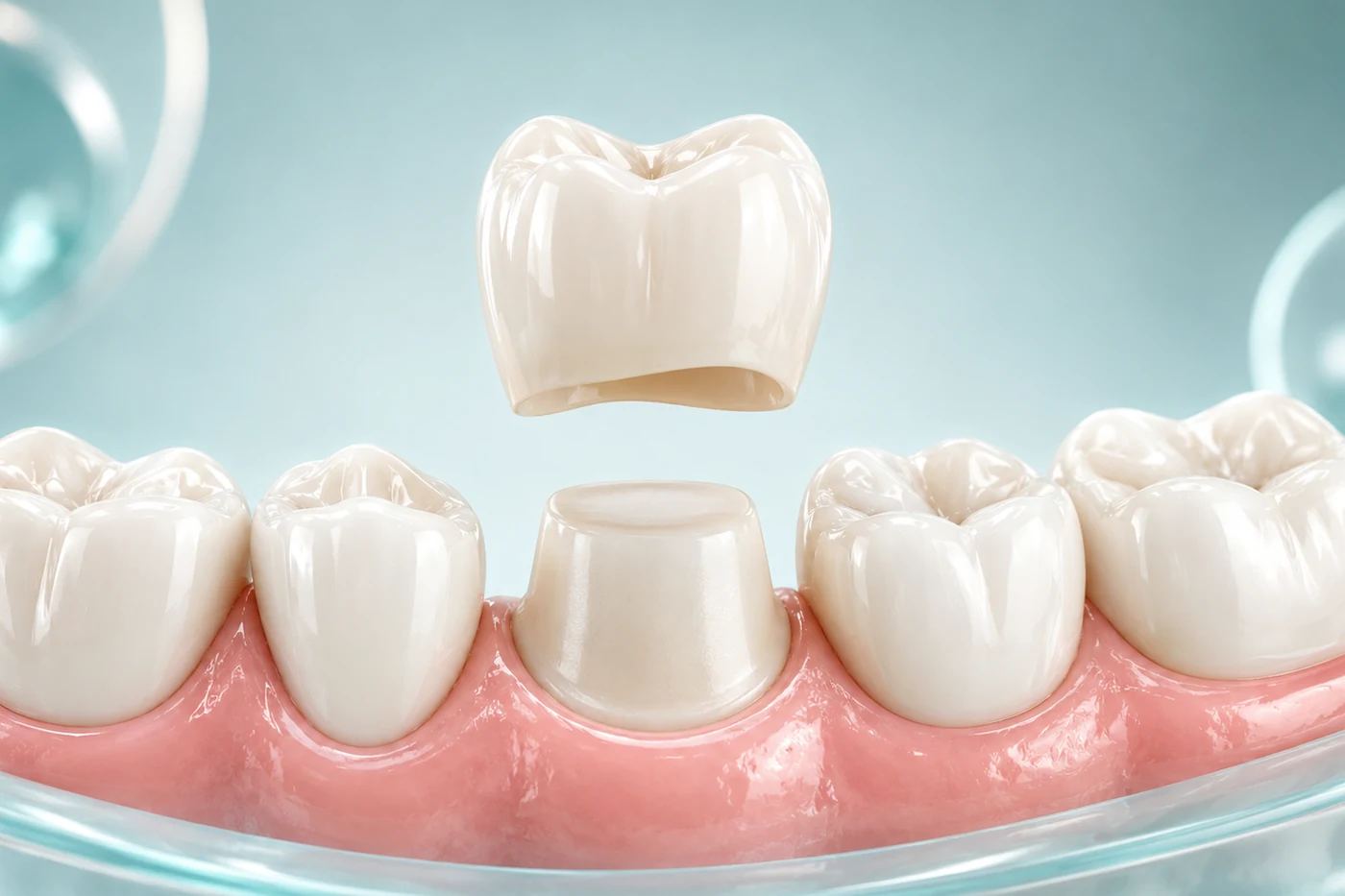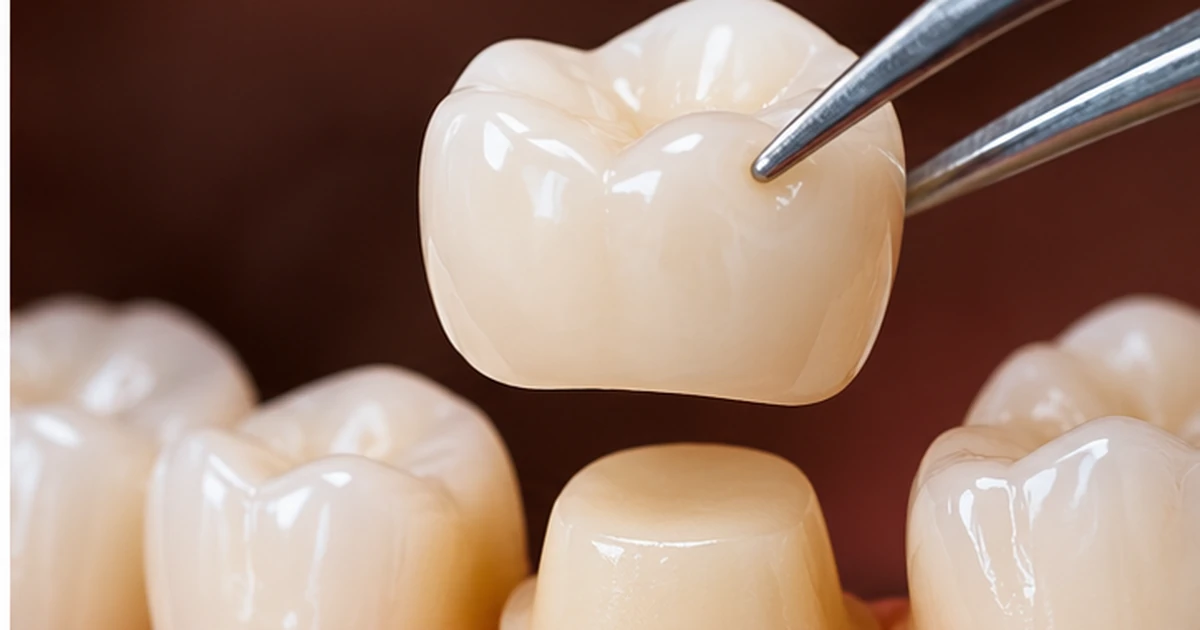
“What are crowned teeth?” is a useful question before booking a cosmetic or restorative dental trip. A crown is a custom restoration covering much of a tooth, often recommended to protect a tooth that has lost substantial structure. A filling replaces a smaller missing portion of the tooth.
After root canal treatment, patients may hear that a crown is essential. The appropriate restoration actually depends on the tooth, the amount of remaining healthy structure, the bite and the treating dentist’s assessment.
What does a dental crown do?
A dental crown covers the prepared tooth and restores its shape, contact with neighbouring teeth and biting function. Crowns may be made from different ceramics, metal-based materials or other materials selected for the clinical situation.
Crowning a tooth usually involves removing some structure and creating room for the restoration. Ask why a crown is preferable to a more conservative option and what tooth tissue will be preserved.
When might a filling be enough?
A filling can be suitable when a tooth has a limited defect and enough strong tooth material remains. The extent of decay, existing restoration and load on the tooth all affect the decision.
For some teeth, an inlay, onlay or partial-coverage restoration may also be considered. These options should be discussed before assuming that every root-treated tooth needs a full crown.
Why root canal treatment changes the discussion
Root canal treatment addresses disease or damage in the tooth’s internal pulp. It does not itself replace missing tooth structure; a restoration is still needed to seal and protect the treated tooth.
Back teeth commonly experience heavy chewing forces, and some root-treated teeth have already lost large amounts of structure. The dentist should assess remaining walls, cracks, the need for a core build-up and the long-term prognosis.
How should a dentist assess the choice?
Ask for the diagnosis, radiographs where appropriate, explanation of cracks or decay, assessment of the bite and the amount of tooth that can be retained. The condition of the gum and supporting tissues also matters.
A crown does not guarantee a tooth will never fracture or need further treatment. The clinician should explain the limits, alternatives and realistic maintenance requirements.
What to confirm in a Turkey treatment quote
A written plan should specify whether the quoted service includes examination, root canal treatment if necessary, post or core build-up, temporary restoration, final crown, impressions or digital scans and follow-up adjustments.
Clarify the material, expected number of visits and what happens if an unexpected crack or infection changes the plan. Avoid having many healthy teeth crowned merely for a rapid uniform cosmetic result.
Care after the restoration
Crowns need normal brushing, cleaning between teeth and regular reviews. Biting discomfort, a loose restoration or persistent pain should be assessed rather than ignored.
If travelling, obtain records of the tooth treated, material used and clinician contact details, and arrange a local dental review when recommended.
Questions for the restoring dentist
- How much healthy tooth remains, and what are the alternatives to a full crown?
- Does this tooth have a crack, major filling or chewing-load concern?
- What is included in the price: root canal, core, temporary and final restoration?
- Who will assess the bite and handle a problem once I am home?
Frequently asked questions
What are crowned teeth?
They are teeth covered by a custom dental restoration designed to recover shape and function and protect remaining structure where indicated.
Does every root canal tooth require a crown?
No universal rule applies. The decision depends on the tooth location, remaining structure, cracks and clinical findings.
Are crowns maintenance-free?
No. Decay can occur around margins, and crowns or supporting teeth may need repair, review or replacement over time.
Related treatment pages
Read more about dental crowns, root canal treatment, veneers and other restorations.
To organise questions for a treating dentist in Turkey, start a private enquiry.
Medical note: This article is educational and cannot determine whether your tooth needs a filling, onlay or crown. A licensed dentist must assess the tooth and provide treatment advice.
Treatment cost
From €150 – €350
Final pricing depends on medical assessment and the individual treatment plan.
Request a personalised quoteThis content is for general information and does not replace individual medical advice, diagnosis or treatment. Discuss treatment suitability, risks and recovery with a qualified healthcare professional.