Zirconia vs Emax crowns is not a simple “stronger versus prettier” decision. Zirconia is a family of zirconium-dioxide ceramics with different strength and translucency levels, while the term Emax is commonly used in crown discussions for lithium-disilicate glass-ceramic. Both can perform well when the tooth, preparation, bite, bonding or cementation plan and laboratory work are appropriate. A systematic review of tooth-supported crowns found zirconia and lithium-disilicate crowns had broadly comparable survival and complication patterns, while newer reviews continue to show strong clinical performance for both materials. Start with our Dental Crowns page and ask why each tooth needs a crown before choosing the ceramic.
First, Confirm What “Emax” Means In Your Quote
In everyday cosmetic-dentistry discussions, Emax usually refers to lithium-disilicate glass-ceramic used for crowns, veneers and other bonded restorations. The exact product, manufacturing method and indication should still be confirmed in writing.
Do not assume that every clinic using the word Emax is describing exactly the same restoration. Ask whether the unit is a full crown, a veneer or another partial-coverage restoration and whether it is milled, pressed or layered.
Zirconia Is Not One Single Material Either
Modern dental zirconia comes in different formulations. Higher-strength zirconia is generally less translucent, while newer high-translucency grades improve light transmission but give up some mechanical strength.
This matters because a back-tooth crown under heavy load and a front-tooth crown beside natural enamel may need different zirconia formulations even though both are marketed simply as “zirconia.”
Which Is Stronger: Zirconia Or Emax?
Zirconia generally has higher mechanical strength and fracture resistance than lithium disilicate. That can be useful for posterior teeth, limited restorative space and patients with heavier bite forces.
However, laboratory strength is not the same as clinical success. Crown thickness, preparation shape, bite adjustment, surface finishing, bonding or cementation and grinding habits can all change the real-world risk of fracture or chipping.
Which Looks More Natural?
Lithium disilicate is well known for enamel-like translucency and is often considered when shade blending and light transmission are major priorities. Traditional high-strength zirconia is usually more opaque, although modern translucent zirconia has narrowed the aesthetic gap.
The final appearance also depends on the underlying tooth colour, crown thickness, cement shade, laboratory staining and layering, and how the crown sits beside neighbouring teeth.
Front Teeth: Do Not Choose By Material Name Alone
For a visible front tooth, the dentist has to balance translucency, masking ability, remaining enamel, tooth colour, bite and symmetry with the neighbouring teeth. Lithium disilicate may be attractive when natural translucency is the main goal.
Zirconia can still be appropriate when more masking or mechanical strength is needed. A dark underlying tooth or post can change the material and opacity choice.
Back Teeth: Strength Matters, But So Does The Bite
Posterior teeth receive higher chewing forces, so stronger zirconia is commonly considered for molars and other high-load situations. Lithium disilicate can also be used for selected posterior crowns when the preparation, thickness and bonding conditions are suitable.
The dentist should assess grinding or clenching, available restorative space and the condition of the opposing teeth rather than using one material automatically for every molar.
What If You Grind Or Clench Your Teeth?
Bruxism increases mechanical demand on any ceramic restoration. Zirconia may offer a larger strength margin in a high-load case, but no ceramic is immune to overload.
The treatment plan may also need bite adjustment, management of parafunctional habits and, when clinically appropriate, a protective night appliance after treatment.
Bonding And Cementation Are Different Between The Materials
Lithium disilicate is a glass-ceramic that can be etched and adhesively bonded using established ceramic-bonding protocols. Zirconia does not contain the same glass phase and needs a different surface-treatment and cementation strategy.
This does not make one material automatically better. It means the dentist and laboratory need to use the correct protocol for the specific ceramic rather than treating all tooth-coloured crowns the same way.
What Does The Crown Evidence Show?
A systematic review comparing tooth-supported zirconia and lithium-disilicate crowns found broadly comparable survival rates and complication patterns, although the available studies had limitations. A 2025 overview of 28 systematic reviews covering approximately 35,000 lithium-silicate and lithium-disilicate crowns reported short- and medium-term survival of about 95–100%, while also noting limited long-term evidence beyond 5 years and substantial variation between studies.
The useful message is not that one material always wins. Both can work well, but the evidence has to be interpreted by tooth location, crown design and patient-specific risk.
Zirconia Crowns In Turkey: What Should Be Written In The Plan?
If you are considering zirconia crowns in Turkey, the written plan should say more than “zirconium crowns.” Ask for the exact crown material or product family, whether the restoration is monolithic or layered, which teeth are being crowned and why that material was selected for each region.
Also confirm how much tooth preparation is expected, how the bite will be checked, whether temporary crowns are needed, how final shade approval works and what records you will receive before returning home.
Do Not Let A Package Decide Which Teeth Need Crowns
Material choice comes after diagnosis. A tooth that could be managed with a more conservative restoration should not automatically receive a full crown just because a package is priced by the number of units.
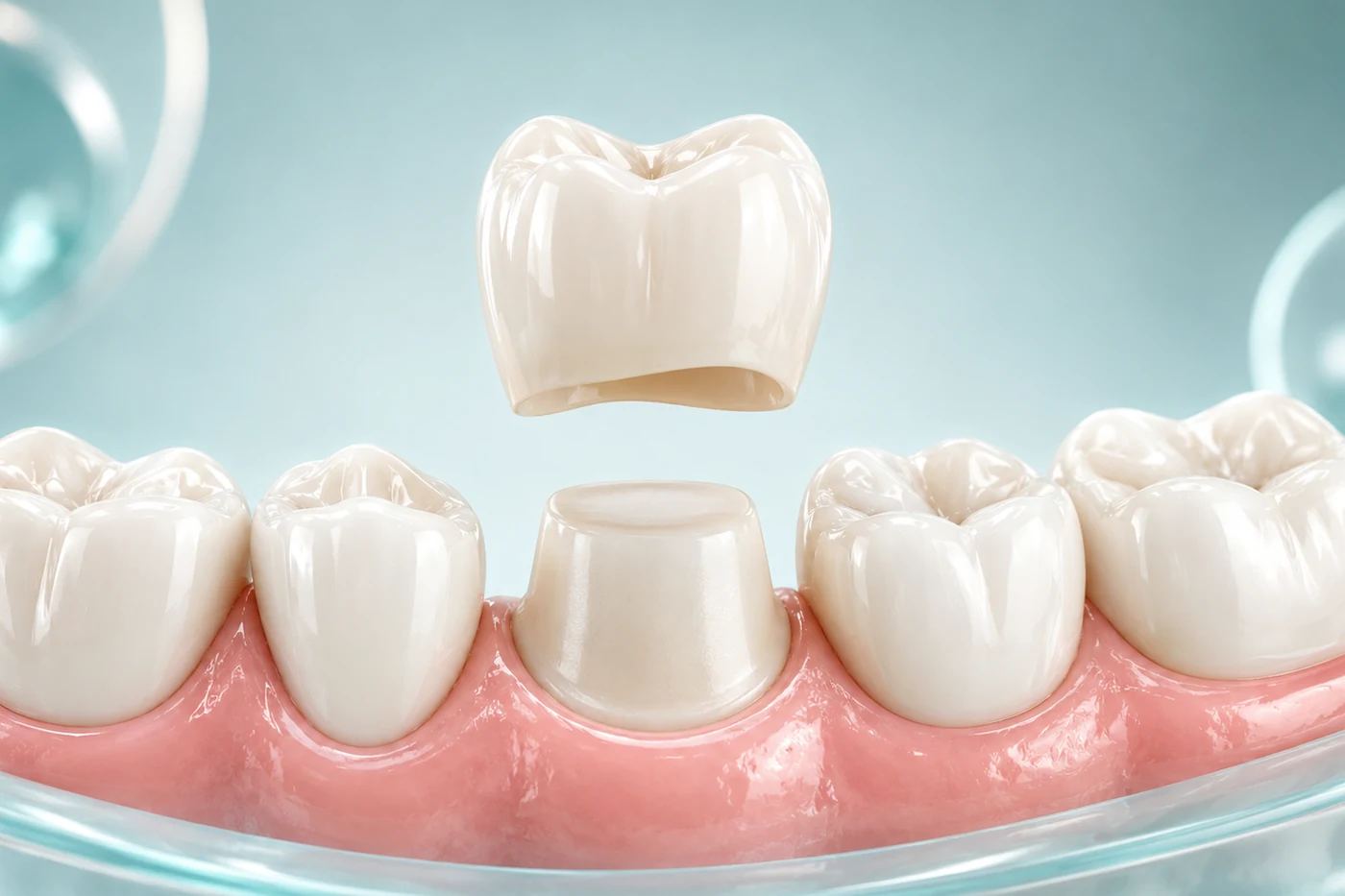
Crowns cover more tooth structure than veneers. Ask the treating dentist to explain why each tooth needs full coverage and what alternatives remain reasonable before preparation begins.
Zirconia vs Emax Veneers Is A Different Question
A veneer is a partial-coverage restoration, so the evidence and bonding demands are not identical to full crowns. A 2025 systematic review and meta-analysis of ceramic laminate veneers included 29 studies. Lithium-disilicate veneers showed a pooled survival of 96.81% at 10.4 years. Zirconia veneers showed 100% survival at a mean follow-up of 2.6 years, but there were no long-term zirconia veneer data.
Those numbers should not be used to claim zirconia veneers are better. The zirconia evidence had much shorter follow-up, while lithium disilicate had a substantially larger long-term evidence base.
Why Lithium Disilicate Is Commonly Discussed For Veneers
Lithium disilicate combines translucency with an established adhesive-bonding pathway, which is useful for thin restorations bonded to enamel. The same 2025 veneer review found strong long-term survival for lithium-disilicate veneers.
Zirconia veneers can be used in selected situations, but long-term clinical evidence is currently much more limited. The treating dentist should explain why zirconia is being proposed instead of a glass-ceramic veneer.
How Much Tooth Preparation Is Needed?
The amount of tooth reduction depends on whether the restoration is a crown or veneer, the starting tooth position, colour, existing fillings, decay, cracks and the minimum thickness required for the selected material.
Do not choose a material from a photograph before the dentist has assessed the tooth. The same ceramic can require a different preparation in two different patients.
Shade, Translucency And Masking Need To Be Planned Together
A very translucent crown can transmit unwanted dark colour from the tooth underneath. A more opaque restoration can mask that colour but may look less enamel-like if opacity is overused.
For visible teeth, ask how the dentist and laboratory will record the underlying tooth shade, final target shade, neighbouring-tooth photographs and any try-in or approval step before final cementation.
What About Chipping And Fracture?
Both materials can fail. Clinical reviews have reported crown fracture, chipping and loss of retention among possible complications. One systematic review of digitally produced crowns reported more chipping in lithium-disilicate crowns, while zirconia had more aesthetic concerns in the included studies.
Layered ceramics can also chip at the veneering layer, which is one reason the exact construction of the crown matters, not just the headline material.
Questions To Ask Before Choosing Zirconia Or Emax
- Why does this tooth need a crown rather than a more conservative restoration?
- What exact zirconia or lithium-disilicate material are you proposing?
- Is the crown monolithic, layered, milled or pressed?
- Why is this material appropriate for this tooth position and my bite?
- How much tooth structure will be removed?
- How will the underlying tooth colour affect the final shade?
- What bonding or cementation method will be used?
- Do grinding or clenching change the material choice?
- How will fit, contact points and bite be checked before I leave?
- What material record and follow-up instructions will I receive?
How Turkelite Medcare Coordinates Crown Planning
Turkelite Medcare is a patient coordination service, not the treating dental clinic. We do not choose zirconia or lithium disilicate, prescribe crown preparation or decide which teeth require full coverage.
Our role is to organise provider questions, written treatment scope, appointments, travel and follow-up around the plan confirmed by the treating dentist. See patient services.
Frequently Asked Questions
Is Zirconia Better Than Emax For Crowns?
Not universally. Zirconia usually offers a larger strength margin, while lithium disilicate is known for high translucency and adhesive bonding. The better choice depends on the tooth, bite, colour and restoration design.
Is Emax Better For Front Teeth?
It can be an excellent option when natural translucency is a priority, but modern zirconia may be preferred when the case needs more masking or a different strength profile.
Are Zirconia Crowns Better For Molars?
They are commonly considered for high-load posterior teeth because of their strength, but the dentist should still assess bite, grinding, available space and opposing teeth.
What Is Better For Veneers: Zirconia Or Emax?
Lithium-disilicate veneers currently have a stronger long-term clinical evidence base. Zirconia veneer data are promising but much shorter in follow-up, so the two evidence sets should not be treated as equivalent.
Do Emax And Zirconia Crowns Last The Same Amount Of Time?
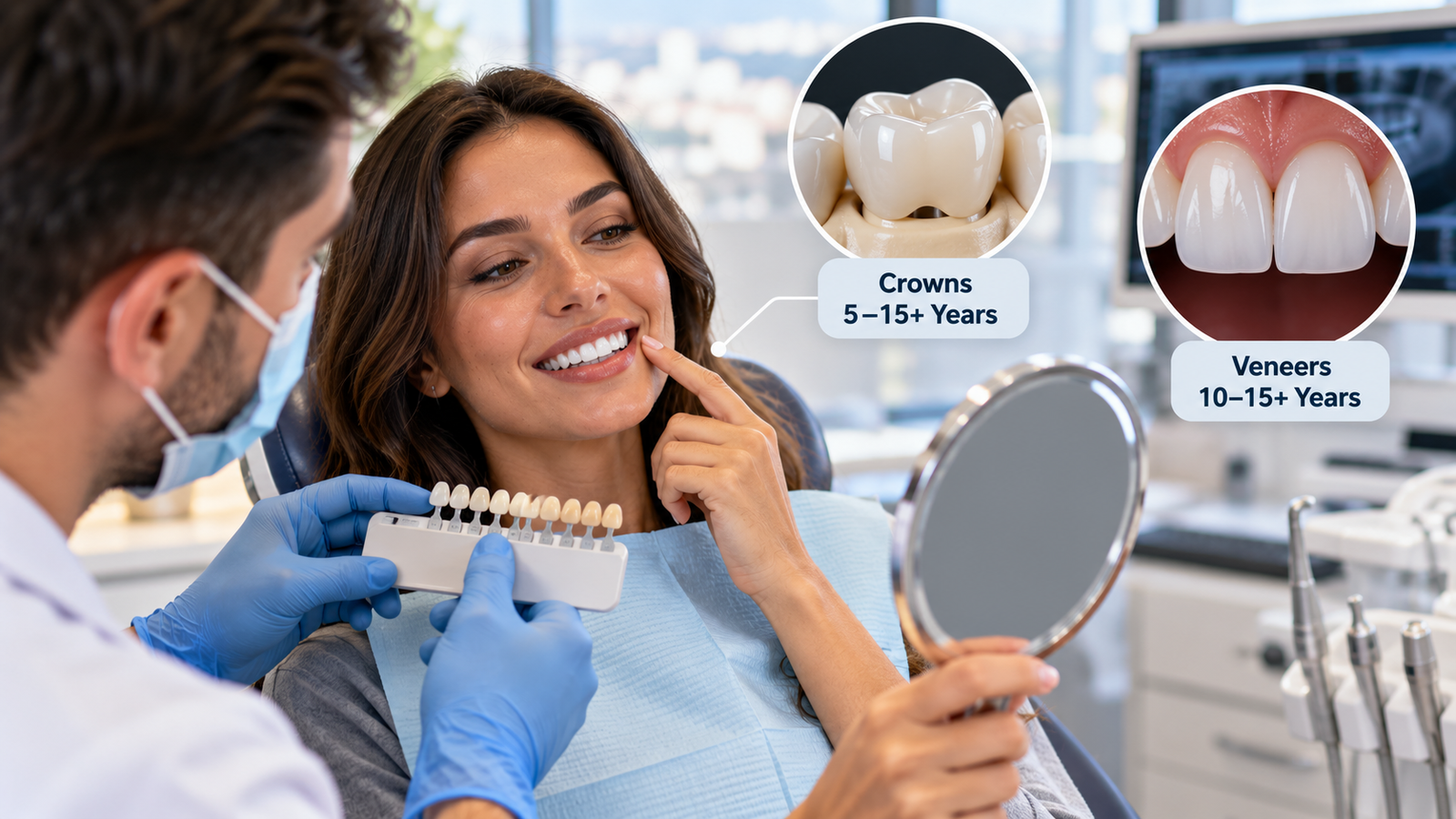
There is no fixed lifespan for either material. Reviews suggest both can have high survival when correctly selected and fabricated, but longevity also depends on the tooth, bite, preparation, bonding or cementation, hygiene and maintenance.
The Best Material Is The One That Fits The Clinical Problem
Zirconia and lithium disilicate are both established dental ceramics. The useful decision is not which material wins in general, but which restoration preserves appropriate tooth structure, fits the bite, manages colour correctly and has a realistic maintenance plan for that specific tooth.
This content is for general information and does not replace individual medical advice, diagnosis or treatment. Discuss treatment suitability, risks and recovery with a qualified healthcare professional.