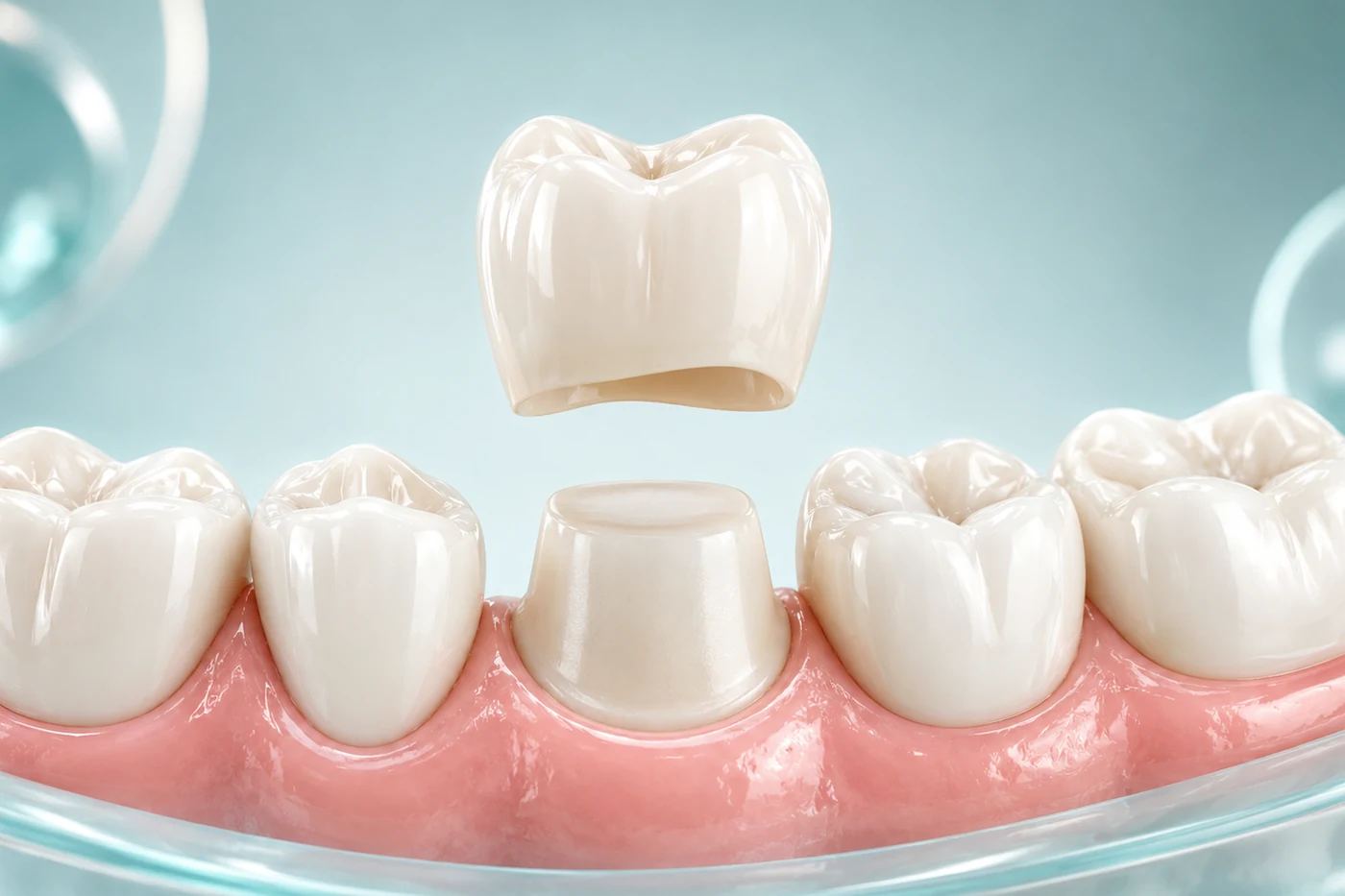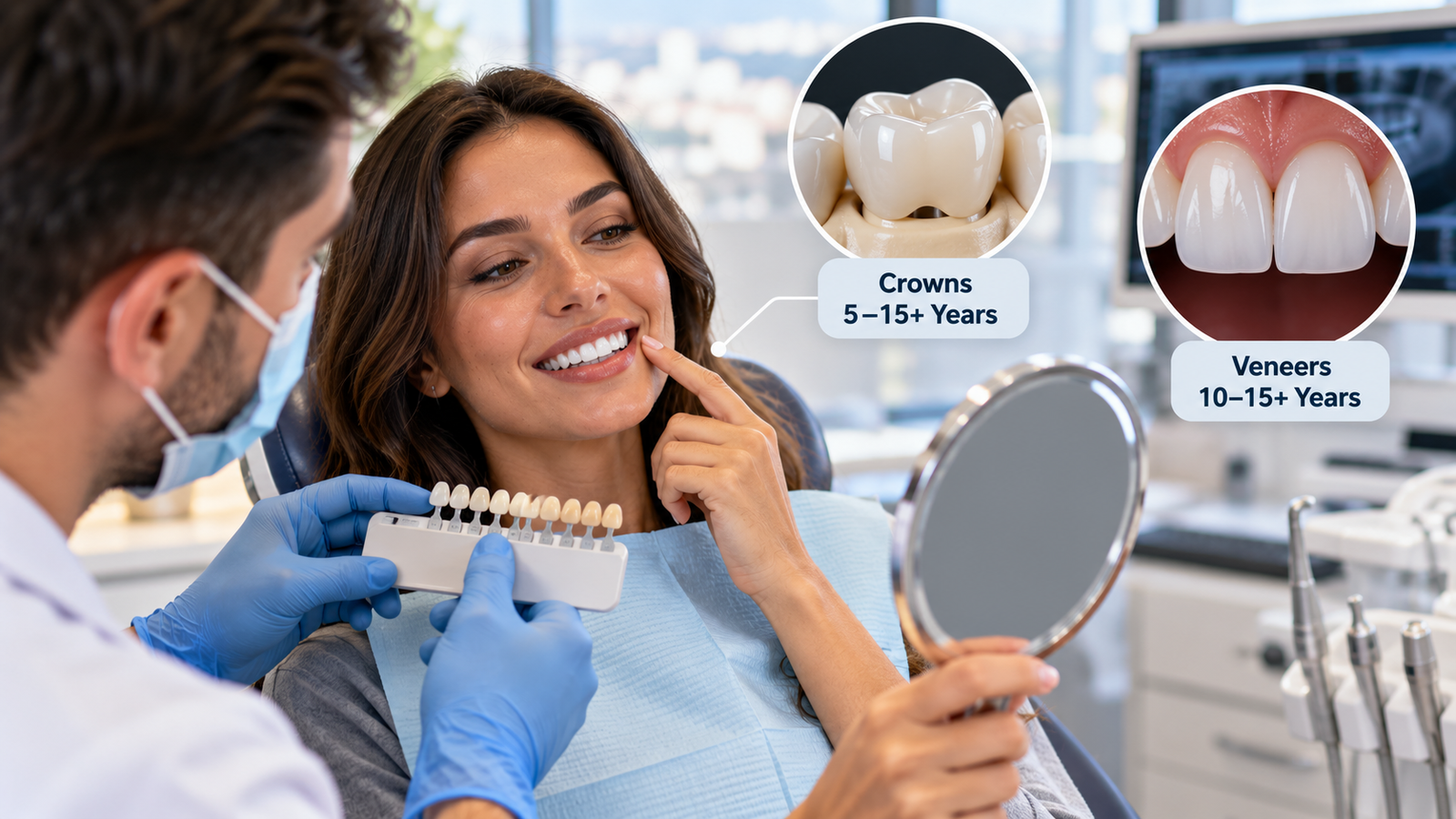

If you have Turkey teeth pain after treatment, the important question is not whether the work was done in Turkey but what type of pain you have, when it started and whether it is improving. Mild temperature sensitivity can occur after crown placement and may settle over the first few weeks, while gum tenderness around a treated tooth often improves within a few days. Pain that is severe, worsening, keeps you awake, occurs with swelling or fever, or persists instead of gradually improving needs dental assessment. Start with the treatment principles on our Dental Crowns page, then contact the treating dentist or a local dentist if your symptoms do not follow the expected recovery pattern.
Not Every Pain After Crowns Means The Same Thing
The informal phrase “Turkey teeth” can describe crowns, veneers or mixed restorative work. Pain after treatment can come from the prepared tooth, the gum around the restoration, the bite, the dental pulp inside the tooth, a crack, decay, infection or another nearby tooth.
That is why the location and pattern of pain matter. A brief cold sensitivity is different from throbbing pain that wakes you at night, and pain only when biting is different from a constant ache with swelling.
A dentist may need examination, bite testing, pulp testing and radiographs to work out the cause rather than guessing from a photograph or message.
How Long Does Turkey Teeth Pain Last?
After a crown, mild sensitivity to hot and cold can be normal for a couple of weeks. Cleveland Clinic notes that some degree of sensitivity is common in the first few weeks after crown placement, while soreness or tenderness of the nearby gum usually settles within a few days.
The American Association of Endodontists also notes that sensitivity to temperature after dental treatment can reflect temporary irritation of the pulp and suggests review if it persists or worsens over roughly two to four weeks.
The key trend should be improvement. A symptom that becomes stronger, changes from brief sensitivity to spontaneous pain, or remains significant beyond the expected recovery period deserves reassessment.
Brief Cold Sensitivity Can Be Different From Lingering Pain
A short sharp response to cold that stops quickly can occur after recent dental work. It may reflect temporary inflammation or exposed sensitive tooth structure.
Lingering pain after hot or cold is more concerning. Endodontic guidance describes pain that continues after the stimulus is removed, especially when it lasts more than about 30 seconds, as a pattern that may indicate more serious pulp injury.
If temperature pain is lasting longer, becoming spontaneous or interrupting sleep, arrange a dental examination rather than waiting for it to settle indefinitely.
Pain When Biting Can Point To The Bite Or The Tooth
If a new crown contacts the opposing tooth too heavily, the tooth may feel sore when chewing. A dentist can check whether the bite needs adjustment.
Sharp pain on biting can also be associated with a crack, decay, a loose restoration or injury to the pulp inside the tooth. That means a bite adjustment should not be assumed to be the answer without an examination.
Tell the dentist whether the pain occurs on biting down, when releasing the bite, or only on one part of the restoration. These details can help narrow the cause.
Night Pain Is Not Typical Crown Sensitivity
Cleveland Clinic notes that a crown should not cause pain or discomfort that keeps you awake at night. Severe spontaneous or throbbing pain is different from mild sensitivity during early recovery.
Night pain can be associated with inflammation or infection inside the tooth and may lead the dentist to assess whether root-canal treatment or another intervention is needed.
Do not repeatedly mask severe night pain without arranging a dental review.
A Tooth Can Need Root-Canal Treatment After Crown Preparation
Some teeth already have deep fillings, cracks, decay or previous trauma before a crown is placed. Preparing a tooth can also stress a pulp that was already vulnerable. In some cases, symptoms later show that the pulp cannot recover.
Possible warning patterns include lingering heat or cold pain, severe spontaneous toothache, strong biting pain, swelling or tenderness around the tooth. These symptoms do not prove that a root canal is needed, but they justify an examination.
The treating dentist should explain whether the tooth was already considered at risk before the crown and what the plan is if endodontic treatment becomes necessary.
Gum Soreness Should Usually Improve
The gum around a newly prepared or cemented crown can feel tender because of retraction, impression procedures, cleaning or cement removal. Mild local soreness should generally improve over the first few days.
Persistent bleeding, increasing swelling, bad taste, discharge or pain that is getting worse should not be treated as ordinary gum tenderness.
If many teeth were treated at once, widespread gum soreness can feel more dramatic, but the dentist still needs to assess areas that are worsening or not healing.
Swelling Changes The Urgency
Swelling of the gum, face or jaw with toothache can indicate infection. A constant severe pain with pressure and swelling is a pattern associated with dental abscess and needs prompt assessment.
Fever or feeling generally unwell can suggest that infection is becoming systemic. Dental guidance recommends urgent clinical treatment rather than relying on antibiotics alone for most pulpal and localised dental pain.
Rapidly spreading facial or neck swelling, difficulty breathing, difficulty swallowing or severe systemic illness requires emergency medical care.
Antibiotics Are Not A General Fix For Crown Pain
The American Dental Association recommends definitive dental treatment rather than antibiotics for most pulpal and periapical dental pain in otherwise healthy adults. Antibiotics are used when there is evidence of systemic involvement or another clinical indication.
That means persistent toothache after crowns should be diagnosed. The solution may be bite adjustment, treatment of decay, root-canal treatment, drainage, repair of a restoration or another dental procedure depending on the cause.
Do not start leftover antibiotics or request them as a substitute for examination.
Loose Or Cracked Crowns Need Review
A crown that moves, chips, fractures or develops a sharp edge should be checked. A loose crown can allow leakage and bacterial contamination, while a crack may expose the underlying tooth or change the bite.
Bad taste or persistent bad breath around one restoration can also be a reason to contact the dentist, especially if accompanied by pain or swelling.
Avoid repeatedly testing a loose crown with your fingers or chewing hard foods on it while waiting for assessment.
Full-Mouth Treatment Can Create Bite Problems
When many crowns are placed in a short treatment window, the bite is being changed across multiple teeth rather than one tooth at a time. Small errors can be harder for the patient to identify because several teeth may feel unfamiliar simultaneously.
If your jaw feels strained, only a few teeth touch first, chewing is uncomfortable or one side feels much higher than the other, ask for a structured bite review.
Do not assume that every post-treatment ache is simply because you need to “get used to” the new teeth.
What To Record Before Contacting The Dentist
- Which tooth or area hurts.
- When the pain began and whether it is improving or worsening.
- Whether pain is triggered by cold, heat, sweet foods or biting.
- How long pain lasts after the trigger is removed.
- Whether pain wakes you from sleep.
- Whether there is swelling, fever, bad taste or discharge.
- Whether any crown feels loose, high or cracked.
- What pain medicines you have already taken.
This information helps the treating clinic or local dentist decide how urgently you need an examination.
When You Should Seek Urgent Dental Care
Seek prompt dental assessment if pain is severe, worsening, persistent, associated with swelling, or prevents normal eating or sleep. A loose or fractured restoration, strong pain on biting, lingering temperature pain or signs of infection also justify review.
Seek emergency medical help if swelling is rapidly spreading into the face or neck, breathing or swallowing becomes difficult, bleeding is uncontrolled or you become seriously unwell.
Do not delay urgent care while waiting for a warranty decision from an overseas clinic.
Aftercare Matters More When Treatment Was Abroad
If the treatment was completed in Turkey and you are now home, contact the treating clinic and a local dentist when needed. The overseas provider should explain what was placed, which teeth were prepared, what materials were used and what complications were anticipated.
Bring radiographs, treatment plans and restoration details to the local dentist. If a root canal, crown removal or other remedial treatment is proposed, ask both providers how it affects any clinic guarantee.
The patient services page explains how Turkelite Medcare coordinates the practical return-home handover around the provider-confirmed clinical plan.
Questions To Ask Before You Leave The Dental Clinic
- Which symptoms are expected and for how long?
- Which teeth were close to the pulp or considered at risk of root-canal treatment?
- Has the bite been checked in normal chewing positions?
- Who should I contact if pain starts after I return home?
- What symptoms require a local dentist rather than remote follow-up?
- What does the clinic's revision or guarantee policy cover?
- Will local emergency treatment affect that policy?
- Which radiographs and treatment records will I receive?
How Turkelite Medcare Coordinates Dental Aftercare
Turkelite Medcare is a patient coordination service, not the treating dental clinic. We do not diagnose toothache, prescribe antibiotics or decide whether a tooth needs root-canal treatment.
Our role is to keep provider communication, treatment records, appointments, travel information and the return-home handover organised. Clinical assessment and treatment decisions belong to the qualified dentist who examines you.
When symptoms are urgent, medical safety comes before travel, warranty or coordination issues.
Frequently Asked Questions
How Long Does Turkey Teeth Pain Last?
Mild temperature sensitivity after crowns can last for a couple of weeks, while gum tenderness often improves within a few days. Pain should trend toward improvement. Persistent, worsening or severe pain needs dental assessment.
Is Toothache Normal After Turkey Teeth?
Mild sensitivity can occur after crown treatment, but strong spontaneous toothache, pain that keeps you awake, swelling or worsening symptoms are not simply routine sensitivity and should be checked.
Why Do My New Crowns Hurt When I Bite?
A high bite is one possible cause, but sharp biting pain can also be linked to a crack, decay, a loose restoration or pulp injury. A dentist should examine the tooth before assuming the cause.
When Does Sensitivity Suggest A Nerve Problem?
Brief sensitivity may settle after treatment. Pain that lingers after heat or cold, becomes spontaneous, worsens or interrupts sleep can indicate more significant pulp inflammation and should be assessed.
Do I Need Antibiotics For Pain Under A Crown?
Not automatically. Most pulpal dental pain requires diagnosis and definitive dental treatment rather than antibiotics alone. Antibiotics are used when a dentist identifies a clinical indication such as systemic infection.
What Warning Signs Need Urgent Help?
Seek urgent assessment for severe or worsening pain, swelling, fever, significant bleeding, a loose or broken crown, or inability to eat or drink normally. Rapidly spreading swelling, breathing difficulty or swallowing difficulty needs emergency medical care.
Pain Should Be Explained, Not Normalised Without A Diagnosis
Some soreness after restorative treatment can be expected, but the pattern matters. Improvement over days or weeks is different from severe, lingering or worsening toothache. If the symptoms do not fit the expected recovery, arrange an examination so the bite, restoration, pulp, gum and surrounding tissues can be checked properly.
This content is for general information and does not replace individual medical advice, diagnosis or treatment. Discuss treatment suitability, risks and recovery with a qualified healthcare professional.