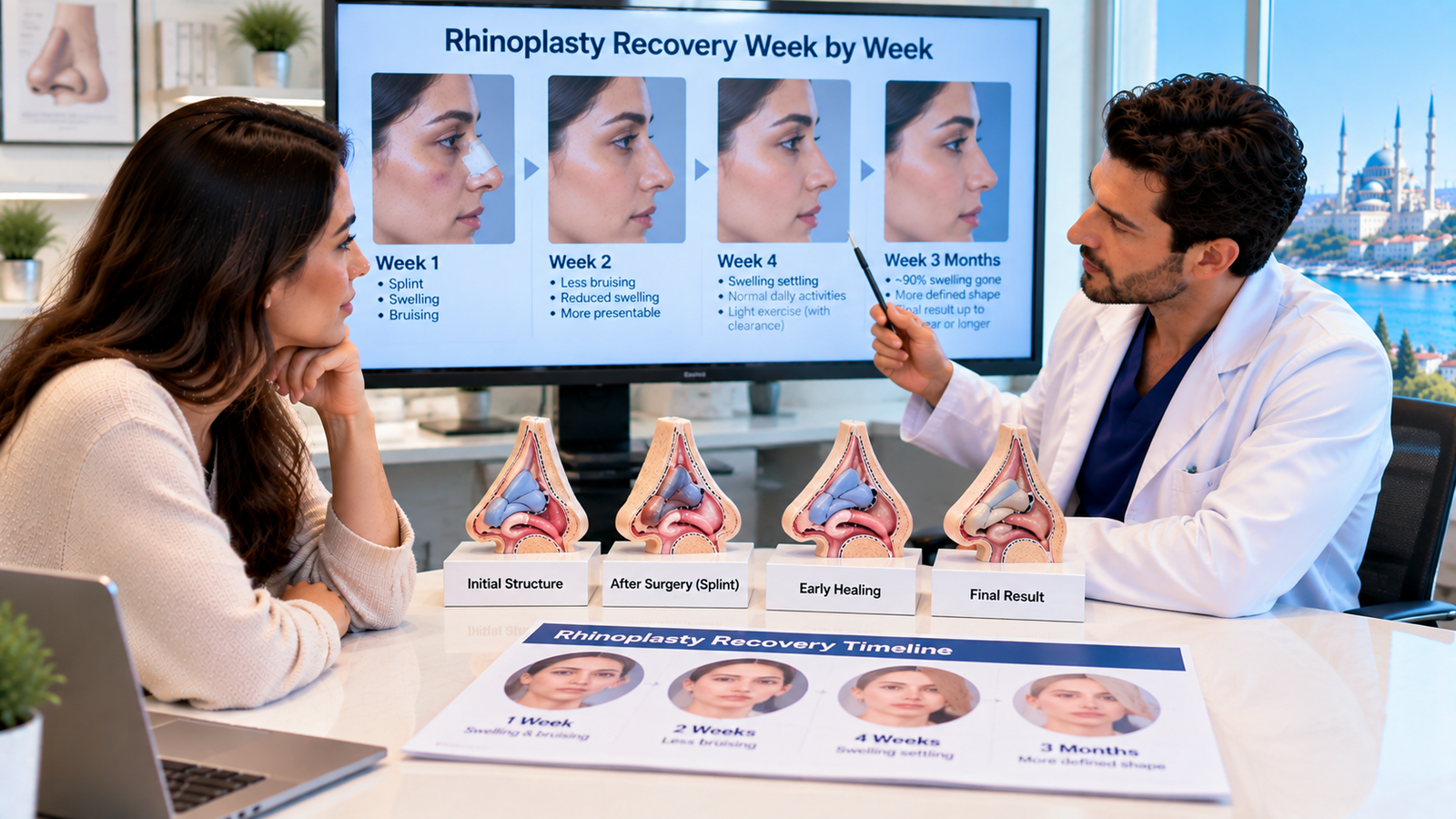

If you are planning flying after rhinoplasty, do not let a package checkout date become your medical clearance date. Published guidance is not completely uniform. The American Society of Plastic Surgeons has suggested waiting about 7 to 10 days after facial cosmetic procedures, including rhinoplasty, before flying, while Cambridge University Hospitals advises avoiding flying for two weeks after septorhinoplasty. The UK National Health Service also notes that an external splint is commonly kept in place for about seven days and that swelling and bruising continue well beyond the first week. That makes the safest planning principle clear: use public timeframes as reference points, but let the surgeon's examination, splint or packing status, bleeding, swelling, breathing and the length of your journey determine the actual return date. Start with the clinical pathway on our Rhinoplasty page, then organise travel around the treating surgeon's confirmed plan.
Flying After Rhinoplasty: Why Guidance Ranges From 7–10 Days To Two Weeks
There is no single published day on which every rhinoplasty patient becomes fit to fly. The American Society of Plastic Surgeons, in guidance about cosmetic-surgery tourism, suggests waiting 7 to 10 days after facial cosmetic procedures such as rhinoplasty. That is useful as a broad planning reference, not a personal clearance rule.
Cambridge University Hospitals gives more conservative advice after septorhinoplasty and tells patients to avoid flying for two weeks. A separate current hospital leaflet from Barts Health also advises no flying for two weeks after septorhinoplasty. These recommendations matter because some operations involve both external reshaping and internal septal work, with splints, congestion or bleeding risk that can extend beyond the first postoperative review.
The difference should not be “solved” by automatically choosing the shorter number. Instead, ask your surgeon which guidance they follow for your exact operation and why. A primary cosmetic rhinoplasty, a revision procedure and a rhinoplasty combined with septal work may not have the same travel timeline.
Flying 7 Days After Rhinoplasty Is Not Automatic Clearance
Seven days is an important recovery milestone because the external splint is often reviewed or removed around that time. The National Health Service says the splint may come off at about one week, and Cambridge University Hospitals schedules a one-week review to remove the splint or plaster. That makes day seven a clinically useful review point.
It does not mean that splint removal automatically equals fitness to fly. At one week you may still have marked nasal blockage, facial swelling, bruising, blood-stained drainage or internal splints. Cambridge notes that internal nasal splints may remain for one to two weeks after septorhinoplasty, and some patients require a longer period before the nose and airway feel more settled.
If you are considering flying 7 days after rhinoplasty, ask the surgeon to confirm the wound, bleeding, swelling, nasal packing or splints, hydration, pain control and any functional breathing concern before departure. A booked flight should remain changeable if the examination does not support travel.
How Long To Stay In Turkey After Rhinoplasty
For an international patient, the useful question is not simply how many hotel nights are included. The stay needs to cover surgery, immediate observation, early recovery, the first in-person review and the surgeon's decision about return travel. If an external splint is intended to stay for about one week, leaving before that review may remove an important opportunity for the operating team to assess early healing.
Current public guidance creates a reasonable planning range rather than a universal rule. A 7-to-10-day window appears in American plastic-surgery travel guidance for facial cosmetic procedures, while NHS septorhinoplasty advice can extend the no-fly period to two weeks. For medical-travel planning, this means a flexible stay of roughly one to two weeks may need to be discussed before booking, with the final duration confirmed by the provider.
Ask the clinic to separate four dates in writing: the operation date, expected hospital discharge, the planned splint or wound review, and the earliest date the surgeon would consider return travel if recovery is uncomplicated. Then ask what findings would extend that stay.
Splint Removal And The Pre-Flight Review Matter
An external nasal splint supports and protects the reshaped nose during early healing. The National Health Service describes a splint being taped over the nose for around seven days, and Cambridge University Hospitals similarly removes the external splint after about one week. Internal splints can remain longer in some septorhinoplasty cases.
The review is more than a cosmetic milestone. It gives the surgeon a chance to examine swelling, wounds, bleeding, infection concerns, nasal obstruction and whether dressings or internal supports still need attention. It also gives you a chance to confirm the medication plan and what to do if symptoms change after you return home.
Do not remove a splint early simply to make air travel easier. If the surgeon wants it kept in place, that clinical plan should take priority over the original ticket.
Swelling During Air Travel After Rhinoplasty
Swelling is expected after rhinoplasty whether or not you fly. The National Health Service says swelling and bruising around the eyes can last about three weeks and that complete resolution of swelling can take months. The American Society of Plastic Surgeons notes that swelling can fluctuate during recovery and that final nasal refinement can take up to a year.
When discussing swelling during air travel after rhinoplasty, it is important not to promise that the nose will look settled by the time you travel home. The American Society of Plastic Surgeons warns that combining surgery with travel can add to swelling and other postoperative risks. A flight taken during the early recovery window can therefore feel uncomfortable even when healing is otherwise uncomplicated.
Keep the head elevated when practical, follow the surgeon's instructions about hydration, medicines and nasal care, and avoid judging the aesthetic result during the travel window. Early asymmetry or puffiness can reflect temporary swelling rather than the final contour.
Cabin Pressure Should Not Be Used As A Simple Scare Story
Patients are often told that cabin pressure will “damage” a newly operated nose, but direct high-quality studies testing routine commercial flight immediately after rhinoplasty are limited. Published hospital guidance still recommends waiting because the early postoperative period can include congestion, swelling, bleeding risk, splints and limited access to the operating surgeon if a problem develops.
The practical concern is therefore broader than pressure alone. A blocked nose, internal swelling or recent septal work can make pressure changes and dry cabin air uncomfortable. If sinus surgery or another procedure involving air-filled spaces was performed at the same time, your surgeon may use a different travel rule.
Ask exactly what was done inside the nose, not just whether the operation was labelled “rhinoplasty.” Functional septal work, turbinate treatment, sinus procedures, grafting or revision surgery can change the aftercare and travel plan.
Long-Haul Travel Adds Blood-Clot And Mobility Considerations
Rhinoplasty is not the same as major abdominal or orthopaedic surgery, but surgery and prolonged travel both contribute to the broader assessment of blood-clot risk. The American Society of Plastic Surgeons specifically cautions that long flights and surgery can each increase the possibility of blood clots and that combining travel with surgery can increase postoperative risks.
Your individual risk depends on more than the nose operation. Previous thrombosis, clotting disorders, obesity, hormone use, smoking, limited mobility, additional procedures and a very long itinerary can all matter. Do not start aspirin, anticoagulants or compression therapy simply because you have a long flight; any prevention plan should be prescribed for you.
Give the surgeon the full door-to-door itinerary, including connections and ground travel. A two-hour flight and a twelve-hour journey with multiple connections should not automatically receive the same practical advice.
Combined Septal Work Or Revision Surgery Can Change The Timeline
Some rhinoplasty procedures are mainly cosmetic, while others also correct the septum, nasal airway or previous surgical changes. Cambridge University Hospitals describes septorhinoplasty as combined surgery to straighten the septum and reshape the nose, with internal splints sometimes remaining for one to two weeks.
Revision rhinoplasty can also involve scar tissue, grafts or more extensive reconstruction. The recovery timetable may therefore differ from a straightforward primary operation. The surgeon who knows what was actually done is better placed than a generic package schedule to decide when travel is appropriate.
Before booking, ask whether your plan includes septoplasty, turbinate surgery, graft harvesting, osteotomies, revision work or another procedure. The answer may affect the review schedule, swelling, breathing and the travel window.
The Airport Is Part Of Rhinoplasty Recovery
Flying starts before you board the aircraft. Airports involve walking, queues, security checks, lifting luggage, crowded spaces and the possibility of accidental contact with your face. A newly operated nose remains vulnerable to trauma even if the external splint has been removed.
Use luggage you can manage without lifting a heavy bag above your head. Arrange assistance if long walking distances are unrealistic. Keep medicines, discharge paperwork, surgeon contact details and any nasal-care items in accessible hand luggage, subject to airline security rules.
If you are travelling with a companion, agree in advance that they will manage heavier luggage and crowded transfers. Protecting the nose from impact is more important than travelling independently for appearance or convenience.
Do Not Judge The Final Result During The Travel Window
The first postoperative week is not the right time to judge whether the nose is straight, refined or symmetrical. The National Health Service says bruising and redness may take around three weeks to fade and swelling may take up to six months to resolve completely. The American Society of Plastic Surgeons describes final refinement taking up to a year.
Swelling also does not disappear evenly. The tip can remain swollen longer, and one side may appear different during early healing. A travel photograph taken after splint removal is therefore not a reliable final-result assessment.
Ask when the surgeon expects photographs, virtual reviews or in-person follow-up after you return home. Early follow-up should focus on healing and function before aesthetic judgement.
When The Return Flight Should Be Postponed
Do not let the ticket override symptoms that need clinical assessment. The National Health Service advises contacting the operating clinic as soon as possible for severe pain or unexpected symptoms after rhinoplasty. Heavy nosebleeds, infection and breathing problems are recognised complications.
Cambridge University Hospitals advises medical review if the nose becomes increasingly blocked and sore or if green, unpleasant-smelling discharge develops. Other NHS nasal-surgery guidance treats heavy uncontrolled bleeding or breathing difficulty as reasons for urgent assessment.
If you develop heavy or persistent bleeding, rapidly worsening pain or swelling, fever, offensive discharge, breathing difficulty, faintness or another severe unexpected symptom, seek medical care locally and contact the treating team. Do not travel simply to avoid the cost of changing a flight.
Questions To Answer Before Booking Your Return Flight
- Was the operation cosmetic rhinoplasty alone or did it include septal, turbinate, sinus or revision work?
- When will the external splint be removed?
- Will any internal splints or packing still be present when I plan to travel?
- Which postoperative review must happen before I leave Turkey?
- Does the surgeon follow a 7-to-10-day, two-week or longer no-fly period for my operation?
- Does the length of my flight or total journey change the advice?
- What degree of swelling, bruising or nasal blockage is expected on my travel date?
- Which symptoms mean the flight should be delayed?
- Who will provide clinical advice after I return home?
These questions are more useful than asking a coordinator for a fixed number of hotel nights. The answer should come from the surgeon who knows your procedure and early recovery.
How Turkelite Medcare Coordinates Rhinoplasty Travel
Turkelite Medcare is a patient coordination service, not the operating clinic. We do not decide when you are fit to fly, remove splints, diagnose postoperative swelling or prescribe medicines. Those clinical decisions belong to the independent treating surgeon and clinic.
Once the provider confirms the operation, review schedule and return-travel window, Turkelite can coordinate flights, accommodation, transfers, appointments, provider communication and the return-home handover around that medical plan. The patient services page explains this practical coordination role.
If the surgeon extends your stay because of swelling, bleeding, splints or another clinical finding, the travel plan should change with the medical plan rather than forcing the medical team to fit a fixed ticket.
Frequently Asked Questions
How Soon Is Air Travel Usually Considered After Rhinoplasty?
Published guidance varies. The American Society of Plastic Surgeons suggests roughly 7 to 10 days after facial cosmetic surgery, including rhinoplasty, while Cambridge University Hospitals advises avoiding flying for two weeks after septorhinoplasty. Your surgeon should choose the timeline that fits your exact operation and recovery.
Is Flying 7 Days After Rhinoplasty Safe?
Seven days is often when the external splint is reviewed or removed, but that does not automatically make you fit to fly. You may still have internal splints, congestion, swelling, bleeding risk or a need for further review. Ask the operating surgeon to assess you before departure.
How Long Should I Stay In Turkey After Rhinoplasty?
Plan around the operation, early recovery, splint removal and the required in-person review. Public guidance ranges from about 7 to 10 days for facial cosmetic procedures to two weeks after septorhinoplasty, so a flexible one-to-two-week planning window may be discussed before booking. The provider must confirm the final duration.
Can Flying Make Rhinoplasty Swelling Worse?
Swelling is already expected during the early recovery period and can persist for weeks or months. Surgical-travel guidance warns that travel can add to postoperative swelling and discomfort. The key is to fly only when the surgeon considers your recovery suitable and to follow the aftercare plan during the journey.
Can I Fly With A Rhinoplasty Splint Still On?
Do not assume that you can. External splints are commonly reviewed around one week, while internal splints may remain longer after combined nasal surgery. The operating surgeon should decide whether the splint or packing must be removed or checked before travel.
What Symptoms Mean I Should Not Fly?
Seek clinical advice before travelling if you have heavy or persistent bleeding, severe or worsening pain, increasing blockage with signs of infection, fever, offensive discharge, breathing difficulty, faintness or another unexpected severe symptom. Urgent symptoms should be assessed locally rather than managed around a booked flight.
Let The Postoperative Review Set The Flight Date
The most useful way to plan return travel is to treat 7 to 10 days and two weeks as reference points, not promises. Splint status, swelling, bleeding, breathing, combined procedures, flight length and the surgeon's examination all matter. A flexible ticket is easier to change than a clinical recovery plan.
If you want help coordinating provider communication and travel around a surgeon-confirmed rhinoplasty plan, start your private enquiry.
This content is for general information and does not replace individual medical advice, diagnosis or treatment. Discuss treatment suitability, risks and recovery with a qualified healthcare professional.