
Gastric sleeve Turkey aftercare should be planned before the operation, not improvised after the flight home. Sleeve gastrectomy permanently reduces stomach volume and creates a long-term need for staged eating, hydration, protein intake, vitamin and mineral supplementation, blood monitoring, weight and reflux review, and access to a bariatric team when problems arise. The British Obesity and Metabolic Surgery Society specifically warns primary-care clinicians to take extra caution with patients who had bariatric surgery abroad and says its primary-care nutrition guidance does not replace support from a bariatric unit. American bariatric guidance likewise describes lifelong vitamins, regular follow-up and gradual diet progression as part of life after surgery. Start with the clinical pathway on our Sleeve Gastrectomy page, then make sure the overseas team and your home-country clinicians know who is responsible for each part of follow-up.
Aftercare Begins Before You Leave Turkey
The return-home plan should be agreed before discharge. You should know the exact operation performed, whether there were any intraoperative or early postoperative issues, the diet stage you are on, the medicines and supplements you should use, the planned review dates and the warning signs that need urgent care.
Ask for a discharge summary, operation report, medication list, nutrition plan, supplement plan, relevant blood results and a direct clinical contact. If a complication develops after you leave, a doctor at home should not have to guess what procedure was performed or what the operating team intended.
Travel coordination is useful only when the medical handover is clear. The clinic should decide when you are fit to travel; the flight should not decide when your clinical follow-up ends.
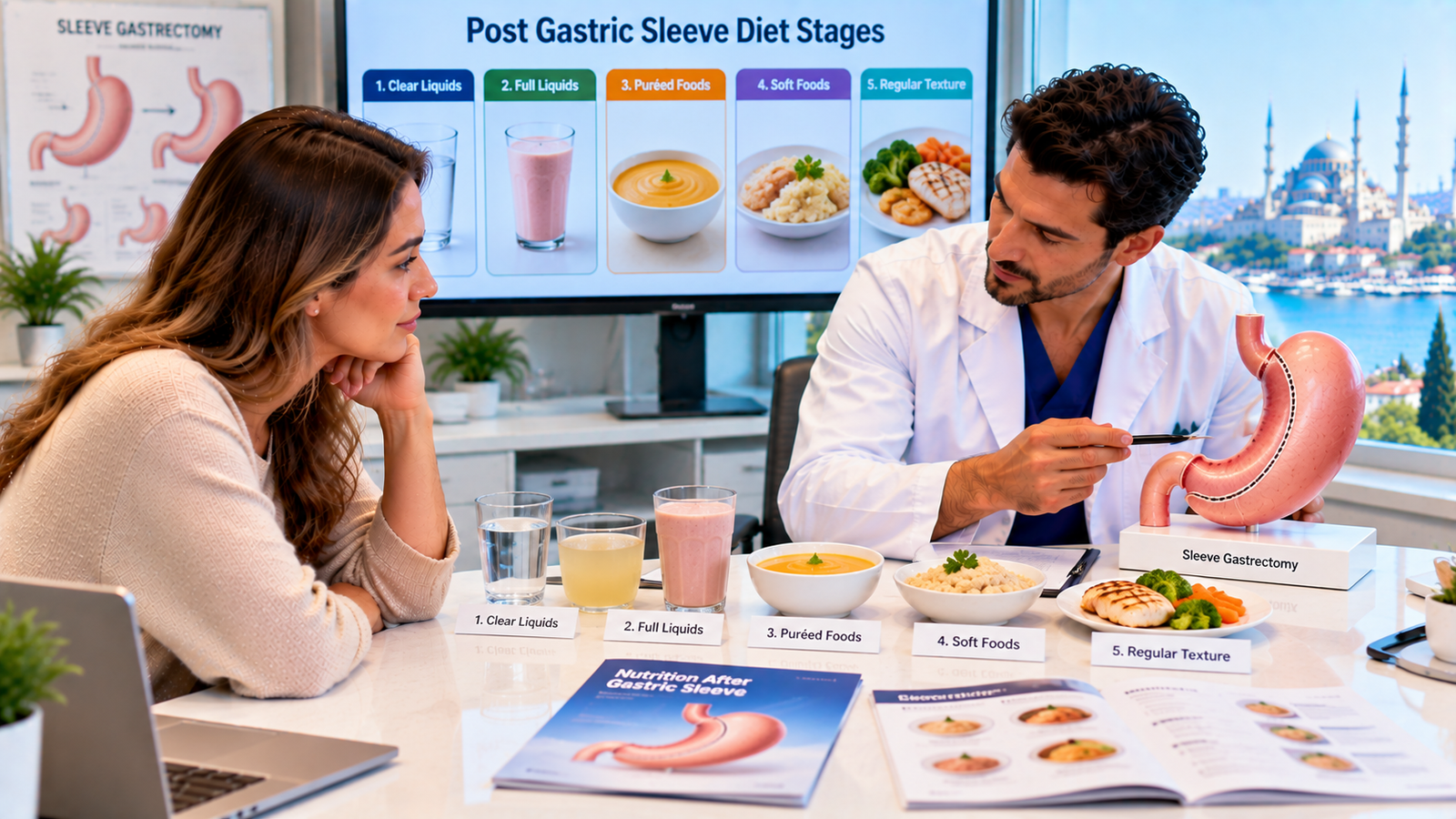
The First Weeks Are A Diet Progression, Not A Return To Normal Eating
After sleeve gastrectomy, food texture is usually advanced in stages. Johns Hopkins describes a progression from liquids to pureed foods, then soft foods and eventually regular food, with timing set by the surgical team. Moving too quickly can cause pain or vomiting.
Your written plan should say what you can drink and eat at each stage, how meals should be spaced, what symptoms suggest poor tolerance and who to contact if you cannot progress as expected.
Do not copy another patient's timetable. The provider may modify the sequence because of nausea, vomiting, reflux, a narrowing concern or another clinical issue.
Hydration Is One Of The Most Important Early Priorities
A smaller stomach can make it difficult to drink enough soon after surgery. American bariatric patient guidance commonly uses at least 64 ounces, roughly 1.9 litres, of fluid per day as a general target and stresses hydration to reduce problems such as nausea, constipation, fatigue and kidney issues.
That number is a general educational target, not an individual prescription. Your bariatric team may give different instructions based on kidney, heart or other medical conditions.
Ask how to recognise dehydration. Inability to keep fluids down, very low urine output, marked dizziness or worsening weakness should not be treated as a normal inconvenience of travelling home.
Protein Targets Need A Written Plan
American bariatric guidance commonly describes 60 to 100 grams of protein per day after weight-loss surgery, depending on the patient and programme. Adequate protein helps preserve muscle and supports recovery while overall food intake is restricted.
The exact target and permitted sources should come from your dietitian or bariatric team. Early after surgery, liquid or soft protein sources may be used while food texture is still progressing.
If you are unable to meet the provider's protein target because of persistent nausea, vomiting, pain or intolerance, contact the clinical team rather than simply adding more supplements without review.
Vitamins And Minerals Are A Lifelong Part Of Sleeve Aftercare
Sleeve gastrectomy does not bypass the intestine, but reduced food intake and changes in the stomach can still lead to nutritional deficiencies. The American Society for Metabolic and Bariatric Surgery states that vitamin and mineral supplementation is needed for life after weight-loss surgery.
The British Obesity and Metabolic Surgery Society also recommends lifelong nutritional supplementation and annual nutritional monitoring after sleeve gastrectomy. The exact products and doses should be individualised by the bariatric team and adjusted according to blood results.
Do not stop supplements because you feel well. Nutritional deficiencies can develop without obvious early symptoms.
Blood Tests Need A Long-Term Owner
After returning home, somebody must be responsible for ordering and interpreting blood tests. Current British specialist guidance for primary care lists routine annual monitoring after sleeve gastrectomy that includes a full blood count, kidney and liver markers, calcium, vitamin B12 and folate, ferritin, vitamin D, zinc, copper and selenium, with other tests according to symptoms and medical history.
During the first year, bariatric programmes usually review patients more frequently than once a year. Johns Hopkins describes multiple surgical and nutrition reviews in the first year and annual follow-up thereafter.
Before travelling for surgery, ask your home doctor or bariatric service whether they will provide this monitoring and what documents they need from the Turkish team.
Persistent Vomiting Is Not Normal Aftercare
The British Obesity and Metabolic Surgery Society states that repeated vomiting after bariatric surgery should be investigated. Prolonged vomiting can lead to dehydration and can also create a dangerous risk of thiamine deficiency, particularly when food intake is poor or weight loss is rapid.
Do not let persistent vomiting be managed only through messaging and repeated anti-nausea advice without clinical assessment. The cause may include dietary intolerance, narrowing, reflux or another postoperative problem.
If vomiting prevents fluids or nutrition from staying down, seek prompt medical assessment and contact the bariatric team.
Know The Red Flags That Need Urgent Review
British bariatric complication guidance highlights abdominal pain with a fast heart rate or fever after sleeve gastrectomy as an emergency pattern. Chest pain, breathlessness and a fast heart rate require urgent assessment. Persistent vomiting with upper abdominal pain also needs investigation.
Other concerning symptoms can include increasing wound redness or discharge, significant bleeding, fainting, severe dehydration, new leg swelling or pain, or a sudden deterioration in how you feel.
Do not board a flight or wait for a routine online review if you are seriously unwell. Seek urgent medical care where you are and tell the treating bariatric team.
Reflux Can Appear Or Change After Sleeve Gastrectomy
Reflux and heartburn are important long-term issues after sleeve gastrectomy. British primary-care bariatric guidance advises reviewing persistent heartburn or reflux symptoms rather than ignoring them.
If you develop frequent burning, regurgitation, nighttime coughing or difficulty swallowing, tell your bariatric clinician. The assessment may involve diet review, medication or investigation depending on the pattern.
Persistent symptoms should not be dismissed as an unavoidable price of the operation.
Weight Loss Is Only One Part Of Follow-Up
Long-term bariatric review should consider more than the number on the scale. Weight trend, nutrition, diabetes, blood pressure, sleep-related problems, medicines, mental wellbeing, physical activity and symptoms related to the operation can all change as weight falls.
Some medicines may need review as health conditions improve or as absorption and tolerance change. Medication changes should be made by the clinician responsible for the condition, not by a travel coordinator.
A good handover makes clear which clinician monitors obesity-related conditions after you return home.
Gastric Sleeve Turkey NHS Aftercare: Do Not Assume Automatic Takeover
UK patients sometimes search for “gastric sleeve Turkey NHS” because they want to know who will look after them after surgery abroad. The practical answer is to arrange local care before travelling rather than assuming that an NHS bariatric team will automatically take over every part of private overseas follow-up.
The British Obesity and Metabolic Surgery Society has created guidance to help general practitioners support people after bariatric surgery, and it specifically advises extra caution with surgery performed abroad. It also states that primary-care nutritional guidance does not replace clinical advice from a bariatric surgery unit.
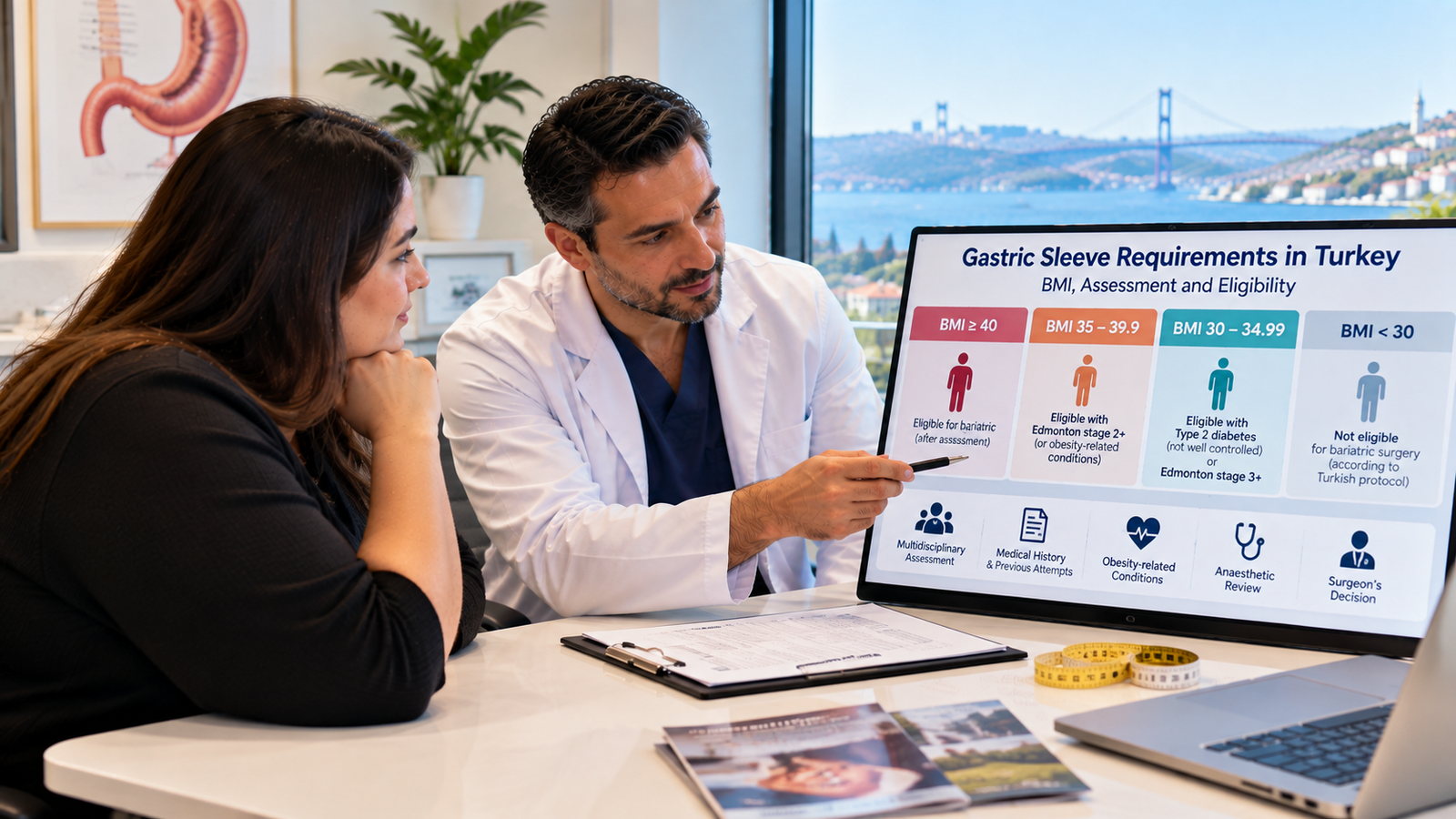
Before surgery, ask your general practitioner what monitoring they can provide, whether local bariatric referral is possible when specialist review is needed and what records the Turkish team must supply.
Aftercare At Home After Gastric Sleeve Abroad Needs Named Responsibility
Your aftercare plan should identify who handles four different jobs: early surgical questions, diet and supplement progression, routine blood monitoring, and long-term bariatric review. One clinician does not necessarily provide all four.
The Turkish surgical team should remain contactable for procedure-specific questions and complications. Your home doctor may support blood tests and general medical issues. A bariatric dietitian or specialist service may be needed for nutrition, persistent symptoms or complex long-term problems.
The most dangerous gap is when every team assumes another team is responsible.
Schlauchmagen Surgery In Turkey And Aftercare In Germany
German patients often search for aftercare in Germany after sleeve surgery in Turkey. The same principle applies: identify a local clinician or obesity service before travelling and confirm what follow-up it can realistically provide.
Germany's current 2024 evidence-based obesity guideline remains valid through 2029, while the German Society for General and Visceral Surgery continues to emphasise structured obesity care, nutritional follow-up, supplementation, complication management and interdisciplinary treatment in its bariatric programmes and centre standards.
Bring the German clinician the operation report, discharge summary, supplement plan, laboratory schedule and direct contact details for the Turkish bariatric team. Do not assume that a local centre will automatically accept responsibility for every aspect of a privately performed overseas operation.
Exercise Should Progress With Surgical Clearance
Walking is encouraged early after bariatric surgery because movement supports recovery and reduces prolonged immobility. More intense exercise should be introduced according to the surgeon's instructions and your wound healing.
Ask when you can lift, drive, return to work and restart structured exercise. These milestones can differ if you had a complication or another procedure at the same time.
Do not use rapid weight loss as a reason to push exercise beyond the recovery plan.
Pregnancy Planning Needs Bariatric Follow-Up
If pregnancy is possible after bariatric surgery, discuss contraception and future pregnancy with the treating team. Nutritional requirements and monitoring change during pregnancy, and specialist bariatric and obstetric input may be needed.
Tell any clinician caring for a future pregnancy that you have had sleeve gastrectomy, even if the operation was years earlier and weight has been stable.
Keep your surgery and supplement records long term because they remain relevant to future medical care.
Keep A Permanent Bariatric Record
- Operation date and exact procedure.
- Operating hospital and responsible surgeon.
- Operation report and discharge summary.
- Current medication and supplement plan.
- Diet progression instructions.
- Baseline and follow-up blood results.
- Emergency contact for the bariatric team.
- Planned surgical and dietetic review dates.
- Allergies and important medical conditions.
- Any complication, readmission or revision procedure.
Questions To Answer Before You Fly Home
- What diet stage am I on and when should I progress?
- What fluid and protein targets apply to me?
- Which lifelong supplements do I need and when do I start them?
- Which blood tests are needed during the first year and long term?
- Which symptoms require emergency or urgent assessment?
- Who do I contact in Turkey for procedure-specific questions?
- Who will monitor blood tests and general health in my home country?
- Who will provide bariatric nutrition support?
- What happens if I develop persistent vomiting or reflux?
- When are my next surgical and long-term bariatric reviews?
How Turkelite Medcare Coordinates The Aftercare Handover
Turkelite Medcare is a patient coordination service, not the bariatric surgery unit. We do not prescribe supplements, interpret blood tests, treat complications or replace your surgeon, general practitioner or bariatric specialist.
Our role is to keep the practical journey connected to the clinical plan: provider communication, records, appointments, travel timing, accommodation, return travel and the follow-up handover. The patient services page explains that division of responsibility.
A strong medical-travel pathway ends with named clinical responsibility at home, not simply with the airport transfer.
Frequently Asked Questions
What Aftercare Do I Need After A Gastric Sleeve In Turkey?
You need a written diet progression, hydration and protein plan, lifelong supplement plan, early surgical reviews, blood monitoring, warning-sign instructions and a clear route for long-term bariatric follow-up after returning home.
How Much Should I Drink And How Much Protein Do I Need?
American bariatric education commonly uses at least 64 ounces, about 1.9 litres, of fluid and 60 to 100 grams of protein per day as general targets, but your individual targets should come from your bariatric team and may differ because of other medical conditions.
Do I Need Vitamins For Life After Sleeve Gastrectomy?
Yes, major bariatric guidance recommends lifelong vitamin and mineral supplementation after weight-loss surgery, including sleeve gastrectomy. The exact products and doses should be set and adjusted by your clinical team according to diet and blood results.
Will The NHS Automatically Provide All My Aftercare After Surgery In Turkey?
Do not assume automatic specialist takeover. British bariatric guidance helps general practitioners support post-bariatric patients but specifically says primary-care nutritional guidance does not replace support from a bariatric surgery unit and advises extra caution after surgery abroad. Arrange your home follow-up before travel.
Can I Get Sleeve Aftercare In Germany After Surgery In Turkey?
Potentially, but organise it before surgery. Ask your family doctor or local obesity centre what monitoring and referrals they can provide, and return with the operation report, discharge summary, supplement plan, laboratory schedule and contact details for the Turkish bariatric team.
When Should I Seek Urgent Help?
Seek urgent medical assessment for severe or worsening abdominal pain, fever, fast heart rate, chest pain, breathlessness, inability to keep fluids down, persistent vomiting, significant bleeding, severe dehydration or another sudden deterioration. Contact the operating bariatric team as well.
Aftercare Is A Lifelong Clinical Pathway, Not A Travel Add-On
A sleeve gastrectomy trip is not complete when you arrive home. Safe long-term care requires nutrition, supplementation, blood monitoring, symptom review and named clinicians who know when a problem needs specialist bariatric input. Arrange that handover before surgery so the clinical pathway continues after the journey ends.
This content is for general information and does not replace individual medical advice, diagnosis or treatment. Discuss treatment suitability, risks and recovery with a qualified healthcare professional.