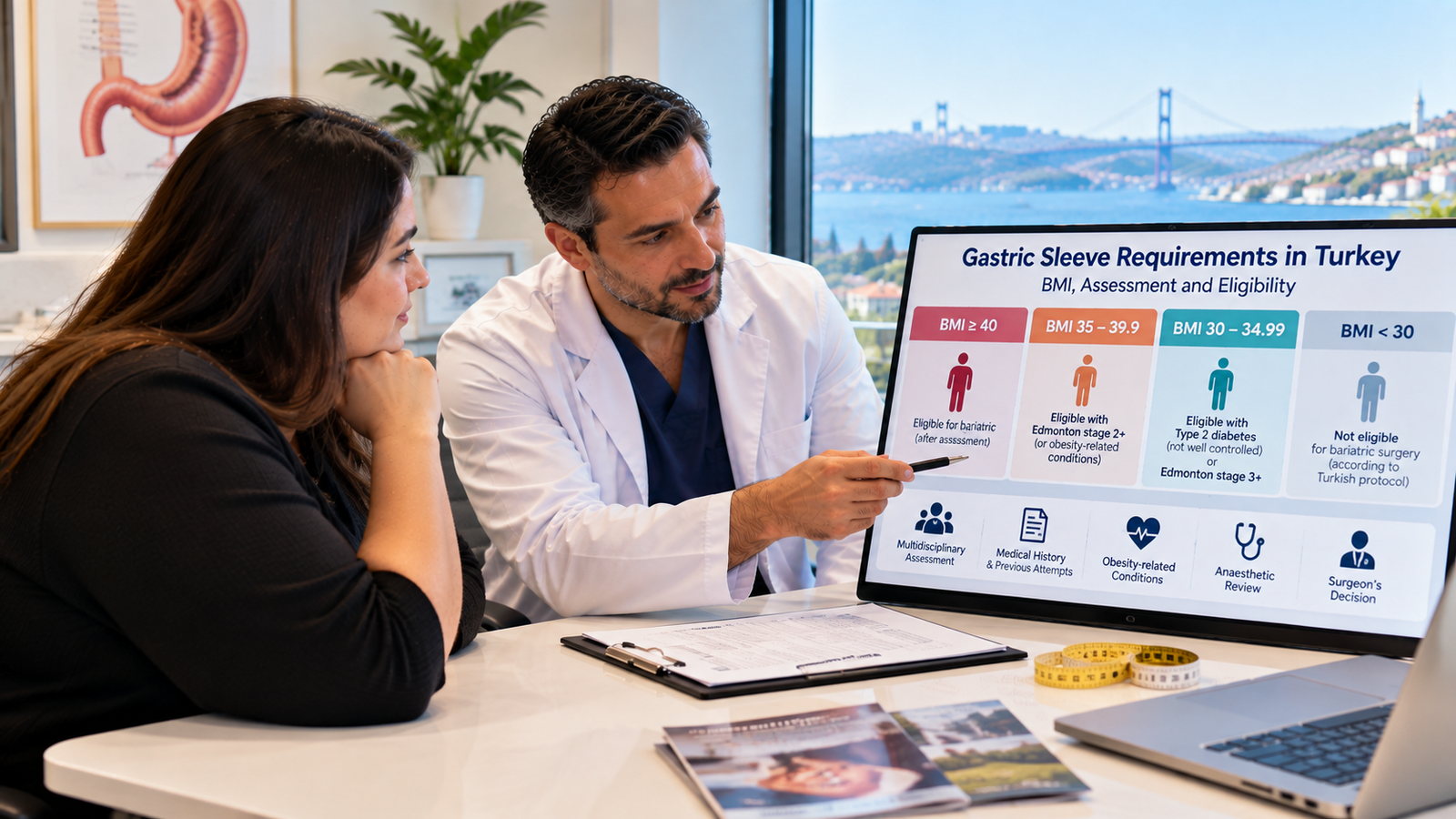
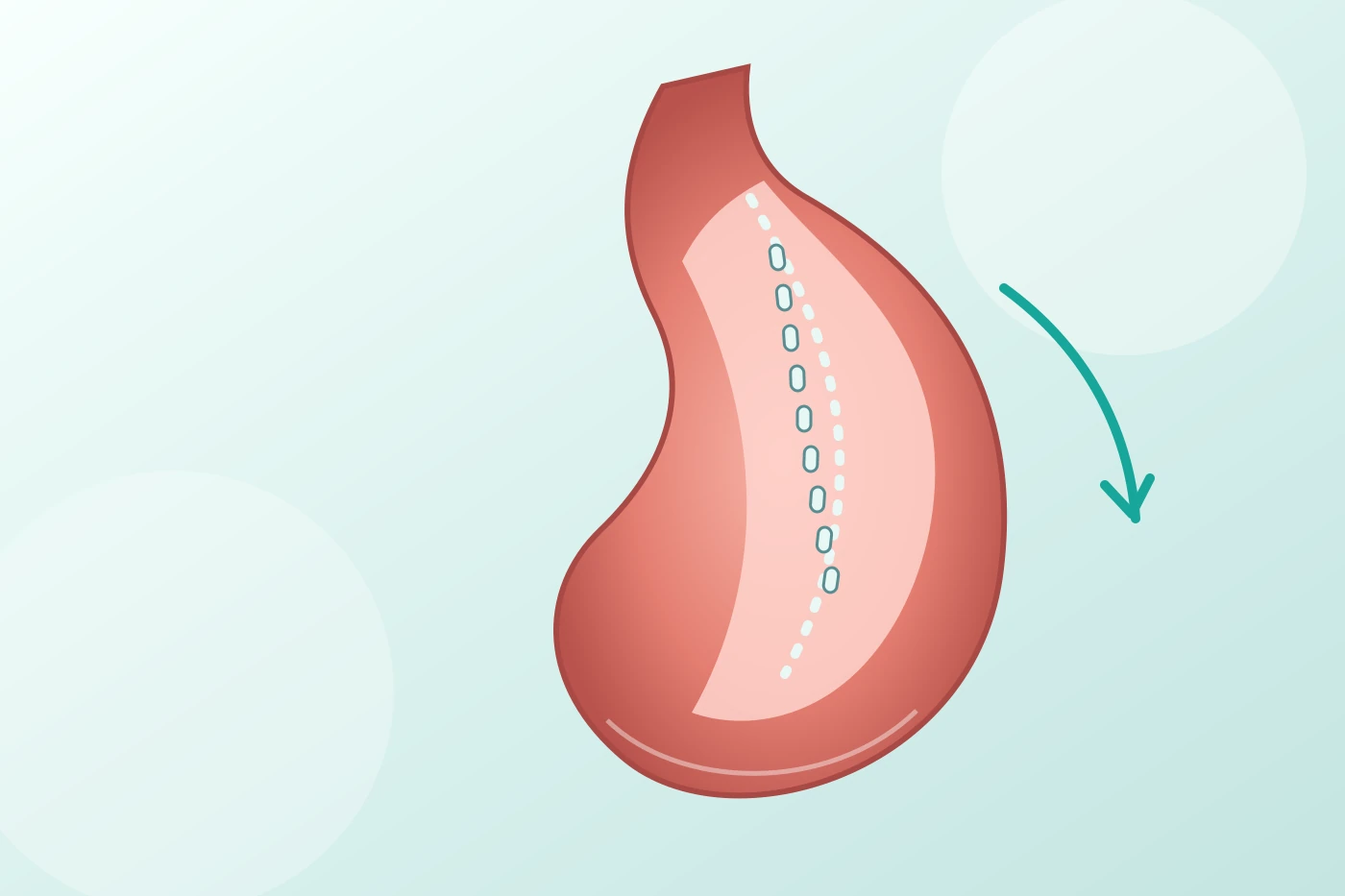
If you are planning bariatric surgery abroad, flying after gastric sleeve surgery needs more thought than choosing the cheapest return ticket. Sleeve gastrectomy is abdominal surgery under general anaesthesia, and the early days involve hospital monitoring, walking, fluid intake, pain and nausea control, wound care and watching for complications. Published guidance on when to fly is not uniform. Some aviation guidance uses a shorter minimum after abdominal surgery, while several NHS bariatric programmes recommend waiting several weeks. That difference is exactly why your treating surgeon, personal clot risk, flight length and follow-up plan matter more than a package date. Start with the clinical pathway on our Sleeve Gastrectomy page, then build travel around the provider-confirmed plan.
Flying After Gastric Sleeve Surgery: Why There Is No Single Safe Day
There is no responsible universal flight date for every patient. The UK Civil Aviation Authority advises avoiding air travel for 10 days after abdominal surgery because cabin pressure causes intestinal gas to expand and because post-operative patients may still be dealing with anaemia, reduced mobility or other complications. That is general aviation guidance, not a sleeve-specific clearance rule.
Several NHS bariatric services use more conservative advice. Leeds Teaching Hospitals recommends avoiding flying for 6 to 8 weeks after bariatric surgery. South Tees Hospitals advises no flying within six weeks after sleeve gastrectomy, and University College London Hospitals says patients should allow about 4 to 6 weeks before travelling abroad after bariatric surgery. These policies are not identical, but they show why a five-day package should never be treated as proof that a five-day flight is medically appropriate.
At the same time, international treatment programmes in Türkiye often organise patients around much shorter stays, commonly about five to seven days in straightforward cases. That is a service-delivery pattern, not a universal medical standard. A patient may be well enough for discharge from hospital without being cleared for a long international flight under every bariatric programme's policy.
Hospital Discharge And Fitness To Fly Are Different Decisions
NHS guidance says people can usually leave hospital one to three days after weight-loss surgery. Discharge means the hospital team believes you are stable enough to continue recovery outside an inpatient bed. It does not mean the operation has fully healed or that a long-haul flight is automatically appropriate.
Before discharge, the bariatric team will usually assess whether you can mobilise, tolerate the prescribed fluids, control pain and nausea, pass urine and manage the immediate post-operative plan. After sleeve gastrectomy, dietary progression begins with fluids and changes gradually over the following weeks. Hydration is particularly important because the stomach volume is smaller and drinking enough may take deliberate effort.
Your travel decision adds another layer. The treating team should consider the distance to the airport, walking through the terminal, sitting for the flight, access to medicines and fluids, the possibility of a connection, how quickly you could reach medical care if symptoms change and whether the airline requires medical documentation.
Why Blood-Clot Risk Matters On The Flight Home
Blood clots are a recognised complication after weight-loss surgery. NHS guidance explains that a deep vein thrombosis can develop in the leg and may travel to the lungs as a pulmonary embolism. This is one reason bariatric pathways often include early walking, anti-embolism stockings or blood-thinning medication when clinically indicated.
Long-distance travel creates an additional period of immobility. The US Centers for Disease Control and Prevention describes journeys longer than about four hours as long-distance travel and notes that prolonged sitting can contribute to blood-clot risk. Recent surgery is one of the factors that can increase that risk, and obesity itself may also contribute depending on the individual.
This does not mean every patient should take the same anticoagulant or wear the same compression garment. Some NHS bariatric services prescribe injections or stockings for defined periods after surgery, but prevention has to be matched to your own risk and the surgeon's protocol. Do not start aspirin, anticoagulants or compression treatment because a travel blog recommended them. Ask the treating team what applies to you and whether your flight duration changes the plan.
How Long To Stay In Turkey After Gastric Sleeve Surgery
The most useful answer is: long enough to complete the surgery, inpatient recovery, the provider's early review and the travel-clearance plan that applies to you. Commercial programmes may describe a total stay of around five to seven days, sometimes longer, but published NHS bariatric advice may recommend postponing overseas travel for several weeks. Those are materially different timelines.
Before booking, ask the provider to separate four dates in writing: the operation date, expected hospital-discharge date, first post-operative review and earliest date they would consider you fit to travel. Then ask whether their advice changes for a short regional flight versus a long-haul flight. A provider who gives only a hotel duration has not answered the medical travel question.
If your local bariatric or primary-care team recommends a more conservative travel interval than the overseas provider, do not hide that difference or choose the shorter answer because it is easier for the booking. Ask the clinicians to explain the reasoning, then decide only after you understand the competing advice and who will be responsible for follow-up.
What Your Early Recovery Needs To Achieve Before Travel
A calendar alone cannot show whether your recovery is ready for travel. The clinical team may look at your observations, wound condition, hydration, mobility, pain and nausea control, ability to follow the prescribed liquid plan and any symptoms that could suggest a complication. The details depend on the provider and your medical history.
Early walking is encouraged in bariatric care because it supports circulation and recovery. You also need enough energy and mobility to manage transfers, airport queues and the distance between gates without placing yourself under unnecessary strain. If you require wheelchair or assisted-travel support, arrange it before the day of departure rather than hoping it can be organised at the gate.
Fluid tolerance deserves special attention. After sleeve gastrectomy, patients follow a staged dietary plan and usually begin with fluids. Persistent vomiting or an inability to maintain the fluid target set by your team can lead to dehydration and should be discussed with the surgical service rather than managed around a fixed flight.
A Practical Turkey Travel Timeline
This is a planning framework, not a recommendation that you should fly on a particular day. Your treating team's instructions take priority.
- Before travel to Türkiye: confirm the surgeon, hospital, pre-operative testing, expected admission, the provider's flight policy and who will provide follow-up after you return home.
- Pre-operative assessment: complete the in-person examination and anaesthetic review. The final clinical plan may change if the findings differ from the remote assessment.
- Surgery and inpatient recovery: allow the hospital team to monitor your early recovery, mobility, fluid tolerance and pain or nausea control. NHS guidance says discharge after weight-loss surgery is commonly within one to three days, but your stay can be longer.
- Post-discharge period: remain close enough to the treating service for the review they have planned. Continue the prescribed fluids, medicines, mobility plan and wound care.
- Travel decision: do not treat hotel checkout as medical clearance. Confirm the provider's advice, compare it with any guidance from your home bariatric team, check airline requirements and change the flight if recovery or policy requires more time.
What Could Delay Your Return Home?
A longer stay is not automatically a complication, and a delayed flight does not mean the surgery has failed. Sometimes the reason is simply slower progress with fluids, nausea, pain control or mobility. Other situations need clinical investigation before travel.
NHS guidance lists important complications after sleeve gastrectomy and gastric bypass, including blood clots and leaks from the gastrointestinal tract. Symptoms such as worsening abdominal pain, fever, a fast heartbeat, persistent vomiting, breathing difficulty, chest pain, new leg pain or swelling, or feeling seriously unwell should not be managed by waiting for the flight time to arrive.
If symptoms are severe or rapidly worsening, seek urgent medical care where you are. In Türkiye, the medical emergency number is 112. Your treating provider should also give you written instructions explaining who to contact for urgent post-operative concerns and which hospital to attend if you are no longer near the treating facility.
Flying Home After Gastric Sleeve: Plan The Airport As Part Of Recovery
Air travel starts before the aircraft door closes. Airport walking distances can be long, queues may involve prolonged standing, security rules can complicate liquids and medicines, and a connection can turn one flight into many hours of travel. Build these details into the plan.
Ask the airline in advance whether recent abdominal surgery requires a medical information form, fit-to-fly letter or other documentation. The UK Civil Aviation Authority notes that the airline makes the final decision about carrying a passenger and that complex cases may need medical information before travel.
Keep your operation summary, medicine list, surgeon contact details and post-operative instructions in hand luggage. If your clinical team has prescribed injections, stockings or other measures for the flight, make sure you understand exactly how and when to use them. Follow the provider's instructions about walking, hydration and movement rather than copying another patient's routine.
Flying After Gastric Bypass Needs The Same Caution, But It Is Not The Same Operation
Gastric bypass and sleeve gastrectomy are both bariatric operations, and both involve abdominal surgery, early dietary changes, blood-clot prevention and a need for follow-up. That means the same travel-planning principles apply: do not use a package date as clearance, consider the length of the flight and arrange continuity of care.
They are still different operations. A gastric bypass changes the route of food through the digestive system, while a sleeve gastrectomy removes a large part of the stomach without creating the same intestinal bypass. Medication, nutrition, complication patterns and long-term monitoring can therefore differ. If your procedure is a bypass, use a bypass-specific plan rather than assuming sleeve instructions apply. You can review the procedure separately on our Roux-en-Y Gastric Bypass page.
Some NHS bariatric services advise avoiding flying for six weeks after both sleeve and bypass procedures. That is another reason this article does not give one generic return-flight date for all bariatric surgery.
Follow-Up Is Part Of The Travel Decision
The American Society for Metabolic and Bariatric Surgery states that extensive travel for bariatric surgery should be discouraged unless appropriate follow-up, continuity of care and transfer of medical information are arranged. That is especially relevant for international patients because bariatric care continues long after the incision has healed.
Before you leave Türkiye, you should have an operation summary, medication plan, staged diet instructions, supplement plan, contact details for the bariatric team and a schedule for clinical and nutritional follow-up. Ask which blood tests will be needed and who will review them after you return home.
Our aftercare guide and travel after treatment guide can help you organise the handover questions before departure.
Questions To Answer Before You Book The Flight
- What is the treating surgeon's earliest acceptable travel date for my specific procedure?
- Does that advice change because my flight is longer than four hours?
- What is the bariatric team's policy on flying compared with general aviation guidance?
- What early review must happen before I leave Türkiye?
- What symptoms would delay travel or require urgent assessment?
- What blood-clot prevention has been prescribed for me, and how does it apply on the flight?
- Does the airline require a fit-to-fly letter or medical information form?
- Who will provide bariatric and dietetic follow-up once I am home?
Use our questions before booking guide to structure the wider discussion about provider credentials, consent, aftercare and what happens if your recovery changes the travel plan.
How Turkelite Medcare Coordinates Bariatric Travel
Turkelite Medcare is a patient coordination service, not the treating hospital. We do not decide whether sleeve gastrectomy is suitable for you, prescribe blood-thinning treatment or determine when you are medically fit to fly. Those decisions belong to the independent bariatric team and qualified treating clinicians after assessment.
Our role is to keep the practical plan attached to the clinical one. Once the provider confirms admission, procedure, review and travel expectations, Turkelite can coordinate provider communication, flights, accommodation, airport and hospital transfers, language support and the return-home handover. If the clinical timetable changes, the travel booking should change around it rather than asking the treating team to work around a fixed ticket.
Before departure, the handover should identify who you contact about symptoms, who manages diet progression and supplements, what documents you carry home and how local follow-up will connect with the overseas bariatric team. The patient services page explains this coordination role.
Frequently Asked Questions
How Soon Is Flying After Gastric Sleeve Surgery Possible?
There is no single answer that is safe for everyone. General UK aviation guidance advises avoiding air travel for 10 days after abdominal surgery, while several NHS bariatric services recommend waiting about 4 to 8 weeks before overseas travel or flying. Your surgeon, bariatric programme, flight duration, clot risk and recovery should determine the plan.
How Long Should I Stay In Turkey After Gastric Sleeve?
International programmes often describe stays of roughly five to seven days, but that is not a universal medical clearance period. Your stay should cover the operation, hospital recovery, planned early review and the travel advice that applies to you. Some NHS bariatric programmes recommend a substantially longer interval before flying, so clarify this before booking.
Why Do Different Hospitals Give Different Flying Advice?
Different guidance may emphasise different risks, including abdominal healing, gas expansion, blood clots, mobility, hydration and access to post-operative care. General aviation guidance is not identical to bariatric-programme guidance. Ask your treating team to explain which standard they are following and why it applies to your case rather than choosing the shortest number you find online.
Does A Four-Hour Or Longer Flight Matter?
Yes, because long-distance travel adds prolonged sitting to the early post-operative period. The CDC identifies travel over about four hours as long-distance travel and lists recent surgery as a factor that can increase blood-clot risk. Your team should consider the flight duration alongside your other risk factors when planning prevention and travel timing.
Can I Fly After Gastric Bypass On The Same Timeline?
Do not assume so. Sleeve gastrectomy and gastric bypass are both bariatric operations, but they are not the same procedure and their nutritional, medication and follow-up needs can differ. Some centres use the same conservative flying restriction for both, while your own surgical team may individualise the advice. Use procedure-specific instructions.
What Should I Do If I Feel Unwell Before The Flight?
Contact the treating bariatric team and do not let the ticket determine the medical decision. Worsening abdominal pain, fever, persistent vomiting, breathing difficulty, chest pain, new leg swelling or feeling seriously unwell need assessment. If symptoms are severe or rapidly worsening, seek urgent local medical care rather than travelling to the airport.
Let The Clinical Plan Set The Return Date
The safest way to plan bariatric travel is to separate hospital discharge, hotel stay and fitness to fly. Confirm the treating team's travel policy, compare it with any advice from your home bariatric service, factor in the length of the flight and make sure follow-up is arranged before you leave. A flexible ticket is easier to change than a medical complication in transit.
If you want help coordinating provider communication and travel around a clinician-confirmed bariatric plan, Start your private enquiry.
This content is for general information and does not replace individual medical advice, diagnosis or treatment. Discuss treatment suitability, risks and recovery with a qualified healthcare professional.